Eat the Frog: How to Do Your Hardest Task First (2026)
TL;DR: To eat the frog means doing your most important task, the one you are most likely to put off, before anything else each day. The idea comes from Brian Tracy's 2001 book Eat That Frog!. In practice: pick one frog the night before, shrink it to a clear first step, start it before you open email, and stay with it until it's done or its time block ends. It works best when you control your mornings. It tends to fail for night owls, reactive jobs, and frogs that are whole projects in disguise. Below: the steps, examples by role, the research, and how to pair it with time blocking and the Ivy Lee method.
Most to-do lists have one item that keeps sliding to tomorrow. It's the report with no clear starting point, the awkward call, the tax form. You tidy your inbox around it, and at 5 p.m. it's still there.
Eat the frog is a one-rule fix for that pattern. You stop negotiating with the task and do it first, while the day is still yours.
What "eat the frog" means
Your "frog" is the task that matters most today and that you least want to do. On his own site, Tracy puts the rule plainly: if you have two important tasks, start with the biggest, hardest, and most important one. He also stresses eating one frog at a time.
That definition has two parts, and most people skip one of them:
- Important: finishing it moves a goal, a project, or your income forward. Something bad happens if it slips for weeks.
- Dreaded: you feel resistance when you look at it. It's vague, boring, uncomfortable, or scary.
A task that's dreaded but unimportant, like sorting old downloads, isn't a frog. A task that's important but fun doesn't need the method, because you'll start it anyway. The frog sits where both overlap.
Who said it first? Probably not Mark Twain
Tracy credits the saying to Mark Twain: eat a live frog first thing in the morning, and nothing worse will happen to you all day. The researchers at Quote Investigator found no solid evidence that Twain said it. The line traces back to the French writer Nicolas Chamfort, in writings published in the 1790s, and his version was about a toad. The earliest link to Twain they found appeared in 1988, long after his death.
The origin doesn't change the advice, but it's a reminder that a catchy quote isn't evidence.
How to eat the frog in 5 steps
The method takes about five minutes of planning and one protected block of focus. Here's the full routine.
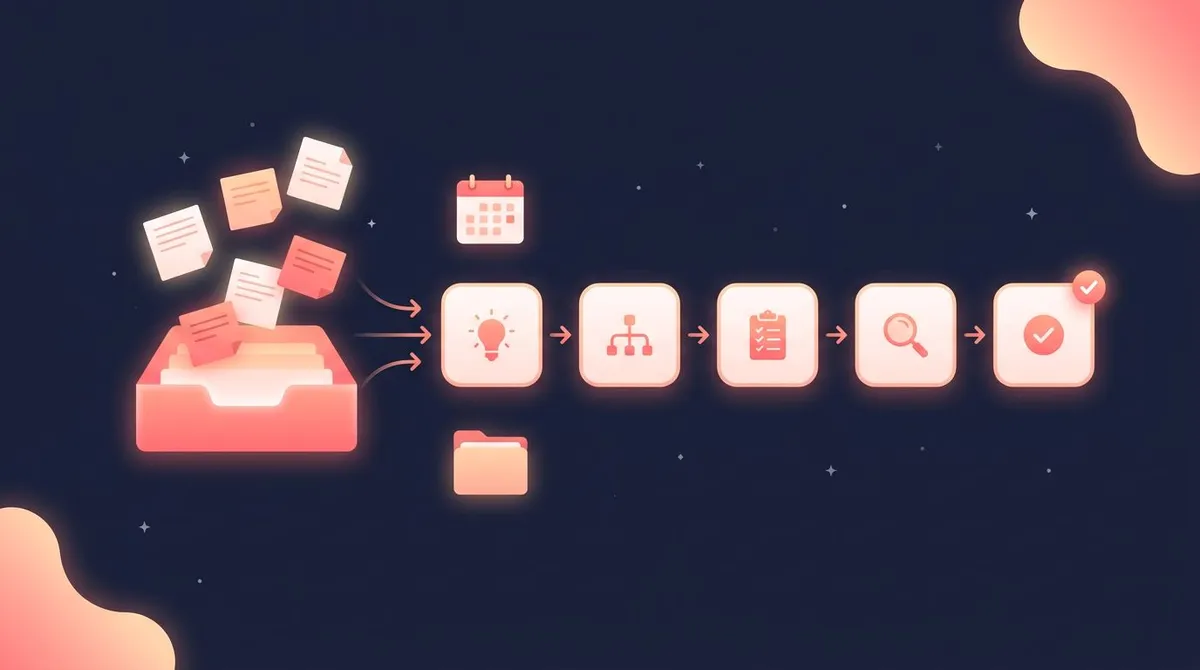
Step 1: List tomorrow's tasks tonight
Before you finish work, write down everything that needs to happen tomorrow. Tracy is a strong believer in planning each day in advance, on paper. A written list lets you compare tasks side by side instead of reacting to whichever one feels loudest in the morning.
Step 2: Pick one frog with the ABCDE test
In the book, Tracy sorts a task list with five letters:
- A means must do, with serious consequences if it slips.
- B means should do, with mild consequences.
- C means nice to do, with no real consequences.
- D means delegate it to someone else.
- E means eliminate it.
Rank your A tasks as A-1, A-2, and so on. Your A-1 is today's frog. If two A tasks tie, pick the one you feel more resistance toward, since that's the one you'll dodge if it isn't first.
A quick gut check helps: if this were the only thing I finished today, would the day still count? If yes, you've found your frog. If urgent and important keep blurring together, our free Eisenhower Matrix maker sorts a messy list into four boxes in a couple of minutes.
Step 3: Shrink the frog to a first action
A frog is often dreaded because it's vague. "Do taxes" has no starting point. "Find last year's return and download three bank statements" does.
Write the first physical action next to the frog, something you could start in under two minutes. If the whole frog would take more than about three hours, it's a project. Cut off a piece you can finish in one sitting and make that piece the frog. People are bad at guessing how long work takes, a bias called the planning fallacy, so smaller frogs get eaten more often.
Step 4: Start before you open anything else
The next morning, open your frog before email, Slack, or the news. This is the step that matters most, because small, urgent-looking messages are good at taking over a morning.
Researchers call this the mere urgency effect. In experiments by Meng Zhu, Yang Yang, and Christopher Hsee (2018), people picked tasks with a short deadline over tasks that paid more, even when the urgency was artificial. If you check your inbox first, you hand your best hour to that bias.
Step 5: Stay with it until it's done or the block ends
Work on the frog until it's finished or until the time you set aside runs out. Tracy calls this single-handling: once you start, don't switch to something easier halfway through.
If the frog is big, give it a fixed box, such as 90 minutes, and stop when the box ends. That's timeboxing, and it keeps one frog from eating your whole day.
Eat the frog examples by role
"Do your most important task first" is easy to agree with and hard to apply. Here's what a frog looks like in different roles, along with the tempting smaller task that usually wins instead.
| Role | Typical frog | What gets done instead | First 10-minute action |
|---|---|---|---|
| Software engineer | Design doc for a tricky feature | Small bug fixes and code review | Write the problem in three sentences |
| Manager | A hard feedback conversation | Status updates and calendar tidying | Draft the two points you need to make |
| Freelancer | Chasing an overdue invoice | Polishing the portfolio site | Open the client thread and write the first line |
| Student | Starting a research paper | Rewriting class notes | List five sources to skim |
| Job seeker | Tailoring a cover letter for the top-choice role | Scrolling job boards | Highlight three must-haves in the job ad |
| Small business owner | Quarterly taxes | Answering customer messages | Download last quarter's bank statement |
| Writer | The chapter that isn't working | More research and outlining | Write a rough opening paragraph |
| At home | Calling the insurance company | Laundry and errands | Find the policy number and set a call time |
The middle column isn't useless work. It feels productive because it's quick to finish, which is why it wins the morning if you let it.
Why eating the frog works (and what the research doesn't show)
No study has tested Eat That Frog as a method. But research on the problems it targets lines up well with the advice, with one caveat.
Putting a task off is mood repair. Fuschia Sirois and Timothy Pychyl argue that procrastination is about short-term mood regulation. We delay unpleasant tasks because delay feels better right now, and the cost lands on our future self. Eating the frog early shrinks the hours you spend dreading it. For the emotional side of this, see our guide on how to overcome procrastination.
Easy wins can hide worse output. Diwas KC, Bradley Staats, Maryam Kouchaki, and Francesca Gino studied six years of data from a hospital emergency department. When workload rose, physicians tended to pick easier tasks. At first glance this looked like more work got done, but once the difficulty of the work was counted, output was worse. Doctors who leaned on easy tasks also got faster more slowly over time. Lab experiments in the same paper tied the pattern to fatigue and to the sense of progress that finishing something gives.
The caveat: "morning willpower" is shakier than it sounds. Many articles say you should eat the frog early because willpower runs down as the day goes on. That idea comes from ego depletion research. A preregistered replication across 23 labs, led by Martin Hagger, found an effect close to zero. So the better reason to go first isn't a full willpower tank. It's that the start of your workday is the part you haven't handed to anyone else yet.
When eating the frog fails
The method has real weak spots. Here are the common failure modes and what to do instead.
You're not a morning person
Mental performance rises and falls across the day, and the peak depends on your chronotype. A review by Christina Schmidt and colleagues found that attention, memory, and executive tasks go best when the time of day matches a person's own peak. If you're a night owl, 8 a.m. may be your worst slot for a hard task.
The fix is to eat the frog first in your focus window, not at a fixed clock time. Our free chronotype quiz estimates your deep-work window if you're not sure when it falls.
The frog is a project in disguise
"Launch the website" isn't a frog. It's 40 frogs. When the frog is too big, you open it, feel lost, and drift back to email. Go back to Step 3 and cut off a piece you can finish today.
Your work is reactive
If you work in support, healthcare, retail, or on call, you may not control the first hour. Don't drop the idea. Eat the frog in the first protected block of the day, even if that's 2 p.m. after the rush, and book that block on your calendar like a meeting.
Starting hard freezes you
For some people, including many with ADHD, facing the hardest task cold leads to paralysis, not momentum. Research on this method with ADHD is thin, so treat this as practical advice rather than science. Try a short warm-up: one small, related task for five to ten minutes, then the frog. Replying to the one email the frog depends on counts. Clearing the whole inbox doesn't.
Everything looks like a frog
If you have five frogs every day, you have a ranking problem, not a discipline problem. Rank them, eat one, and schedule the rest. If the same frog survives a week of mornings, ask whether it needs to happen at all, or whether someone else should do it.
Eat the frog with time blocking, Ivy Lee, and other methods
Eat the frog is a single rule, not a full planning system. It decides what goes first. It doesn't tell you what to do with the rest of the day, which is why it pairs well with other methods.
| Method | What it adds | How the frog fits |
|---|---|---|
| Time blocking | A plan for every hour | The frog gets the first deep-work block |
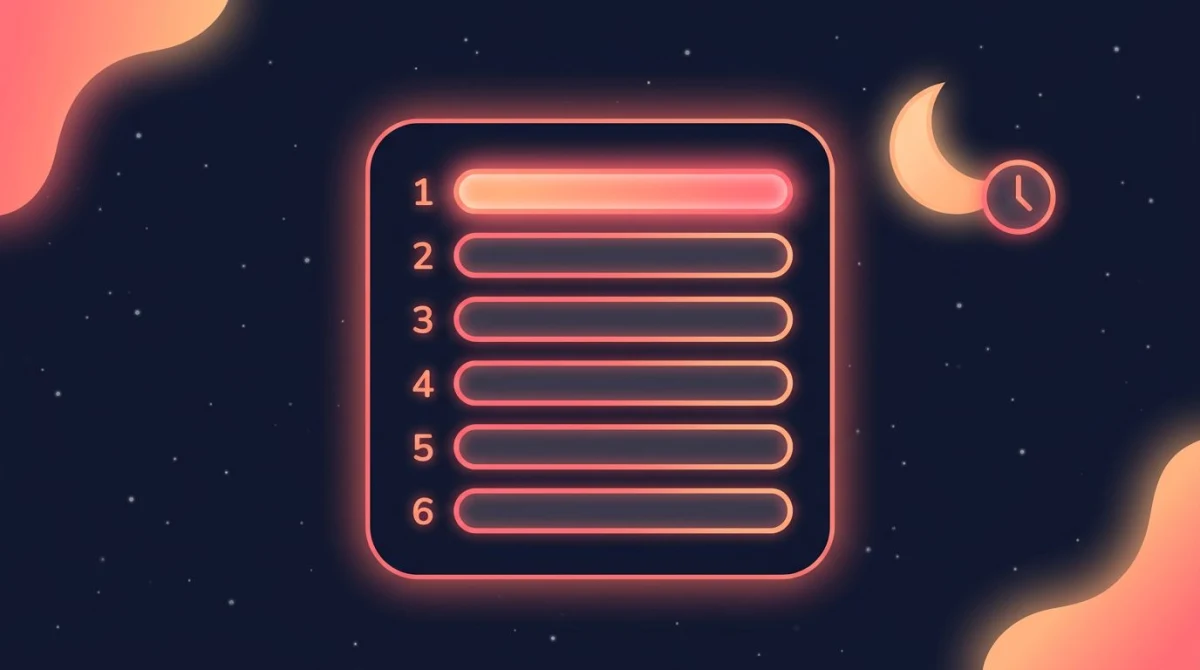
| Ivy Lee method | Six ranked tasks per day | The frog is task number one |
| Timeboxing | A hard time limit per task | The frog gets a fixed box, such as 90 minutes |
| Getting Things Done | A system to capture every open loop | GTD builds the list; the frog decides what goes first |
| Pomodoro | 25-minute focus sprints | The first two or three sprints go to the frog |
With time blocking, a frog-first morning might run like this: 8:30 read last night's plan, 8:40 to 10:10 on the frog, a short break, then half an hour for email. Email still gets done. It doesn't get your best hour.
The Ivy Lee method is the closest cousin, since it asks for six ranked tasks each evening. Eat the frog keeps you honest about the ranking, because item one should be the task you'd rather skip. For a wider view of daily planning frameworks, see how to plan your day. If your frogs tend to be deep, creative work, our Deep Work summary covers how Cal Newport protects that kind of time.
Make eating the frog a daily habit
Eating one frog is easy to do once. The payoff comes from doing it most workdays for months, until starting with the hard thing feels normal.
That takes longer than most people expect. In Phillippa Lally's study at University College London, a new daily behavior took a median of 66 days to feel automatic, with a range of 18 to 254 days. Plan for a few months of deliberate effort, and expect to miss days along the way.
Track the input, not the outcome. Some frogs take three days, so "finished the frog" is a bad daily goal. "Worked on my frog first" is a good one. Add it as a daily habit in a tracker like HabitBox and check it off after your first block. The calendar heatmap shows at a glance which weeks you held the line and which weeks email won.
Once a week, look at the pattern. A weekly review is a good place to notice which frogs kept escaping, and why.
Want a record of the mornings you ate the frog, not a list of good intentions? Download HabitBox on iOS and Android — one-tap check-ins, a calendar heatmap of your frog-first days, and no account to create. Free to start, with an optional Plus upgrade.
FAQ
What does it mean to eat the frog?
Who originally said "eat the frog"?
What are the downsides of eat the frog?
What is the 80/20 rule in Eat That Frog?
Can you eat the frog if you're not a morning person?
What if you have two frogs?

Mira Hartwell
Editor, HabitBoxEditor at HabitBox. Writes about habit science and productivity, grounding every post in named research (Lally, Wood, Walker, Huberman) instead of recycled advice. Read full bio →