How to Overcome Procrastination: 6-Step Method
Here's how to overcome procrastination in 1 line: stop treating it as a time-management failure and start treating it as the emotion problem it actually is. Procrastination isn't laziness or bad planning — it's your brain ducking a negative feeling about a task. Dr. Tim Pychyl of Carleton University, who has studied this for over 20 years, found the relief is real but temporary, and the most reliable fix is to start the task for just 2 minutes. Below is the science, plus a 6-step method you can run today.
What procrastination actually is (emotion regulation, not laziness)
Procrastination feels like a willpower problem. It isn't. The clearest definition from the research is that procrastination is the voluntary delay of an intended action despite expecting to be worse off for the delay. The key word is despite — you know it will cost you, and you do it anyway.
That makes no sense if procrastination is about time. It makes total sense if it's about feelings. Dr. Tim Pychyl frames it simply: procrastination is an emotion-regulation problem, not a time-management problem. When a task brings up something unpleasant — boredom, anxiety, self-doubt, resentment, fear of doing it badly — your brain reaches for the fastest way to feel better right now. Avoiding the task delivers instant relief.
Here's what the research says about that relief: it works, briefly, which is exactly why the habit is so sticky. The American Psychological Association describes procrastination as a failure of self-regulation, and Pychyl's lab calls the trade "giving in to feel good." You trade tomorrow's stress for a few minutes of comfort today.
This is also why procrastination is not laziness. A lazy person doesn't want to act. A procrastinator wants to act, plans to act, and feels terrible about not acting — they're just stuck on the feeling, not the effort. If your problem is low energy or no drive at all, that's a different issue and a different fix.
Why we do it: the procrastination-anxiety loop
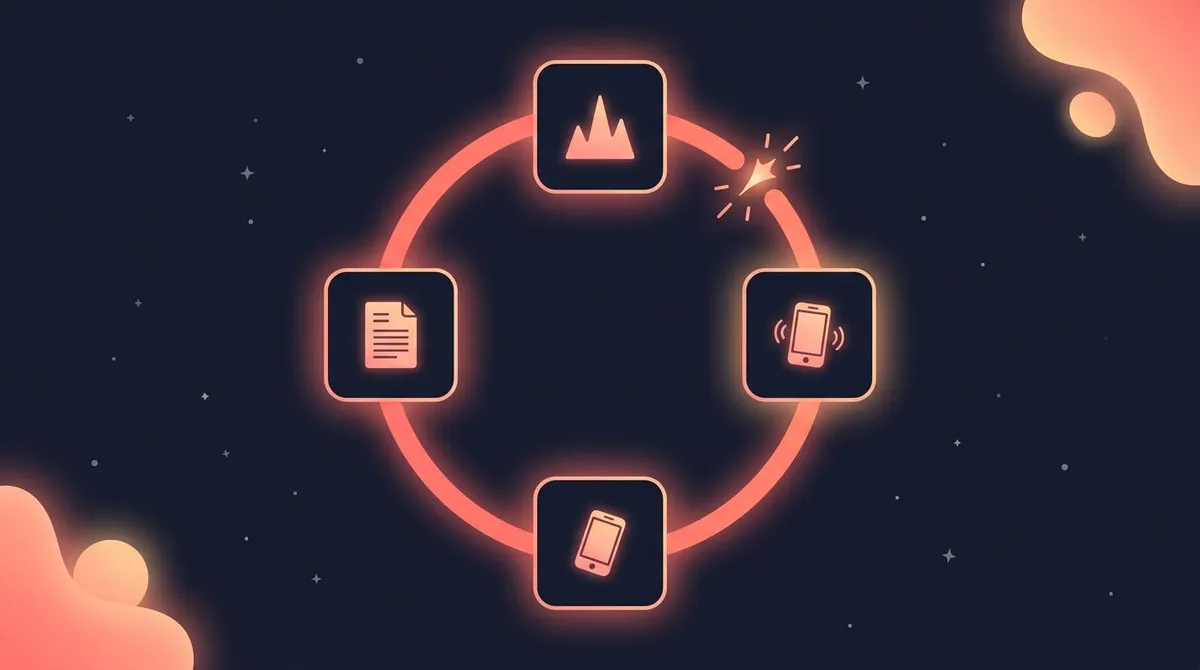
Once you see procrastination as emotion regulation, the cycle gets obvious. It runs in four beats, and each loop makes the next one harder to break.
You face a task that triggers a negative feeling. You avoid it and feel immediate relief. The relief teaches your brain that avoiding works. Then the deadline gets closer, the dread grows, and the next time you sit down the feeling is even bigger — so you avoid again.
Dr. Fuschia Sirois, a leading researcher on procrastination and well-being, has shown that chronic procrastinators tend to beat themselves up, and that self-blame feeds the loop. The shame becomes another negative feeling attached to the task, which makes the task even more aversive, which makes you avoid it more. Her research points to self-compassion — not harsher discipline — as a way out, because dropping the self-attack lowers the emotional charge that started the avoidance.
Piers Steel's temporal motivation theory adds the timing piece: we heavily discount rewards that are far away. A deadline two weeks out feels weightless, so the small discomfort of starting outweighs it. As the deadline nears, the reward (or the threat of failure) finally feels real — which is why so much gets done in a last-minute panic. The goal of the method below is to make "start anyway" feel easier than avoiding, long before the panic arrives.
How to overcome procrastination: a 6-step method you can start today
This is one move per step, and you can run the whole thing in the next ten minutes. The order matters — you lower the feeling first, then make starting almost effortless.
- Name the feeling. Before you label yourself lazy, ask what the task actually makes you feel. Bored? Anxious you'll do it badly? Resentful it's even yours? Naming the emotion takes the edge off it — research on affect labeling shows that putting a feeling into words reduces its intensity. You can't regulate a feeling you won't admit you have.
- Shrink the task to 2 minutes. Don't commit to writing the report — commit to opening the document and writing one ugly sentence. The point of the 2-minute rule is that starting is the hard part; once you're in motion, finishing is far easier than starting was. Make the on-ramp so small there's nothing left to dread.
- Use an implementation intention. Vague plans lose to feelings; specific ones don't. Set a concrete "when X, I'll do Y" trigger: "When I finish my morning coffee, I'll open the report and write one sentence." Decades of research on implementation intentions show this single move roughly doubles follow-through, because you've decided in advance instead of negotiating in the moment.
- Remove one friction point. Find the single thing that makes starting harder and delete it tonight. Close the 14 browser tabs, put your phone in another room, open the file before you go to bed so it's the first thing you see. You don't need a perfect setup — one less obstacle between you and the first 2 minutes is enough. Reducing distraction is half the battle, which is why learning how to focus better compounds with everything here.
- Schedule a small reward. Because the brain over-values immediate payoffs, give the starting an immediate payoff of its own. Tie a tiny reward to the action, not the outcome — a good coffee after the first work block, a walk after you've done your 2 minutes. You're rebalancing the math so that starting feels good now, not just later.
- Track the streak. The new behavior you're building isn't "finish the project" — it's "start anyway, even when it feels bad." That's a habit, and habits stick through repetition. Mark every day you started, and you turn an abstract intention into a visible chain you don't want to break. Consistency is what converts a one-off win into a default.
Which kind of procrastinator are you?
Not all procrastination has the same root, so not every fix lands the same. Find the pattern that sounds most like you, then aim the method at the actual trigger underneath it.
| Type of procrastinator | Root trigger | The fix that works |
|---|---|---|
| Perfectionist | Fear the work won't be good enough | Lower the bar on purpose: aim for an "ugly first draft," then improve it |
| Dreamer | Big vision, no concrete next action | Convert the goal into one 2-minute step with a "when X, I'll do Y" trigger |
| Avoider | Anxiety and fear of judgment or failure | Name the feeling, add self-compassion, shrink the task so the threat shrinks too |
| Crisis-maker | Only the deadline rush feels motivating | Build artificial early deadlines and reward starting, not finishing |
Most people are a blend, and the type can change with the task. The constant is the emotion underneath — once you treat that, the right tactic is usually obvious.
How tracking breaks the cycle
The procrastination loop is powered by an invisible reward: you avoid, you feel relief, and nobody sees it. To break the loop you need the opposite — a visible reward for the behavior you actually want, which is starting.
That's the quiet reason tracking works. When you log "started for 2 minutes" and watch a streak grow, you give the brain an immediate, concrete payoff for the moment that used to feel like all cost and no benefit. Over a few weeks, "start anyway" stops being a battle and becomes the default. A dedicated tracker like HabitBox shows that streak as a chain on your phone, which taps into loss aversion — once you've started ten days in a row, the urge not to break it competes with the urge to avoid.
Track the action, not the outcome. You can't control whether today's work turns out brilliant, but you can control whether you started. Tie this to a broader self-discipline practice — our guide on how to be more disciplined covers how to make that "start anyway" muscle run without leaning on willpower. Ready to make starting a daily streak instead of a daily fight? HabitBox lets you check off the habit in one tap and watch the chain grow — it's free to download.
Common mistakes: what doesn't work
Most anti-procrastination advice fails because it treats the wrong problem. Here's what to drop.
- Trying to feel motivated first. Motivation follows action far more often than it leads it. Waiting to feel ready is how the deadline arrives.
- Punishing yourself for procrastinating. Sirois's research is clear that self-blame makes it worse, not better. The shame becomes one more bad feeling glued to the task.
- Making a huge, perfect plan. A detailed plan can be its own form of avoidance — it feels productive while you still haven't started the actual work.
- Relying on one big push of willpower. Willpower is a spike, and spikes crash. A 2-minute on-ramp you can repeat beats a heroic effort you can't.
The thread through all four is the same reframe: you're not fixing a character flaw or a scheduling gap. You're learning to start in the presence of an uncomfortable feeling, and then doing it often enough that it becomes a habit.
How to Overcome Procrastination FAQ
Why do I procrastinate?
Is procrastination just laziness?
How do I stop procrastinating right now?
What is the 2-minute rule for procrastination?
How long does it take to stop procrastinating?

Mira Hartwell
Editor, HabitBoxEditor at HabitBox. Writes about habit science and productivity, grounding every post in named research (Lally, Wood, Walker, Huberman) instead of recycled advice. Read full bio →