Extrinsic Motivation: 10 Examples & When It Backfires
TL;DR: Extrinsic motivation means doing something for an external reward that is separable from the activity itself — money, grades, praise, a streak, or a badge. Below are 10 extrinsic motivation examples across 3 categories. Rewards are great for starting a habit, but 1 well-known effect (the overjustification effect) shows they can quietly reduce your genuine interest. The fix is to fade rewards out as the habit takes root.
What is extrinsic motivation?
Extrinsic motivation is the drive to do something to earn a reward or avoid a punishment. The reward is separate from the activity itself. You are not doing the thing for its own sake. You are doing it for what the thing gets you.
Compare that to intrinsic motivation, where the activity is its own reward. You go for a run because it clears your head, not because someone pays you. Psychologists Edward Deci and Richard Ryan built this split into Self-Determination Theory, one of the most cited frameworks in motivation research.
Here is the key insight. Most of what we do sits on a spectrum between the two. A paycheck is extrinsic. Pride in your work is intrinsic. And a habit streak on your phone? That is a mild extrinsic nudge — a topic we will return to.
Intrinsic vs. extrinsic motivation
The two are not enemies. In fact, the same task can carry both at once. A nurse may work partly for the salary (extrinsic) and partly because the work feels meaningful (intrinsic).
The difference matters for one reason: durability. Extrinsic motivation tends to fade when the reward stops. Intrinsic motivation lasts, because the doing is the payoff. So the smart move is not to pick a side. It is to use extrinsic rewards to get moving, then let intrinsic drive take over.
Types of extrinsic motivation
Extrinsic motivation is not all-or-nothing. Deci and Ryan describe a range that runs from fully controlled to nearly self-directed. Knowing where a habit sits tells you how sturdy it is.
At the most controlled end is external regulation — acting purely for a reward or to dodge a punishment. Next comes introjected regulation, where you act to avoid guilt or to earn approval. Then identified regulation, where you act because you genuinely value the result. At the far end is integrated regulation, where the behavior fits who you are.
The further right you move, the more the motivation behaves like intrinsic drive — and the longer the habit tends to survive. Most reward strategies aim to walk a habit from the left of this range toward the right.
10 extrinsic motivation examples
Extrinsic motivators fall into three broad groups: tangible rewards, social rewards, and avoidance-based pressure. Here are 10 examples you will recognize from work, school, and everyday habits.
Tangible rewards
- A year-end bonus for hitting a sales target. The money is separate from the selling itself. Take the bonus away, and the extra push often goes with it.
- A prize for finishing a reading challenge. A gift card for reading 12 books this year is a reward you can hold. The reading is the means; the card is the end.
- Streak rewards or badges in an app. They unlock when you check in enough days in a row. The badge has no value on its own — it is a marker of effort.
- A cheat meal you promise yourself after a week of workouts. The workout earns the meal, so the meal pulls you through the workout.
Social rewards
- Praise from a manager in a team meeting for shipping a project on time. The recognition, not the shipping, is the payoff you are chasing.
- Public recognition, like an "employee of the month" plaque or a shout-out post. The visible status is the reward.
- Grades and class rank. A student often studies for the A, not for the subject. The grade is a stand-in for learning, and sometimes it eclipses the learning entirely.
- Competition with a friend to see who logs more gym sessions this month. Winning, not the exercise, is the point.
Avoidance-based pressure
- A deadline that pushes you to finish a report you would otherwise put off. You act to escape the consequence of missing it.
- Fear of losing a streak. You meditate today mostly so you do not break a 40-day chain. The dread of the reset does the motivating.
Notice that the last one does double duty. Loss aversion is our tendency to feel losses more sharply than equal gains. It makes "don't break the chain" a strong extrinsic pull. That is why streak features work. It is also why they need care.
Each group nudges you differently. Tangible rewards give you a thing to chase. Social rewards tie the behavior to other people's approval. Avoidance-based pressure works by making inaction feel costly. Most habits you build will lean on at least one of these in the early days.
When extrinsic motivation helps
Rewards get a bad reputation in habit circles, but they are genuinely useful in specific situations. The good news is that they are best exactly where intrinsic motivation is weakest.
Starting a new habit. In the first few weeks, a behavior feels effortful. The joy of doing it for its own sake has not shown up yet. An external nudge bridges that gap. A check-in, a small treat, or a visible streak keeps you going until the habit starts to feel natural.
Boring-but-necessary tasks. Flossing, filing expenses, and doing physio exercises rarely become fun. That is fine. There is nothing wrong with rewarding yourself for doing them anyway. Here the overjustification risk is low, because there was no intrinsic joy to crowd out in the first place. Pair the dull task with a small treat and let the reward carry it.
Habits with a delayed payoff. Some behaviors are worth it, but the benefit arrives weeks or months later. Saving money, studying for an exam, and building strength all pay off slowly. An extrinsic marker along the way — a small win you can see today — keeps you going while the real reward is still out of reach.
External accountability. Some people are wired to respond to outer expectations. Gretchen Rubin's Four Tendencies framework describes one such type: the Obliger. Obligers readily meet expectations that others hold them to, but they struggle with purely internal goals. For an Obliger, an accountability partner or a public commitment is not a crutch. It is the mechanism that makes the habit possible. If that sounds like you, our guide to building an accountability partner system walks through the setup.
When extrinsic motivation backfires
Here is where habit-building gets counterintuitive. Piling rewards onto something you already enjoy can make you enjoy it less. Psychologists call this the overjustification effect.
The classic evidence comes from two studies. In 1971, Edward Deci ran an experiment with Soma cube puzzles that students already found fun. He paid one group to solve them. A control group solved them for free. Then the payment stopped. The paid group spent less of their free time on the puzzles than the unpaid group. The reward had crowded out their original interest.
Two years later, Mark Lepper, David Greene, and Richard Nisbett studied preschoolers who loved drawing with felt-tip markers. Some children were promised a "Good Player" certificate for drawing. Others drew for no reward at all. Later, the promised-reward group spent noticeably less time drawing than the no-reward group. The prize had turned play into work.
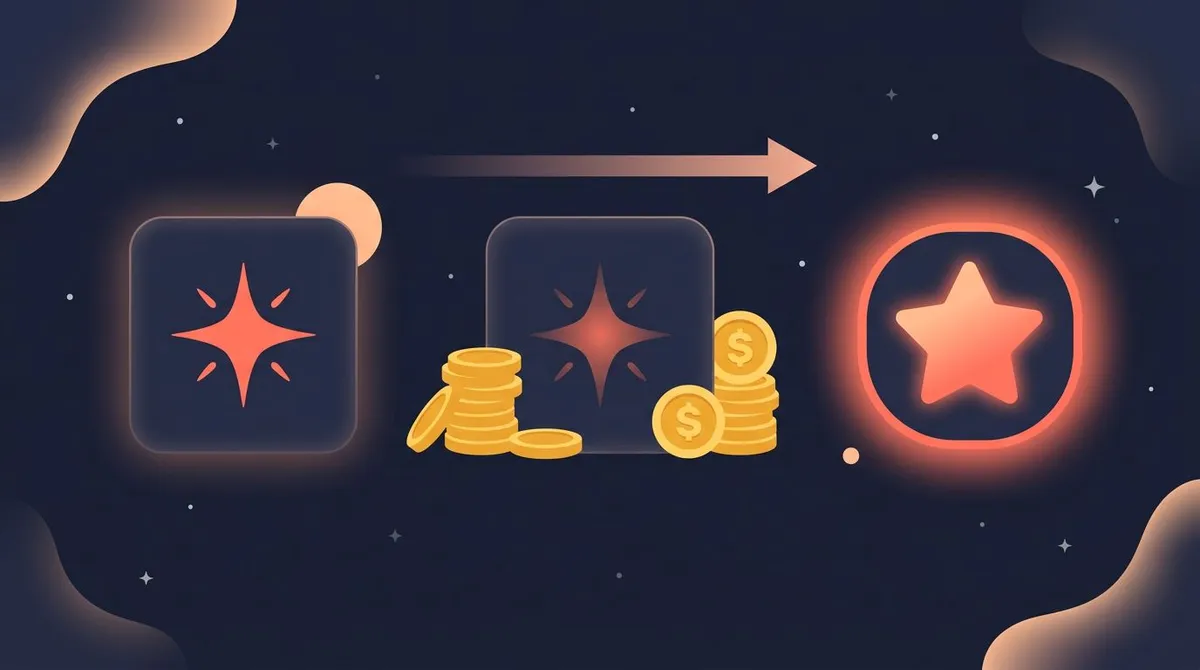
Self-Determination Theory points to one mechanism: control. When a reward feels like the reason you act, your sense of doing it freely drops. Researchers call that sense autonomy. As autonomy falls, intrinsic interest fades with it.
For a habit tracker audience, this matters. Say you already enjoy your morning run. If you over-gamify it into a grind for points, you risk teaching your brain a lie: that the run is only worth doing for the reward. When the novelty of the points wears off, the habit can go with it.
Helpful vs. harmful extrinsic rewards
Not all rewards carry the same risk. The overjustification effect mostly bites when you attach a reward to something you already find interesting. Here is a quick way to tell the difference.
| Reward type | When it helps | When it backfires |
|---|---|---|
| Cash or prizes | Kick-starting a boring or brand-new task | Paying for something you already enjoy |
| Praise and recognition | Reinforcing effort and progress | Making approval the only reason to act |
| Streaks and badges | Bridging the fragile early weeks of a habit | Becoming the sole reason the habit survives |
| Deadlines and penalties | Getting necessary but dull tasks done | Turning a passion project into pure pressure |
| Competition | Adding energy to a shared goal | Crowding out your own reason for doing it |
The pattern is simple. Rewards help most when a behavior has no intrinsic pull yet. They hurt most when they replace an intrinsic pull that already exists.
One more nuance from the research. The overjustification effect is strongest when the reward is expected and tied to the task. A surprise reward you did not work toward does far less damage. So a spontaneous "well done" rarely dents your interest. A promised bonus for every single rep is where the risk climbs.
How to use rewards without killing intrinsic drive
You do not have to swear off rewards. You just have to use them like training wheels — on at first, off once you can balance. Here is a simple playbook.
Fade rewards over time. Use an external nudge to get started, then taper it on purpose. Reward every check-in for two weeks. Then reward every few. Then let the habit stand on its own. The goal is to become the kind of person who does the thing, not the person who does it for points.
Reward the process, not just the outcome. Praising effort protects autonomy better than celebrating results alone. "I showed up 4 times this week" keeps your focus on the behavior you actually control. A number on the scale does not.
Let the habit become identity. The most durable motivation shows up when the behavior becomes part of who you are. "I'm a reader" beats "I'm chasing a reading prize." James Clear calls these identity-based habits. They are the natural endpoint of a well-faded reward. Once "runner" or "meditator" feels true, you no longer need the badge. If you want to lock the behavior in, our 2-minute rule timer makes the first, hardest rep small enough to start.
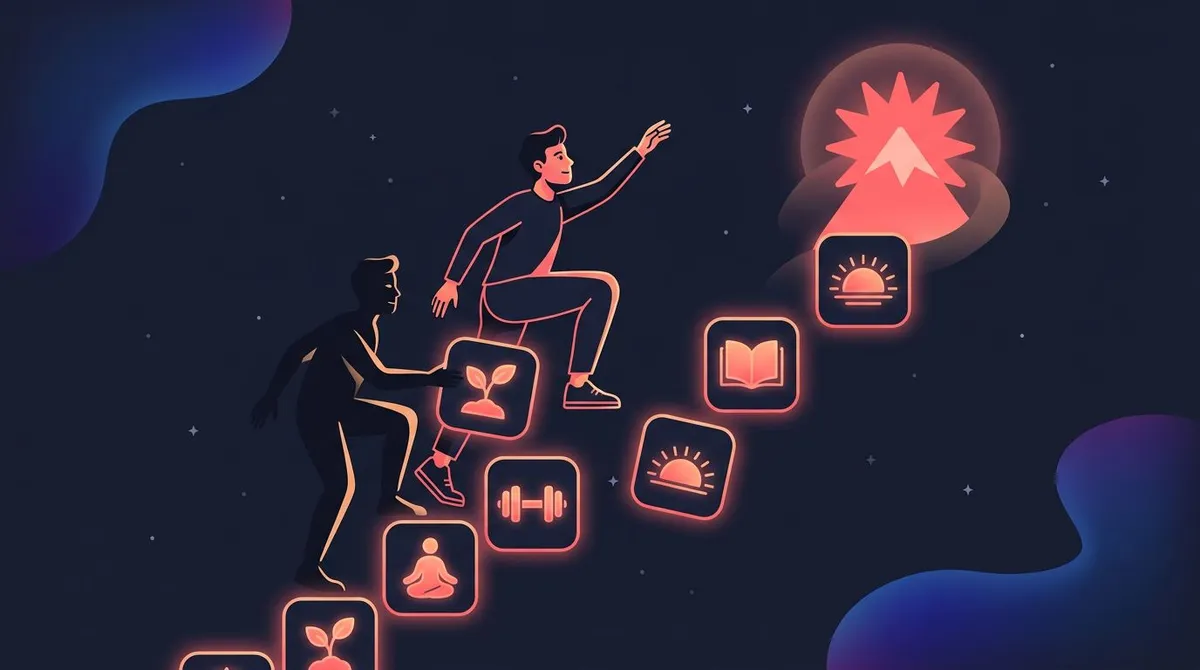
This is also the honest way to think about a streak in an app. In HabitBox, the streak count is a mild extrinsic nudge. It uses loss aversion to make showing up feel worth it in those fragile early weeks. It works best as a bridge, not a life sentence. The aim is for the habit to feel intrinsic long before you would ever be tempted to lean on the number forever.
A quick self-check helps here. Ask yourself: if the reward vanished tomorrow, would I still do this? If the answer is yes, the habit has taken root, and you can retire the reward. If the answer is no, keep the nudge a little longer, but keep watching for the day the answer flips.
If you are weighing rewards against sheer willpower, our piece on motivation vs. discipline covers what to rely on when the reward fades. And our guide to how to be consistent covers the systems that keep a habit alive once the novelty is gone.
FAQ
What is extrinsic motivation?
What are examples of extrinsic motivation?
Is extrinsic motivation bad?
What is the overjustification effect?
How do rewards affect habit formation?

Mira Hartwell
Editor, HabitBoxEditor at HabitBox. Writes about habit science and productivity, grounding every post in named research (Lally, Wood, Walker, Huberman) instead of recycled advice. Read full bio →