Motivation vs Discipline: Which Builds Habits? (2026)
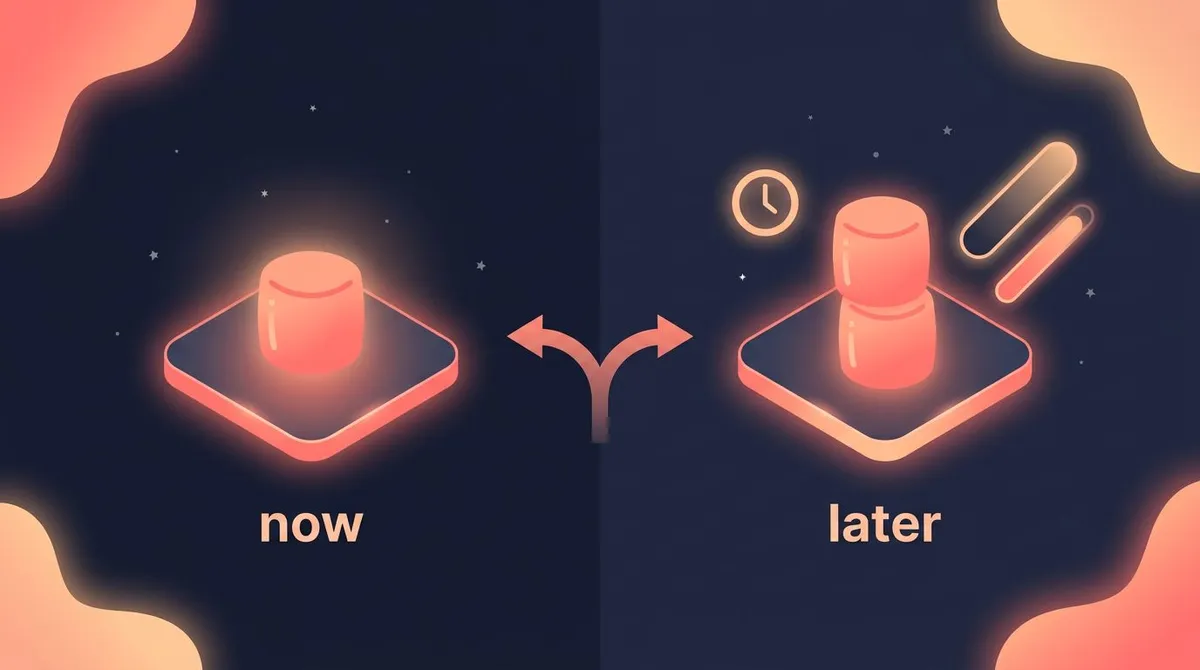
In the debate of motivation vs discipline, the short answer is that you need both, but at different stages. Motivation initiates a behavior, discipline sustains it through the boring middle, and a habit eventually replaces both. Once the action runs on autopilot, you no longer have to feel inspired or force yourself, because the behavior happens on its own.
Most people pick a side. They either wait to feel motivated, or they grind on willpower until they burn out. Both groups are right about one thing and wrong about the bigger picture. The truth is that motivation and discipline are not rivals, and asking which one wins misses how habits actually form.
This post explains what motivation and discipline actually are, why each works best at a different point, and how to move from one to the next until the habit takes over and carries the load for you.
What motivation and discipline actually are
Motivation is the drive to act. It is the internal "want" that gets you off the couch in the first place. Psychologists Edward Deci and Richard Ryan, in their Self-Determination Theory (1985), split motivation into two types. Intrinsic motivation comes from inside, when an activity is interesting or satisfying on its own. Extrinsic motivation comes from outside, through rewards, deadlines, or pressure from other people.
This matters because the two types behave differently. Intrinsic motivation tends to last longer and feel better, since the activity is its own reward. Extrinsic motivation can kickstart action, but it often fades once the reward or pressure disappears. Deci and Ryan also found, in a meta-analysis of 128 experiments, that piling external rewards onto something you already enjoy can crowd out the intrinsic drive, which is one reason bribes and threats are a shaky foundation for any habit. Either way, motivation is a feeling, and feelings move.
That movement is the catch. You cannot summon motivation on demand, and you cannot store it for the day you need it most. It rises with novelty, a fresh goal, or a burst of inspiration, then it drains as the task becomes routine. This is normal and expected, not a personal failing, but it does mean motivation makes a poor engine for anything you want to do every single day.
Discipline is different. Roy Baumeister, who spent decades studying willpower and self-regulation, describes discipline in his book Willpower (2011) as the capacity to override an impulse and act in line with a goal. It is not a mood. It is the skill of doing the thing even when the feeling to do it is gone.
Baumeister's research also frames willpower as a limited resource that can be drained by use, much like a muscle that tires within a session but grows stronger with training over time. Later large replication attempts have struggled to reproduce that depletion effect, so treat the tank as a useful metaphor rather than a hard limit. That has two practical consequences. First, you should not expect raw discipline to power an unlimited number of hard choices in a single day. Second, the less a behavior leans on willpower, the more reliably it will survive your worst days.
In short, motivation asks "do I want to?" and discipline asks "what did I decide to do?" One depends on how you feel right now. The other depends on a commitment you made earlier. That single difference explains why discipline carries more weight when you want to be more disciplined over the long run.
Motivation vs discipline vs habit, side by side
Here is how the three forces compare across the traits that matter for building habits.
| Trait | Motivation | Discipline | Habit |
|---|---|---|---|
| Trigger | A feeling or reward | A decision and rule | A context cue |
| Decay/durability | Fades fast | Holds, but tires | Durable, self-sustaining |
| Energy cost | Low at first | High, draws on willpower | Near zero |
| Predictability | Unreliable | Reliable while you have it | Highly predictable |
| Scalability | Hard to scale | Limited by daily reserves | Scales freely |
| Role in habit-building | Starts the behavior | Carries the behavior | Replaces both |
The pattern is clear. Motivation is cheap but unreliable. Discipline is reliable but expensive. A habit is the only one that is both reliable and cheap, which is why it should always be the destination.
The 3-stage progression: motivation → discipline → habit
Here is the core idea most people miss. Motivation and discipline are not two camps you choose between. They are two stages in a single progression that ends in habit.
Treating it as a binary is the mistake. "I'm a motivation person" or "I'm a discipline person" both assume you are stuck with one tool forever. In reality, the same behavior moves through all three stages over time, and each stage needs a different force.
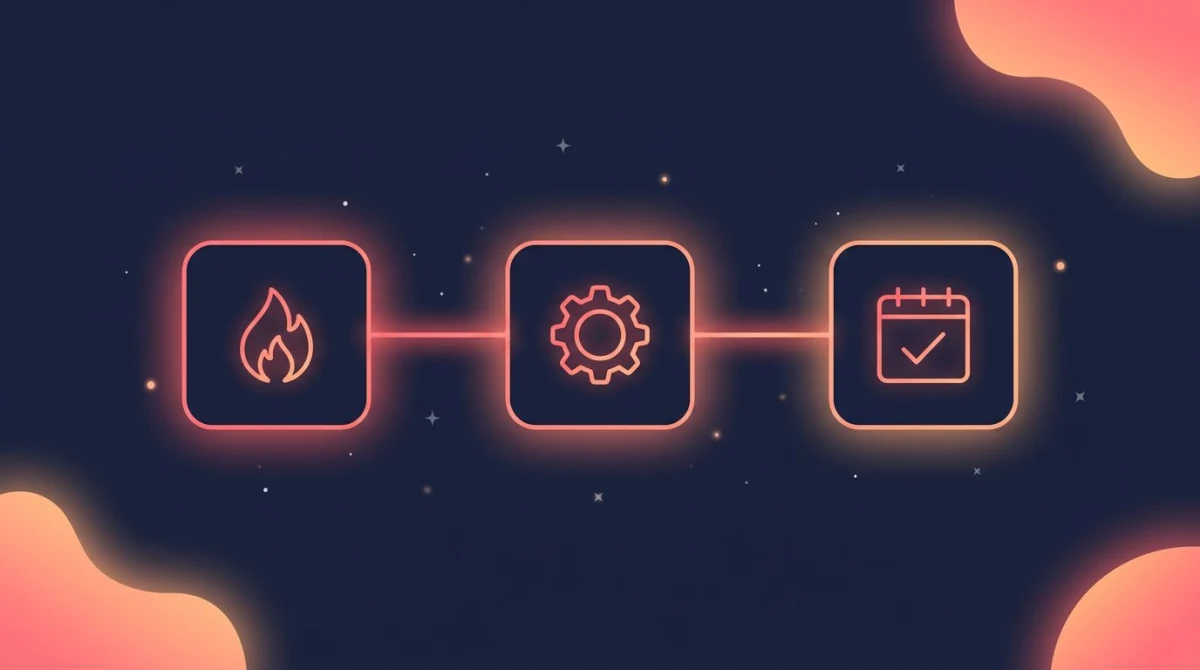
- Stage 1: Motivation starts the engine. You feel inspired, you decide, and you begin. This stage is short and you should expect it to fade. Its only job is to get you moving.
- Stage 2: Discipline carries you through the dip. After the novelty wears off and before the behavior feels natural, there is a gap. This is where most people quit, because they wait for motivation that is not coming back. Discipline is what bridges that gap.
- Stage 3: Habit makes it automatic. Once the behavior is wired to a cue, it stops costing willpower. You do it without debating it.
The trap is the dip in stage 2. People expect motivation to return and rescue them. It rarely does. The skill is not finding more motivation, it is recognizing that motivation already did its job, and now it is discipline's turn. If you understand this handoff, you stop blaming yourself for not "feeling it" and you start relying on systems instead. That shift is also the foundation of lasting habit formation.
Seeing the progression this way also changes how you measure progress. In stage 1, success is simply starting. In stage 2, success is showing up on the days you do not want to, because those are the reps that build the habit. In stage 3, success is barely noticing you did the thing at all. If you judge stage 2 by how motivated you feel, you will always conclude you are failing, when in fact a dull, joyless repetition is exactly what the stage is supposed to feel like.
How to switch from motivation to discipline
The handoff from motivation to discipline does not happen by accident. You have to engineer it. These seven tactics, all grounded in behavior-change research, lower how much willpower the behavior costs so you can keep going when the feeling is gone.
- Use implementation intentions. Decide the exact when and where in advance, in the form "When situation X happens, I will do Y." Research on implementation intentions shows that pre-deciding the trigger sharply raises follow-through, because you remove the in-the-moment negotiation. "I'll exercise more" becomes "When I finish my morning coffee, I do ten pushups."
- Reduce activation energy. The harder a behavior is to start, the more motivation it demands. Shrink the first step until it is almost too small to skip, which is the heart of the two-minute rule. Lay out your gym clothes the night before, or open the document before you close your laptop, so tomorrow's start is nearly free.
- Design your environment. Your surroundings either fight you or carry you. Put the cue for a good habit in plain sight and add friction to the bad one. Keep the book on your pillow and the phone charging in another room. A good environment means you spend less willpower resisting temptation, which leaves more for the behavior you actually care about.
- Schedule it like an appointment. A vague intention competes with everything else in your day and usually loses. A fixed time on the calendar turns the behavior from optional into expected. Protect that slot the way you would protect a meeting.
- Anchor it to identity. Discipline gets easier when the action reflects who you believe you are. Instead of "I'm trying to write," you tell yourself "I'm a writer, and writers write today." This is the engine behind identity-based habits, where each repetition is a vote for the person you want to become.
- Add accountability. A commitment someone else can see is harder to abandon quietly. Tell a friend, join a group, or report your progress to someone who will notice if you stop. The mild social cost of skipping often outweighs the comfort of skipping.
- Track it. Recording each completion gives you a visible record that builds momentum. A chain of marked days is something you do not want to break, and that pull keeps you going on low-energy days. Tracking also turns a vague sense of "am I doing this?" into a clear yes or no, which is one of the simplest ways to be more productive.
How discipline becomes habit
Discipline is not meant to last forever. It is the scaffolding you use while the habit hardens underneath. The goal is to reach the point where the behavior no longer needs a decision at all.
How long does that take? Phillippa Lally's study at University College London (2009) followed people forming new daily habits and found a median of 66 days for a behavior to become automatic. The range was wide, from 18 to 254 days, depending on the person and how complex the action was. So the honest answer is that it varies, and anyone promising a fixed number like 21 days is overselling it.
If you want a deeper look at why willpower behaves the way it does during this stretch, Kelly McGonigal's TEDx talk on the science of willpower is a worthwhile companion:
What actually drives the shift is repeating the behavior in a stable context. Wendy Wood, in Good Habits, Bad Habits (2019), shows that habits form when an action gets reliably tied to a recurring cue, like a time, place, or preceding event. Her research also estimates that roughly 43% of our daily actions are habitual, performed without conscious choice. That is the autopilot you are aiming for.
This is also where the right tools quietly help. Visual feedback like streaks and a calendar heatmap externalizes your discipline, so the record carries some of the load instead of your willpower, which is part of what a tracker like HabitBox is built to do. The more you can see your progress, the less you have to feel inspired to keep it going.
Two things speed up the move from discipline to habit. The first is consistency of cue: doing the behavior after the same trigger every time, rather than at a different moment each day. A wandering trigger forces your brain to keep deciding, which keeps the action in the willpower zone. The second is consistency of repetition itself. A missed day now and then will not undo your progress, but long, irregular gaps reset the wiring and push the start line back. Aim for steady and frequent over perfect and rare.
When motivation is the right tool
None of this means motivation is the weak option. It is the right tool for a specific job.
Motivation shines when the path is not fixed yet. Creative work, exploration, and brainstorming all benefit from the energy and openness that motivation brings. You cannot schedule a breakthrough the way you schedule pushups.
Motivation is also the right tool for deciding direction. When you are choosing which goals to chase, which projects to start, or whether a habit still fits your life, you want to consult how you feel, not override it. Discipline executes a decision well, but it is bad at making the decision in the first place.
There is one more place motivation earns its keep: as a signal worth listening to. If a habit has become a daily grind that you dread for weeks on end, that low motivation may be telling you the goal no longer fits, or that the behavior is wrong for you. Discipline will happily march you off a cliff, because it does not question the destination. A dip in motivation is normal in stage 2, but a sustained, deep resistance is worth investigating rather than overriding.
The mistake is using motivation for the wrong stage. Trust it to start things and to set direction. Do not trust it to carry you through 66 days of repetition. Match the tool to the stage and both forces work for you instead of against you.
Putting it together
If you take one thing from all of this, let it be the sequence. Motivation gets you off the starting line and helps you choose a direction worth pursuing. Discipline is the bridge across the boring middle, where the feeling is gone but the behavior still needs to happen. Habit is the destination, the point where the action runs on a cue instead of on effort.
So the next time you catch yourself waiting to feel ready, remember that the feeling is stage 1, and it has already done its part. What carries you now is a decision you made earlier, made easier by tiny first steps, a clean environment, a fixed schedule, and a visible record of your progress. Repeat that long enough in a stable context and the habit takes over.
Stop asking which is better. Ask which stage you are in, then reach for the tool that stage needs.
Motivation vs Discipline FAQ
What's the difference between motivation and discipline?
Motivation is the feeling or drive to act, and it depends on your mood, rewards, or inspiration in the moment. Discipline is the ability to act on a prior decision even when that feeling is absent. Motivation starts behaviors, while discipline sustains them after the motivation fades.
Is self-discipline genetic or learned?
Discipline behaves much more like a skill than a fixed trait. Baumeister's work on self-regulation frames it as a capacity you can strengthen through practice and protect by reducing temptation around you. While people differ in their starting point, the research treats discipline as something you build, not something you are simply born with or without.
How long until a habit replaces discipline?
Lally's 2009 study found a median of about 66 days for a new behavior to become automatic, with a range from 18 to 254 days. The exact time depends on the person, the behavior's difficulty, and how consistently you repeat it in the same context. Expect it to take longer than the popular 21-day myth suggests.
What should I do when I have no discipline and no motivation?
Shrink the task until it is almost effortless to start, then do only that. Reducing the activation energy, like committing to just two minutes, often gets you moving when both motivation and discipline are empty. Pair this with environment design and a fixed schedule so the behavior depends on your setup rather than your state of mind.
Can you have both motivation and discipline?
Yes, and the best results come from using them together at the right stages. Let motivation get you started and help you choose your direction, then hand off to discipline to carry you through the repetitive middle. When you do this consistently, the behavior eventually turns into a habit that needs neither one.

Mira Hartwell
Editor, HabitBoxEditor at HabitBox. Writes about habit science and productivity, grounding every post in named research (Lally, Wood, Walker, Huberman) instead of recycled advice. Read full bio →