How to Break a Habit: 7-Step Method (2026)
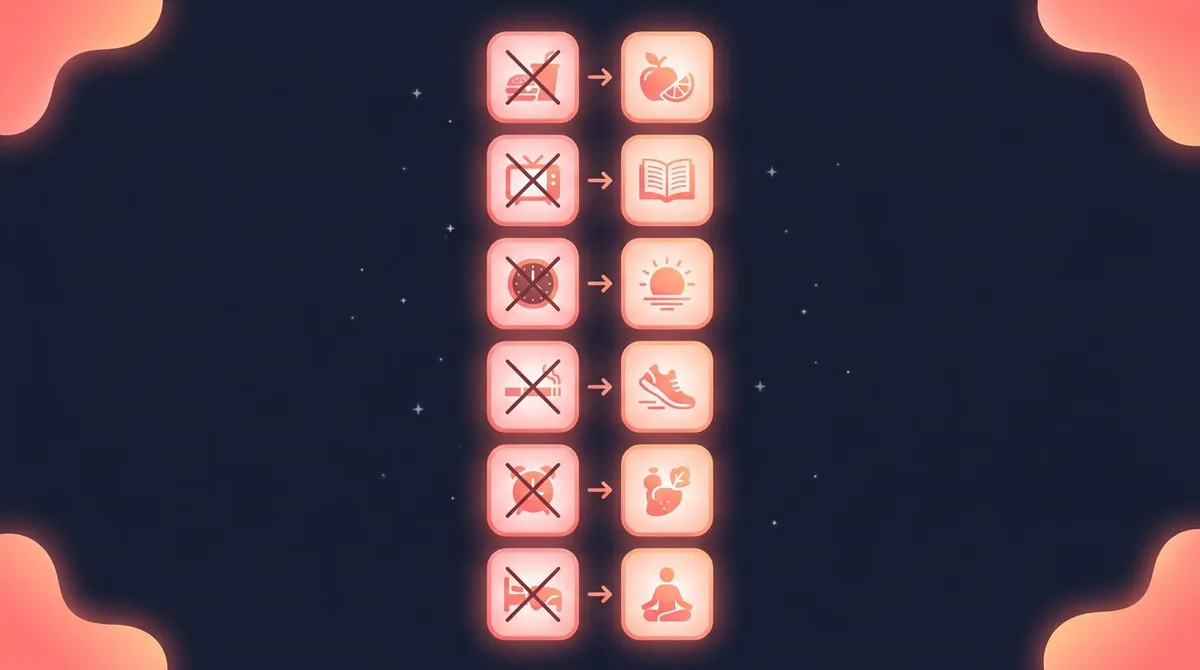
Here is how to break a habit: find the cue that triggers it, swap in a new routine that delivers a similar reward, and make the old behavior harder to start. This takes a median of about 66 days, though one well-known study found a range of 18 to 254 days (Lally, 2009). The 7-step method below works by disrupting the habit loop one piece at a time instead of relying on willpower alone.
Why habits are hard to break
A habit is not a character flaw. It is a small automatic program your brain runs to save effort. Charles Duhigg describes this program as the habit loop in The Power of Habit (2012): a cue triggers a routine, and the routine delivers a reward. Repeat that loop enough times and your brain stops deciding. It just runs.
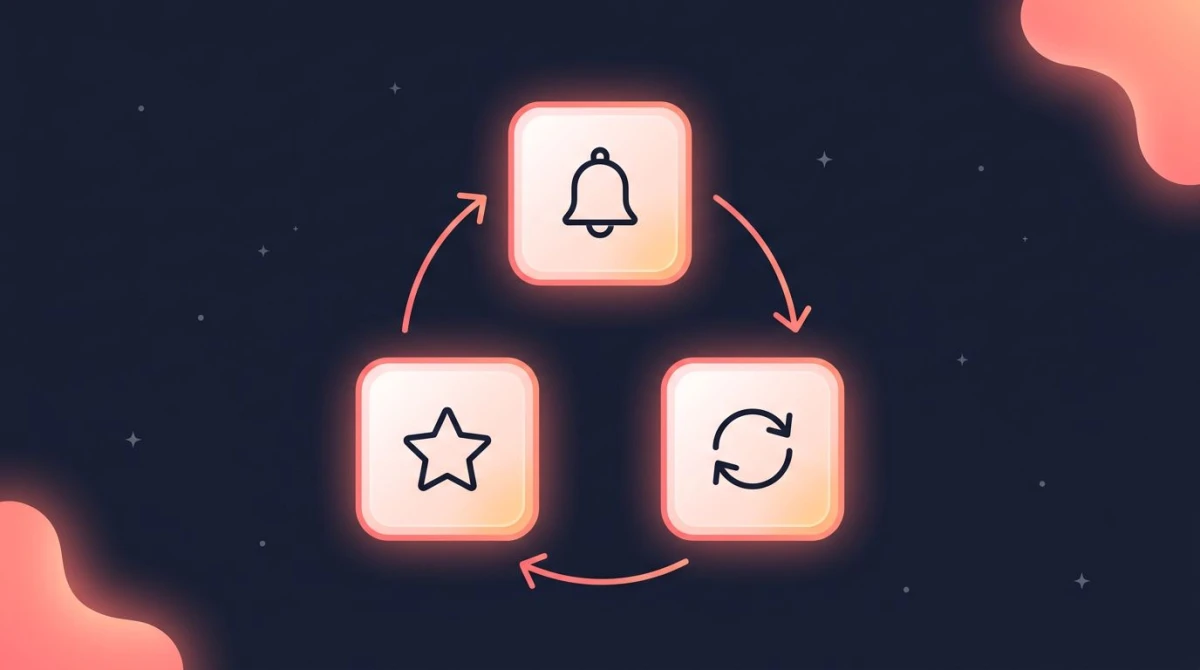
The habit loop: a cue triggers a routine that delivers a reward. You break a habit by disrupting one of the three, not by erasing the loop.
That automation has a physical home. Neuroscience research ties habits to the basal ganglia, a set of structures deep in the brain that handle routine, learned behavior. Once a behavior moves into that system, it no longer needs much conscious thought, which is exactly why it can feel so resistant to stop on demand even when you genuinely want to change it. The deliberate, effortful part of your brain is barely involved anymore, so simply deciding to stop is rarely enough on its own.
So the goal is not to delete the loop. You cannot easily erase a pattern your brain has learned. The goal is to interrupt it. When you change the cue, the routine, or the reward, the old loop stops firing the way it used to. That is what each of the seven steps below is built to do.
The 7-step method to break a habit
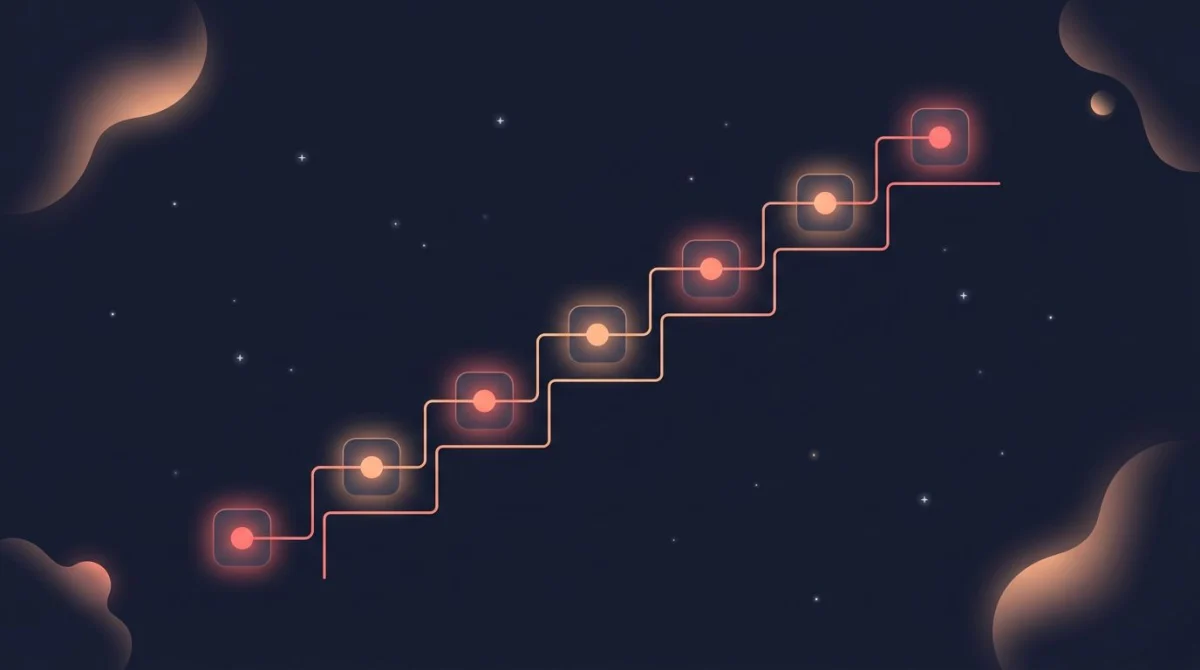
Each step targets one part of the loop or the environment around it. You do not need to do all seven perfectly. Work through them in order and you will weaken the habit from several angles at once.
| Step | What it does | Example |
|---|---|---|
| 1. Identify the cue | Finds the trigger that starts the loop | Notice you reach for your phone the second you sit down |
| 2. Diagnose the reward | Names what the habit actually gives you | Realize scrolling relieves boredom, not curiosity |
| 3. Choose a replacement | Swaps in a new routine for the same reward | Read two pages of a book instead of scrolling |
| 4. Add friction | Makes the bad habit harder to start | Move the app off your home screen |
| 5. Use an if-then plan | Pre-decides your response to the cue | "If I sit on the couch, then I pick up the book" |
| 6. Track honestly | Externalizes accountability | Mark a calendar each day you skip the habit |
| 7. Plan for relapse | Treats a slip as data, not failure | After one bad day, restart the next morning |
Step 1: Identify the cue
Most habits are triggered by one of a few categories: a time of day, a place, an emotional state, the presence of other people, or the action that came immediately before. Duhigg argues that you cannot meaningfully change a routine until you have first pinned down the precise thing that sets it off. For a few days, do nothing except observe yourself with curiosity. When the urge hits, note where you are, what time it is, who you are with, and how you feel in that moment.
For example, you might notice your evening snacking always starts when you open the fridge after a stressful call. The cue is not hunger. It is the stress plus the kitchen.
Step 2: Diagnose the reward
Habits stick because they pay off in some way. BJ Fogg, in Tiny Habits (2019), stresses that behavior follows what feels good in the moment, not what is good for you long term. So ask what the habit actually delivers. Relief? Distraction? A hit of energy? Connection?
Test it. If you think you snack for energy, try a glass of water or a short walk instead and see if the urge fades. The real reward is whatever makes the craving go away.
Step 3: Choose a replacement behavior
You rarely beat a habit by leaving a blank space where it used to be. Wendy Wood, in Good Habits, Bad Habits (2019), shows that habits are sticky because they are cued by your environment, so the durable fix is to give the same cue a new, better response. Keep the cue and the reward, but change the routine in the middle.
If the cue is stress and the reward is relief, a two-minute breathing exercise can stand in for the cigarette or the snack. The replacement should be easy and deliver a similar payoff, or it will not hold.
Step 4: Add friction
James Clear, in Atomic Habits (2018), frames this as making a bad habit harder and less visible. Every extra step between you and the behavior lowers the odds you do it. Hide the trigger, add a delay, or put a physical barrier in the way.
Log out of the app after each use. Keep junk food out of the house instead of trusting willpower at 9 p.m. Park the car so the gym is on your way home. Small bits of friction add up.
Step 5: Use implementation intentions
Peter Gollwitzer's research on implementation intentions shows that a specific "if-then" plan beats a vague goal. Instead of "I will scroll less," you decide in advance: "If I pick up my phone out of boredom, then I will open my reading app." You are pre-loading the decision so you do not have to make it in the heat of the moment.
Write the plan down in the exact form: If cue], then [new routine]. The more concrete the cue and the response, the more reliably it fires. This is also the backbone of [identity-based habits, where each small choice reinforces who you want to become.
Step 6: Track honestly
Phillippa Lally's work on habit formation underlines that consistency over time is what changes behavior, and you cannot judge consistency without a record. Marking each day you skip the habit turns a fuzzy sense of "I think I'm doing better" into a clear picture you can act on.
A visual streak or calendar in HabitBox externalizes that accountability, so a missed day is obvious instead of easy to forget. The key word is honest: log the slips too, because hiding them only hides the pattern you are trying to fix.
Step 7: Plan for relapse
G. Alan Marlatt's relapse-prevention model treats a slip as expected, not catastrophic. If you assume you will have an off day, you can plan your response now instead of spiraling later. Decide in advance: one slip means you restart at the next opportunity, full stop.
A slip is data rather than a verdict on your character. It tells you which cue is still stronger than your current plan, or which replacement behavior is too weak to satisfy the reward you are chasing. Use that information to adjust the plan deliberately, and then get back on the very next rep instead of waiting for a fresh Monday.
What to expect: a week-by-week timeline
Lally's research suggests new patterns settle in over weeks, not days, with a median near 66 days and a wide range of 18 to 254. Your timeline depends on the habit and on you, so treat this as a rough map, not a deadline.
| Timeframe | What's happening | What to do |
|---|---|---|
| Week 1 | Cues still fire constantly; urges feel strong | Track every slip and lock in your if-then plan |
| Week 2 | The replacement starts to feel familiar | Add more friction to any cue that still wins |
| Week 4 | The new routine wins more often than not | Keep tracking; do not assume you are done |
| Week 8 | You are near the median 66-day mark | Expect the routine to feel more automatic |
| Week 12 | The pattern is well established for many people | Stay consistent; protect the new default |
3 worked examples
Doomscrolling
The cue is usually downtime plus your phone within reach, and the reward is escape from boredom or stress. Swap the routine: when you reach for the phone, open a book or a short walk instead. Add friction by deleting the app from your home screen and logging out, so the next pull-to-refresh takes real effort.
Mindless snacking
The cue is often a place and a feeling, like standing in the kitchen after a hard call, and the reward is comfort, not hunger. Replace the snack with a glass of water and a two-minute stretch, which delivers a similar reset. Add friction by keeping trigger foods out of the house, so the easy default becomes the better one.
Smoking
The cue is frequently a transition moment, a break, a coffee, or a drive, and the reward is relief and a pause. Choose a replacement that fills the same gap, such as a short breathing routine or a brisk walk. Add friction by not carrying cigarettes and changing the routine around the cue, so the old sequence no longer flows automatically.
What to do after a slip
A slip is not the end of the project. The real danger is the abstinence-violation effect that Marlatt described: after one lapse you decide you have blown it, so you might as well keep going. That story turns a single bad day into a lost week.
Catch the thought and rewrite it. One slip is one slip, not proof that you cannot change. Look at what triggered it, tighten the friction or the if-then plan around that cue, and restart at your very next opportunity.
For a research-backed take on riding out the urge itself, psychiatrist Judson Brewer's TED talk on using curiosity instead of willpower to break a bad habit is a sharp, 10-minute companion to this method:
Getting back on the next rep is the whole skill. The people who break habits are not the ones who never slip. They are the ones who slip and return quickly, the same mindset behind how to be more disciplined over the long run.
How to Break a Habit FAQ
How long does it take to break a habit?
There is no single number. Lally's 2009 study found habit formation took a median of about 66 days, with a range from 18 to 254 days. Breaking a habit follows a similar pattern, so plan for weeks of consistency rather than a quick fix.
Can I quit a habit cold turkey?
You can, and for some habits it works. But abrupt stops leave the cue and reward in place, so the urge stays strong. Whether you quit cold or taper, you still need a replacement behavior and added friction to keep the old loop from firing again.
What should I do if I slip up?
Treat the slip as data, not failure. Marlatt's relapse-prevention work warns against the abstinence-violation effect, where one lapse spirals into giving up. Note what triggered it, adjust your plan, and restart at the next opportunity.
Do habit trackers help you break habits?
They help by making your progress visible and honest. A streak or calendar externalizes accountability, so a missed day stands out instead of slipping past unnoticed. Tracking also shows you which cues still win, which tells you where to add friction.
What is the hardest habit to break?
Habits with strong, frequent cues and fast rewards tend to be the toughest, since the loop gets reinforced many times a day. The fix is the same regardless of difficulty: identify the cue, swap the routine, add friction, and stay consistent. For a deeper breakdown of the method, see our Atomic Habits summary.

Mira Hartwell
Editor, HabitBoxEditor at HabitBox. Writes about habit science and productivity, grounding every post in named research (Lally, Wood, Walker, Huberman) instead of recycled advice. Read full bio →