How to Stop Snacking: 8 Habit Swaps That Work (2026)
Here is how to stop snacking: mindless snacking is a cue-driven habit loop, not a willpower failure. Identify the cue that sets it off — boredom, stress, the 3pm slump, or simply walking past the kitchen — then keep the reward but change the routine. A 10-minute delay can defuse many urges, and the 8 habit swaps below target a specific cue each, so you are fixing the trigger instead of fighting the craving.
If you have ever finished a bag of chips without deciding to, or found yourself at the fridge ten minutes after dinner, you are not weak. You are running a habit loop. The good news is that loops are made of parts you can take apart one at a time.
Why you snack when you're not hungry
Most snacking has nothing to do with hunger. It is automatic behavior triggered by a cue, and your brain runs it before you consciously choose anything.
Charles Duhigg, in The Power of Habit (2012), describes every habit as a three-part loop: a cue (the trigger), a routine (the behavior), and a reward (the payoff your brain wants). Snacking fits this perfectly. The cue might be opening your laptop; the routine is grabbing a handful of something; the reward is a small hit of relief or stimulation.
Here's the key insight: the reward you are chasing is often not food at all. Boredom snacking rewards you with a break from monotony. Stress snacking rewards you with a moment of calm. Once you know the real reward, you can deliver it without the snack.
Wendy Wood, in Good Habits, Bad Habits (2019), found that roughly 43% of our daily actions are habits performed in the same context each day — driven by environmental cues, not deliberate choices. That is why snacking clusters around the same times and places. Your kitchen, your couch, and your 3pm slump are doing the deciding for you.
Find your snack cue
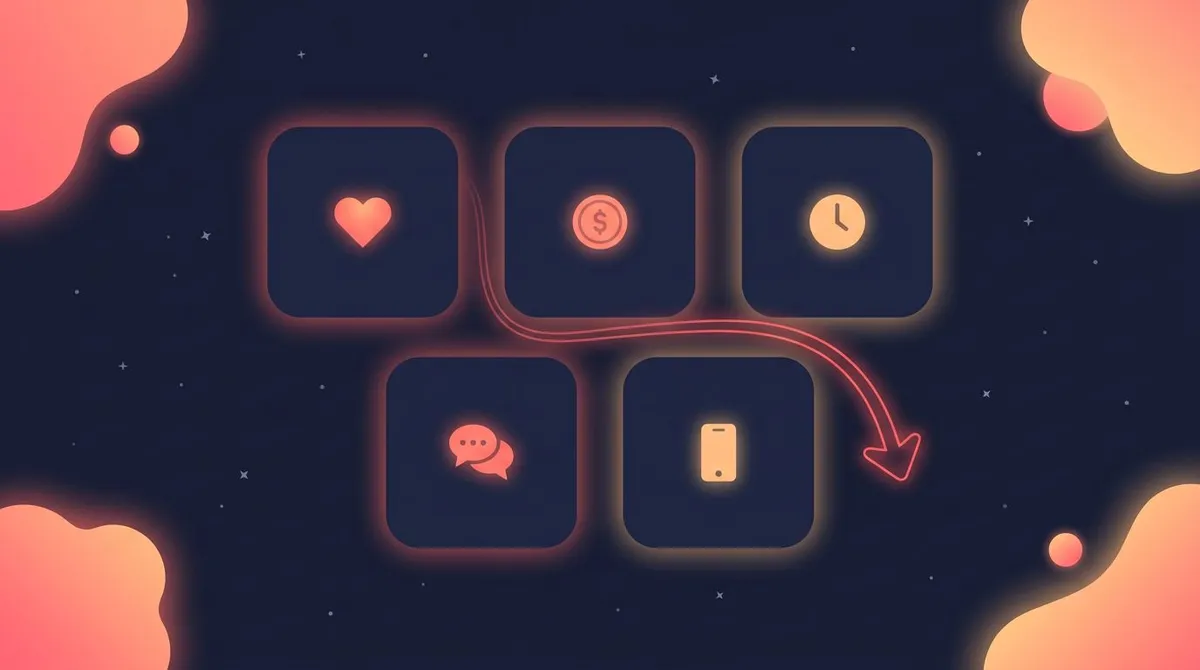
You cannot swap a behavior you have not pinned down. For three days, notice the moment before you reach for a snack. Where are you? What just happened? How do you feel? Most people find their snacking falls into four buckets: boredom, stress, time-of-day energy dips, and location.
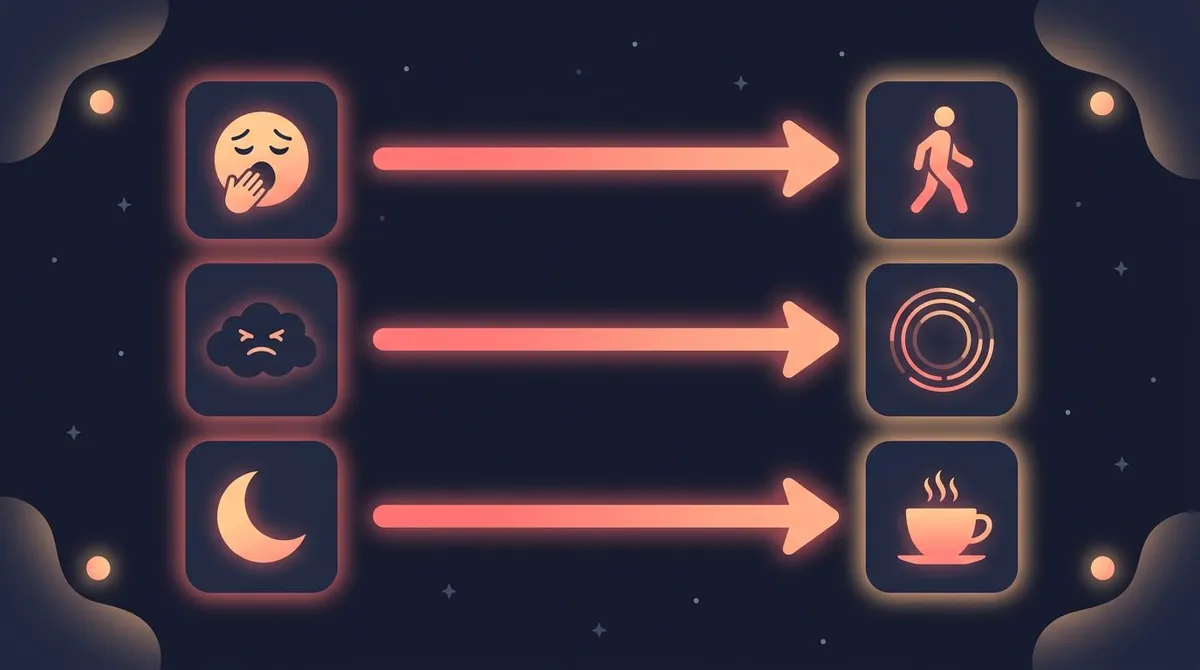
The table below maps the most common cues to a swap that keeps the reward and drops the snack.
| Your snack cue | Why it fires | The swap |
|---|---|---|
| Boredom (scrolling, a dull task) | You want stimulation, not food | Keep hands busy: a 2-minute walk, a glass of water, a quick stretch |
| Stress (deadline, hard email) | You want a moment of calm | Box breathing for 60 seconds, then decide if you're hungry |
| 3pm energy dip | Blood sugar and focus drop mid-afternoon | A real food pairing (protein + fiber), not a quick sugar hit |
| Location (walking past the kitchen) | The environment is the trigger | Reroute your path; keep trigger foods out of sight |
| Nighttime / after dinner | Wind-down cue, often habit not hunger | A fixed wind-down ritual: tea, brush teeth, signal "kitchen closed" |
A quick way to test whether it is a cue or real hunger: ask "would I eat an apple right now?" If the answer is no, you are not actually hungry — you are answering a cue, and a swap will work better than a snack. If the answer is yes, eat something with protein and fiber and move on. This one question filters most mindless snacking from genuine need in a couple of seconds.
Once you can name your top one or two cues, the swaps below become targeted instead of generic.
The 8 habit swaps to stop snacking
Each swap below attacks a specific part of the loop. You do not need all eight. Pick the two that match your most common cues and run them for two weeks.
1. Keep a glass of water at your desk
Thirst and boredom both masquerade as hunger. Before any snack, drink a full glass of water and wait two minutes. Often the urge passes because the real cue was a dry mouth or a need to pause. Keeping the glass already filled removes the friction — the healthy routine becomes the easy one.
2. Reroute the kitchen walk
If you snack every time you pass the kitchen, the kitchen is your cue. James Clear, in Atomic Habits (2018), calls this "make it invisible" — the most reliable way to break a bad habit is to remove its trigger from view. Take a different path to your bedroom. Move the snack jar off the counter into an opaque container in a high cupboard. Out of sight genuinely is out of mind.
3. Pre-portion instead of eating from the bag
Eating straight from a large container removes your only natural stopping point. Portion a snack into a small bowl, then put the bag away before you start. This does not forbid the snack — it just gives the routine an end. The decision happens once, at the cupboard, instead of repeatedly with every handful.
4. Use the 10-minute delay rule
When an urge hits, set a 10-minute timer and tell yourself you can absolutely have the snack when it goes off. Many urges ease within that window once the cue that triggered them has moved on. A simple timer — even the two-minute rule approach scaled up — gives the craving room to pass without a flat "no" that backfires.
5. Replace the reward, not just the routine
This is the swap most diet advice misses. If you snack for calm, a celery stick will not satisfy you, because calm was the reward — not crunch. Match the real reward instead. Bored? Take a two-minute walk. Stressed? Breathe. Lonely? Text a friend. When the genuine reward is delivered, the food urge often dissolves. This is the core of how to break a habit rather than just suppress it.
6. Fix the 3pm dip with food, not a snack
A genuine mid-afternoon energy crash is your body asking for fuel, and a sugary snack only spikes and crashes you again. The fix is upstream: a lunch with protein and fiber holds your energy longer, so the 3pm cue never fires. If you are still flagging, pair a real snack — Greek yogurt and berries, apple and peanut butter — rather than a lone fast carb. This is a hunger cue, so honor it; just feed it properly.
7. Build a nighttime wind-down swap
After-dinner snacking is usually a wind-down ritual, not hunger. Replace the ritual with a different closing routine: a cup of herbal tea, brushing your teeth early (a strong "kitchen closed" signal), or a 10-minute reading habit. You are giving the evening a new cue-routine-reward loop that does not run through the pantry. Anchoring it to an existing routine works the way implementation intentions do — "after I clear the dinner plates, I make tea." If after-dinner snacking is stubborn, a defined eating window can turn "kitchen closed" into a fixed time instead of a nightly negotiation — our free intermittent fasting timer counts down a 16:8 or 18:6 window so the pantry is simply off-limits after a set hour.
8. Track the urge, not the calories
This is the swap that ties the others together. Instead of counting calories, count urges — every time you feel the pull to snack, log it, whether or not you act on it. Tracking the urge does two things: it makes the invisible loop visible, and it turns awareness into a streak you can build. Most people find that simply logging the urge creates a half-second pause — long enough to choose.
How tracking the urge breaks the loop
Counting calories tracks the symptom. Tracking the urge tracks the cause — and the cause is where the loop lives.
When you log every urge, patterns surface fast. You will see your snacking clusters at 3pm on workdays, or every night after the kids are down. That data tells you exactly which swap to deploy and when. You stop guessing and start aiming.
There is a second benefit that diet tracking never gives you: self-compassion. Counting calories tends to score the day as a pass or a fail, which fuels the restrict-then-binge cycle. Counting urges noticed has no failure state — even an urge you gave in to still counts as an urge you caught. That reframe matters, because shame is itself a stress cue that triggers more snacking. Tracking the urge keeps you curious about your patterns instead of judgmental about your choices.
A count-based habit tracker makes this practical. In HabitBox, you can set up a count habit like "snack urges noticed" and tap once each time one hits. Watching the daily count fall — and the streak of "urge noticed, snack skipped" days grow — gives your brain the very reward (progress, a small win) that the snack used to provide. That is the loop working for you.
This is why awareness-based habits tend to ripple outward. Building one keystone habit of noticing your cues often improves sleep, focus, and other keystone habits at the same time, because you are training the underlying skill of catching automatic behavior before it runs.
Stopping snacking is not about a stronger "no." It is about a smarter loop. Find the cue, keep the reward, change the routine — and give yourself a way to see the progress.
How to stop snacking FAQ
How do I stop snacking at night?
Treat nighttime snacking as a wind-down ritual, not hunger. Build a replacement closing routine — herbal tea, brushing your teeth early as a "kitchen closed" signal, or a short reading habit. Keep trigger foods out of sight, and use a 10-minute delay before any after-dinner snack. The urge usually fades once the evening has a different cue to settle into.
Why do I snack when I'm not hungry?
Because snacking is often a habit loop, not a hunger signal. A cue (boredom, stress, a time of day, or walking past the kitchen) triggers an automatic routine, and the reward your brain wants is usually relief or stimulation rather than food. Wendy Wood's research found about 43% of daily behavior is cue-driven habit, which is why non-hungry snacking clusters around the same times and places.
Is snacking a bad habit?
Not inherently. A planned snack that fuels a genuine energy dip is fine. The problem is mindless snacking — eating on autopilot in response to a cue rather than hunger. The goal is not to ban snacks but to make eating a decision again, so you snack when your body needs fuel and skip it when the trigger is just boredom or stress.
How long does it take to stop snacking?
Expect a few weeks, not a few days. New habits take a median of about 66 days to feel automatic (Lally et al., 2010), but most people notice the strongest cravings ease within the first two weeks of consistently applying a cue-specific swap and the 10-minute delay. Pick one or two swaps and run them long enough for the new routine to take hold.
Does tracking help stop snacking?
Yes — especially tracking the urge rather than calories. Logging every urge to snack makes the hidden habit loop visible and creates a half-second pause that lets you choose. Watching the count drop and a streak grow delivers a small reward your brain used to get from the snack, which reinforces the new behavior instead of the old one.

Mira Hartwell
Editor, HabitBoxEditor at HabitBox. Writes about habit science and productivity, grounding every post in named research (Lally, Wood, Walker, Huberman) instead of recycled advice. Read full bio →