Keystone Habits: 7 That Cascade Change (2026)
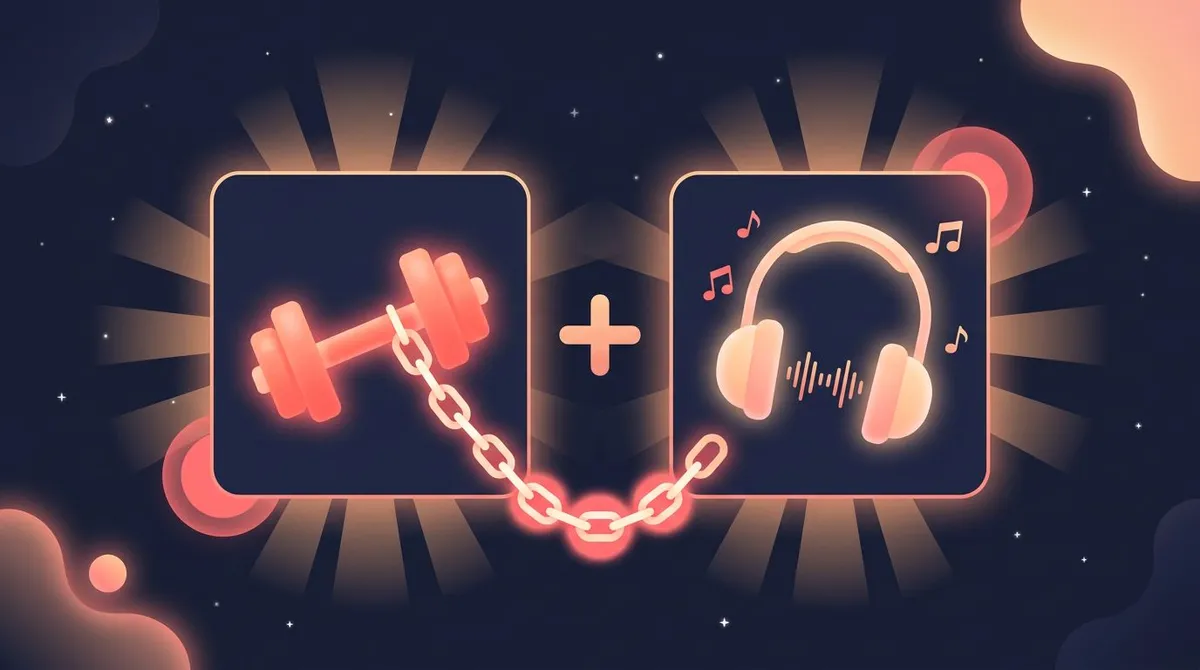
A keystone habit is a single behavior whose adoption produces unintended positive spillover into other areas of your life. The term comes from Charles Duhigg's The Power of Habit (2012). This is a list of the 7 keystone habits with the strongest research behind them, ranked by evidence quality, plus a 4-question diagnostic for finding your own. For the broader picture of how any habit forms, start with our habit formation guide — this article assumes that base.
TL;DR
A keystone habit is one whose installation triggers small wins that cascade into other behaviors. The top 3 by evidence strength: regular exercise (cascades to sleep, diet, mood, cognition — Erickson 2011; Harvard Health 2014), consistent sleep timing (cascades to mood, focus, eating, recovery — Walker 2017), and short daily meditation (cascades to emotional regulation, attention, sleep — Davidson lab and Goyal 2014). The other four worth knowing: family meals, making your bed, journaling, and daily reading. Pick one and run it for 60 days before adding a second.
Quick answer: Keystone habits are single habits whose installation produces ripple effects across other areas of life (Duhigg, 2012). The three most research-backed: exercise, sleep regularity, and meditation. Find yours by asking which habit, if held for 60 days, would naturally make 3 other habits easier. That habit is your keystone.
What makes a habit "keystone"?
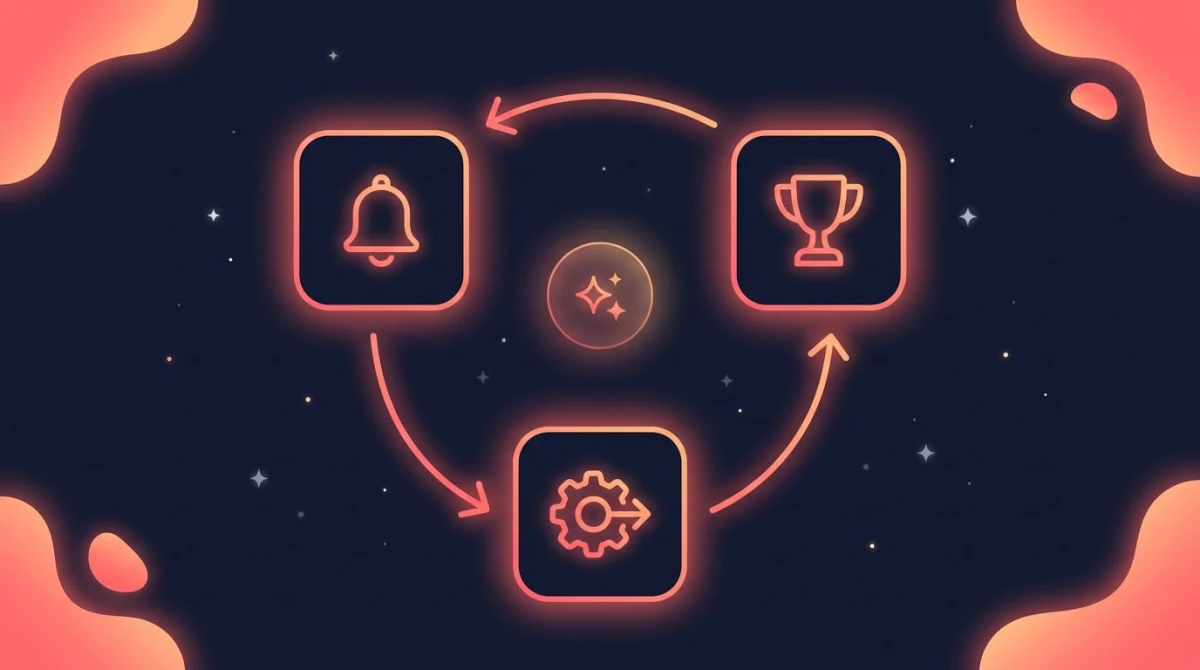
Duhigg's definition has three parts. A keystone habit gives you small wins. It builds new habits around it. And it gives you the energy to take on more change. Not every "good" habit is a keystone. Flossing is good. It does not ripple. A keystone habit is one that, as Duhigg puts it, "starts a process that, over time, changes everything."
The how is part mindset — a daily win lifts how you see yourself — and part body. Exercise, for example, shifts sleep, appetite, mood, and how you use time. Each new change makes the next one easier. The habits build on each other, not just on themselves.
That is the reason to find your keystone habit and run it first, rather than install 12 small ones at once. One keystone does the work of three.
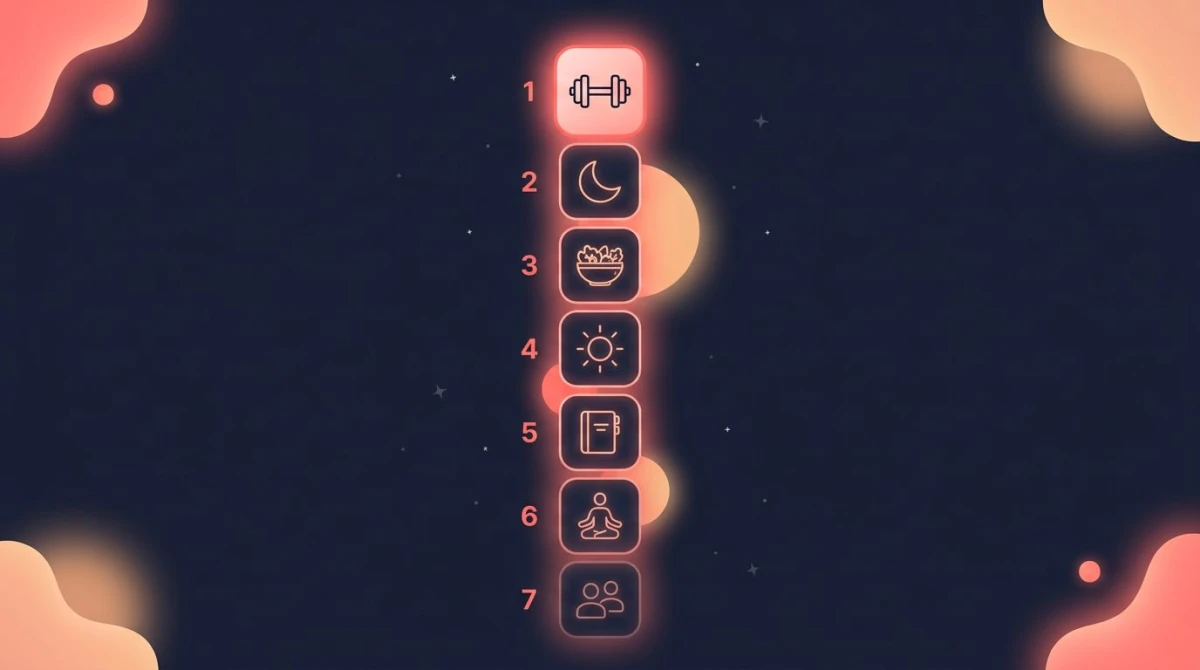
The 7 keystone habits, ranked by research strength
I am ranking by evidence quality — how robust the underlying research is and how reliable the cascade effects are across populations. The first three are well-supported. The next four are real but smaller.
1. Exercise
The strongest keystone habit by research volume. A 2011 study by Erickson and colleagues in PNAS showed that one year of moderate aerobic exercise grew the hippocampus in older adults and improved memory. The ripple effects are broad: regular exercisers sleep better, eat more vegetables, drink less alcohol, report better mood, and plan their days more deliberately. Harvard Health's piece on regular exercise and the brain sums up the cognitive cascade.
Why it ripples: movement lifts how you see yourself ("I followed through on something hard"), shifts appetite, helps you fall asleep, and lowers background stress. The downstream behaviors are not willpower choices. They follow from the body changes.
How to start small: 10 minutes a day. Walk, jog, body-weight workout — does not matter. The point is daily, not hard. See our how to make exercise a habit and morning workout routine for installation guides.
2. Sleep regularity
Matthew Walker's Why We Sleep (2017) and a decade of sleep science make the case that steady sleep timing — same bedtime and same wake time, within a 30-minute window — is the single biggest non-drug lever on thinking, mood, and metabolism. Walker's main claim is that timing beats duration. A steady 7 hours beats a messy 8.
Why it ripples: sleep timing controls hunger hormones, affects insulin, shapes mood, and decides how much energy you have for other habits during the day. Wreck sleep timing and every other habit gets harder.
How to start small: pick a fixed bedtime and wake time. Hold the wake time even on weekends. The bedtime will calibrate within two weeks. See our sleep hygiene checklist for the full setup.
3. Short daily meditation
Roughly 10 to 20 minutes a day of mindfulness practice. The Davidson lab at the University of Wisconsin and a large 2014 review by Goyal et al. in JAMA Internal Medicine show real if small effects on anxiety, depression, and pain. The gains in focus and emotion control are well-replicated.
Why it ripples: meditation trains the skill of noticing a craving without acting on it. That single skill spills into eating, drinking, social media, and reactive emails. Most "self-control" gains people credit to meditation are really gains in the gap between trigger and action.
How to start small: 5 minutes, daily, same time. An app like Insight Timer or Waking Up makes the first 30 days easier. See our how to start a meditation practice for a beginner program.
4. Family meals
Barbara Fiese's work at the University of Illinois shows children who eat regular family meals have lower rates of substance use, depression, and obesity, plus higher grades. The ripple effects extend to adults: people who eat meals at a table with others (no phones) report better digestion, slower eating, and stronger ties.
Why it ripples: family meals create a fixed cue for connection, a slower pace, and a routine that anchors the evening. They also skip a lot of the "what should I eat" decision fatigue that drives snacking.
How to start small: pick three dinners a week to commit to eating at a table with at least one other person. No phones. Build from there.
5. Making your bed
Admiral William McRaven's 2014 graduation speech made "make your bed" famous as the "first win of the day." The proof here is story-level, not from a lab, but the logic holds: a 60-second finished task at the start of the day sets up the rest of the day with a sense of "I finish things." A 2012 survey by Hunch.com found a link between bed-making and reported output, but that is not proof of cause.
Why it might ripple: a finish at minute one of the day casts an "I follow through" vote for your identity. The downstream effect is subtle but real for many people.
How to start small: make the bed every morning for 30 days. Note what changes about the room and the morning. If nothing, it is not your keystone. Move on.
6. Daily journaling
A growing body of research on expressive writing (Pennebaker; Baikie & Wilhelm 2005) shows that writing about thoughts and feelings for 15 to 20 minutes a day lowers anxiety, lifts immune markers, and sharpens choices over time. The ripple also reaches task planning, since writing pulls the to-do list out of your head.
Why it ripples: journaling builds the skill of watching your own thoughts. That skill carries over to most other habits. People who journal tend to choose more carefully, including which other habits to install.
How to start small: 3 lines a day — what happened, what you're feeling, what you'll do tomorrow. Five minutes. See our how to start journaling for a structured starter.
7. Daily reading
Research on "cognitive reserve" (Bennett et al., Rush University) shows that lifelong mind-engaging tasks — including reading — are tied to lower dementia risk and slower age-related decline. The ripple is slower than for exercise but real. Daily readers tend to have larger vocabularies, better verbal reasoning, and a wider frame for life choices.
Why it ripples: reading is also a screen-swap habit. The 30 minutes of nightly reading is 30 fewer minutes of scrolling, which helps sleep and lowers evening worry.
How to start small: read one page before bed. The 2-minute rule applies. Most people who manage one page nightly read 15 to 30 books a year within two years.
Find YOUR keystone habit: 4-question diagnostic
Not every keystone works for every person. The honest answer is "it depends." Use this diagnostic to find yours.
- Which area of your life is most blocking the others? If your sleep is wrecked, that is downstream of nothing else — fix it first. If sleep is fine but your energy is low, exercise is likely the lever. If sleep and exercise are fine but you feel reactive and scattered, meditation is the lever.
- Which habit, if held for 60 days, would make 3 other habits easier on its own? Write the three. If the answer to "what would exercise change" is "diet, sleep, and mood," that is your keystone signal.
- Which habit do you keep almost-starting and then stopping? The thing you keep restarting often points at the habit that matters most. The fact that you keep coming back to it is the clue.
- Which habit aligns with the identity you want? Atomic Habits framing: who do you want to become? Pick the habit that votes loudest for that identity. The keystone is the one with the most weight.
If two answers conflict, default to sleep first, exercise second, meditation third. Those three carry the most research weight and the widest ripple.
Anti-pattern: false keystones
A handful of habits feel important but rarely cascade. They are worth doing for their own sake. They will not transform other habits.
- Taking supplements without diet/sleep work. Vitamin D, magnesium, fish oil — fine. They do not cascade. Fix sleep and exercise first; supplements optimize at the margin.
- Cold showers. Energizing, anti-inflammatory for some, fun for many. Not a keystone. The downstream behaviors do not change much for most people.
- Bullet journaling for its own sake. A planning tool, not a keystone. The planning works only if it triggers actual changes in execution. Many bullet journalers spend more time decorating than executing.
- Productivity apps. Notion, Things, Todoist. Useful. Not keystones. The app does not cascade — the habits inside it might.
- Skincare routines. Genuinely improve skin. Not a keystone habit by Duhigg's definition. They do not change unrelated behaviors.
- Affirmations and visualizations. Research is mixed at best. Self-talk matters less than the behavior the self-talk is supposed to motivate. The habit is the action, not the affirmation.
The test: does this habit, held for 60 days, change 3 other parts of your life? If yes, keystone. If no, just a good habit.
How to install your keystone
The honest version: pick one and run it for 60 days before adding a second. Most people fail keystone-habit setup by trying to install three at once. The whole point is that the ripple does the work — you should not need three direct installs.
A simple plan:
- Pick one keystone from the 4-question diagnostic.
- Define the 2-minute version. Exercise: walk 10 minutes. Sleep: same wake time daily. Meditation: 5 minutes after coffee.
- Stack it. "After [existing habit], I do [keystone]." See our habit stacking guide for patterns.
- Track daily. A visible streak keeps the rep honest. HabitBox shows the streak as a calendar heatmap on iOS and Android — useful for the first 60 days when the rep is fragile.
- At day 60, check the ripples. Did 2 or 3 other habits get easier on their own? If yes, keep the keystone and add a second. If no, that habit is not your keystone — try a different one.
The 60-day window is chosen on purpose. Phillippa Lally's 2009 study at UCL put the median habit-formation time at 66 days. Below that window, the keystone has not locked in and the ripple has not started. Do not judge before day 30.
When keystones fail
Three failure modes worth naming honestly.
Trying to install two keystones at once. Picking exercise AND meditation AND family meals in the same week. The willpower budget runs out by day 12 and all three fall apart. Do them in order.
Picking a keystone that does not fit your life. If you have a newborn, "sleep regularity" is off the table. Pick a different keystone — short daily reading, journaling, or a 10-minute walk — while the block lifts.
Expecting the ripple to be hands-off. It mostly is, but not all of it. After you start exercise, you still have to choose to go to bed earlier. The keystone makes that choice easier; it does not make it for you. Some steering is needed.
One more thing worth saying: most life change is not driven by one big keystone. It is driven by 5 to 10 small habits stacking up over years. The keystone idea is a great way in. It is not the whole map. Pair it with the wider identity-based habits frame and you have the full picture.
FAQ
What is a keystone habit?
What is the most powerful keystone habit?
Is exercise really a keystone habit?
Did James Clear coin "keystone habits"?
How do I find my keystone habit?
The bottom line
Keystone habits are real and useful, but only if you pick one and run it long enough for the cascade to start. The strongest three: exercise, sleep regularity, meditation. Use the 4-question diagnostic to pick yours. Install the 2-minute version. Track it for 60 days. Then audit which other habits got easier on their own.
If you want a clean tracker for the keystone rep across 60 days, HabitBox is free to try on iOS and Android, with Plus unlocking the rest — just the streak, the heatmap, and the daily check.

Mira Hartwell
Editor, HabitBoxEditor at HabitBox. Writes about habit science and productivity, grounding every post in named research (Lally, Wood, Walker, Huberman) instead of recycled advice. Read full bio →