Habit Formation: The Science of How Habits Form (2026)
TL;DR. Habit formation is the process by which a behavior becomes automatic — triggered by a context cue rather than a conscious choice. The most-cited study, Phillippa Lally et al. at University College London (2010), found new habits take a median of 66 days to feel automatic, with a range of 18 to 254 days. The popular "21-day rule" has no scientific basis. Habits form in four stages — initiation, learning, stability, and automaticity — and need four parts to stick: a consistent cue, a felt craving, a clear response, and a fast reward.
Most articles about habit formation repeat the same myth — that it takes 21 days. It doesn't. The 21-day claim came from a 1960s plastic surgeon noting how long his patients took to adjust to a new face, and somehow it became gospel. The actual research is more useful, more honest, and more encouraging once you understand it.
This guide pulls together what habit science currently knows: how habits form in the brain, how long it really takes, the four stages your behavior moves through, the components every habit needs, why most attempts fail, and how to design new behaviors so they actually stick.
What habit formation actually is
A habit, in the strict scientific sense, is an automatic behavior triggered by a cue in your environment. You don't decide to do it — the cue prompts the response, and the response runs without much conscious thought. Brushing your teeth before bed, checking your phone when you sit down, reaching for coffee when you hear the kettle — those are habits. Going to the gym because you feel motivated today is not a habit. It's a decision.
This distinction matters for one reason: habits don't depend on motivation. That's the whole point of forming one. Wendy Wood, a behavior researcher at the University of Southern California, has estimated that around 43% of daily behavior is habitual — performed in stable contexts without conscious deliberation. When you're trying to "build a habit," what you're actually doing is moving a behavior from the conscious, effortful side of your brain to the automatic, low-effort side.
The clinical definition comes from a 2012 review by Gardner, Lally, and Wardle published through the NIH/PubMed Central archive: a habit is a learned response that's triggered automatically by associated contextual cues. That's the bar. A behavior isn't a habit until the cue alone — not your willpower — is doing the work.
The everyday usage of "habit" is much looser. People call any repeated behavior a habit. But for the science to be useful, you have to keep the strict definition in mind. Otherwise you'll keep mistaking effortful repetition for the real thing.
The 4 stages of habit formation
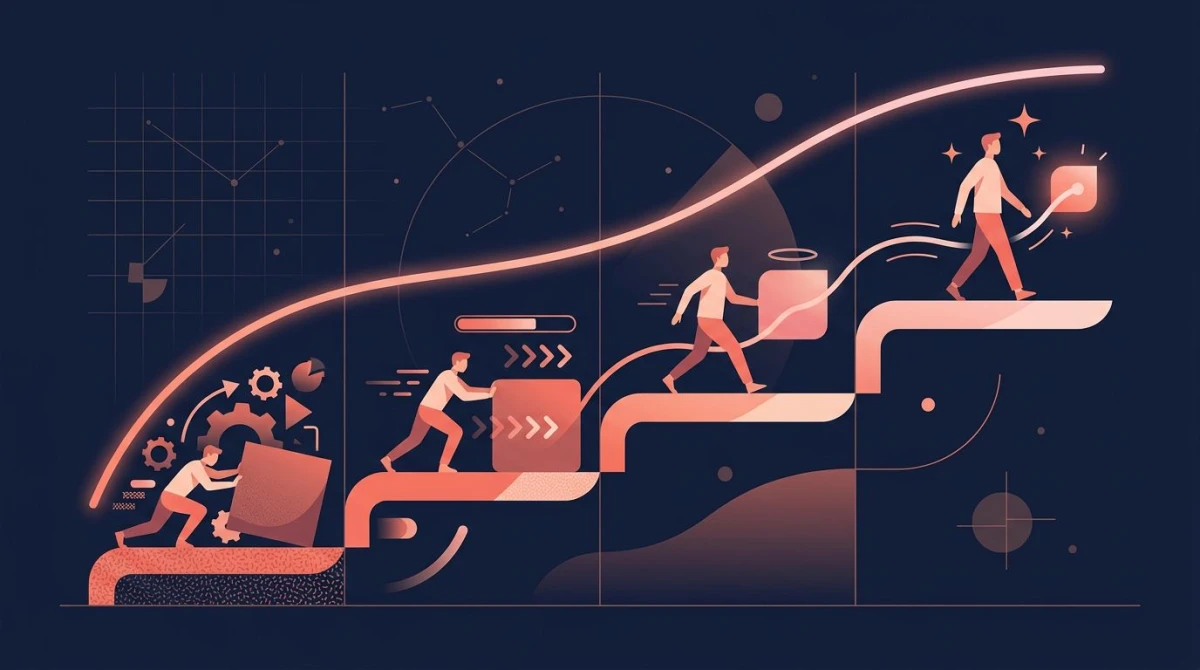
Habit formation isn't a single switch flipping. It's a curve. Researchers describe four overlapping stages your brain passes through as a behavior moves from "I have to remember to do this" to "I just did it without thinking."
| Stage | Brain region most active | Time range | What it feels like | What derails it |
|---|---|---|---|---|
| 1. Initiation | Prefrontal cortex (planning, willpower) | Days 1-7 | Excitement, novelty, conscious effort | Vague goals, no clear cue |
| 2. Learning | Prefrontal cortex + basal ganglia | Days 7-30 | "I'm trying to remember" — high friction | Inconsistent context, missed cues, low reward |
| 3. Stability | Basal ganglia takes over | Days 30-66 | Easier, but still effortful some days | Life disruption, travel, schedule change |
| 4. Automaticity | Basal ganglia (habit circuits) | Day 66+ | "I just did it" — no decision needed | Long absence, change in cue context |
Stage 1 is when most people quit. Initiation is exciting but expensive — you're paying full conscious attention. Stage 2 is when most of the rest quit, because the novelty wears off and the behavior still costs effort.
Stages 3 and 4 are where the science gets encouraging. Once your basal ganglia — a set of structures deep in the brain that handle motor learning and routine — start running the behavior, your conscious mind doesn't have to. MIT neuroscientist Ann Graybiel has shown that the basal ganglia "chunk" repeated behaviors into single units, firing at the start and end of a routine but going quiet during execution. That's what automaticity actually looks like in the brain.
The honest answer to "what stage am I in?" is: probably earlier than you think. Most people overestimate how automatic their behavior has become. If you skip a day and the behavior doesn't pull you back tomorrow, you're not yet in stage 4.
How long habit formation really takes
The 21-day myth needs to die. The number came from a 1960 book by plastic surgeon Maxwell Maltz, who wrote that his patients took at least 21 days to adjust to a new face. The "at least" got dropped, and decades of self-help books treated 21 days as the finish line.
The real research is messier and more useful. Phillippa Lally and colleagues at University College London tracked 96 volunteers doing a self-chosen daily behavior — drinking water with lunch, doing 50 sit-ups, going for a run — and measured how automatic the behavior felt over 12 weeks.
The findings:
- Median time to automaticity: 66 days.
- Range: 18 to 254 days.
- Simple behaviors (drinking water) automated faster than complex ones (50 sit-ups).
- Missing a single day did not measurably impair the formation curve.
That third bullet is critical. The shape of the automaticity curve is asymptotic — it rises steeply early, then flattens out as you approach full automaticity. Big gains come from your first three to four weeks of consistent repetition. The last 10% of the curve takes the longest.
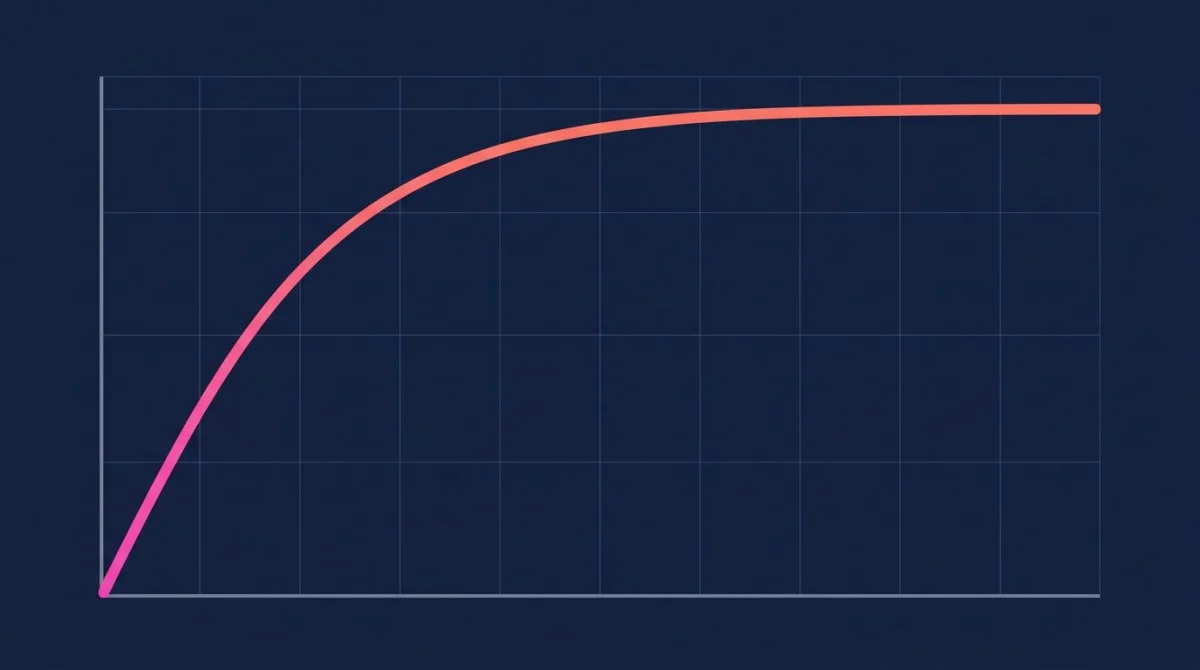
Two practical implications fall out of this. First, do not expect a habit to feel automatic at three weeks. Plan for two to three months for simple habits, and longer for complex ones. Second, do not panic about a missed day. Lally's data showed a single miss did not break the curve — your brain doesn't reset. Just resume the next day in the same context.
If you're tracking a habit and you've passed the 30-day mark without feeling like the behavior is getting easier, the problem is almost never that you "need more discipline." It's usually that one of the four habit components is missing or weak.
The neuroscience of habits, in plain English
You don't need a neuroscience degree to use habit science, but a few key terms make the rest of this article useful.
Basal ganglia. A cluster of structures deep below the cortex that runs motor learning and routine behavior. When researchers measure brain activity during a behavior that's still new, the prefrontal cortex (the planning and willpower region) lights up. As the behavior automates, activity shifts to the basal ganglia. The behavior hasn't stopped requiring brain power — it's just being run by a more efficient region.
Dopamine prediction error. Dopamine is not the "reward chemical" most people think it is. It's a learning signal. When you do something and the result is better than your brain predicted, you get a dopamine spike, and your brain marks that behavior as worth repeating. As the behavior becomes routine and the reward becomes expected, the dopamine spike actually shrinks. By the time a habit is automatic, you barely feel the reward — you feel uncomfortable when you don't do the behavior. That's why habits stick even when they stop feeling enjoyable.
Context-cued automaticity. Wendy Wood's research has shown that habits are tied tightly to physical and situational context. Same coffee shop, same time of day, same first action when you sit at your desk. Change the context — move to a new home, switch jobs, travel — and habits weaken or break, because the cue is gone. Removing or altering the cue on purpose is exactly how to break a habit you no longer want. This is also why a vacation is often the easiest time to build a new habit. The old context is paused, and your brain is open to new associations.
Chunking. When the basal ganglia learn a sequence, they treat it as a single unit. Tying your shoes is a chunked sequence. Driving to work is a chunked sequence. The first cue triggers the whole chain. This is why "habit stacking" works — anchoring a new behavior to the end of an already-chunked routine borrows that routine's automaticity.
You don't need to memorize any of this. You only need to know one principle: behaviors don't become automatic because you tried hard. They become automatic because you repeated them in a stable context until the brain handed control to a more efficient region.
The 4 components every habit needs
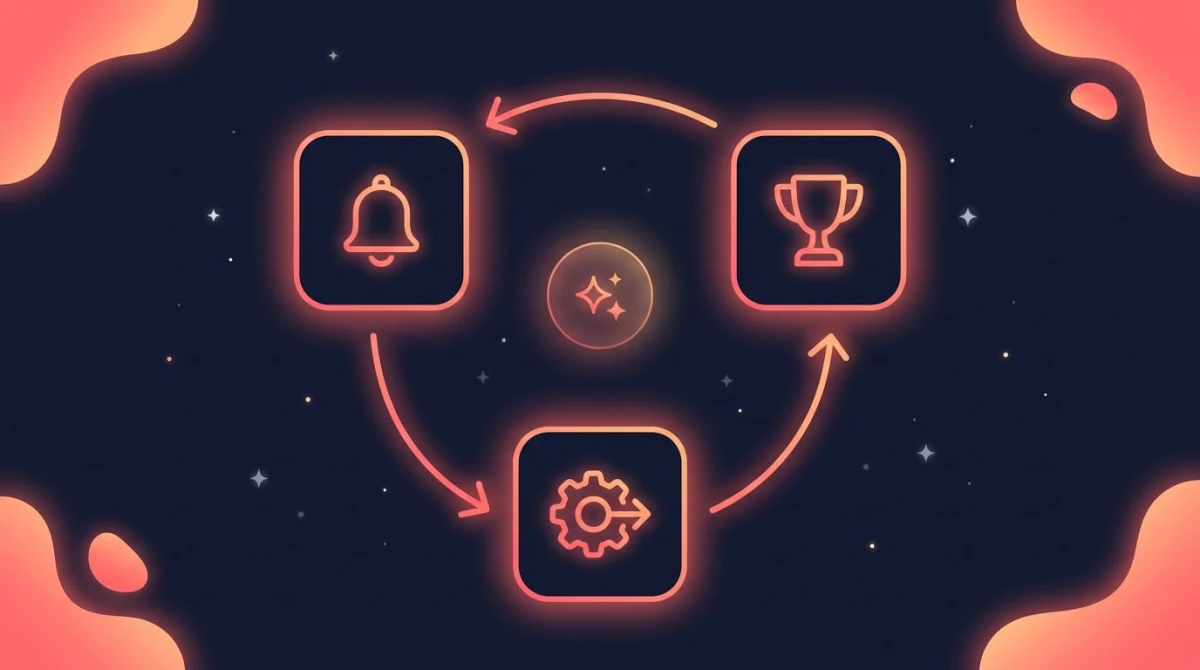
Charles Duhigg, in The Power of Habit, popularized the cue-routine-reward loop. James Clear, in Atomic Habits, expanded it to four parts: cue, craving, response, reward. Both frameworks point to the same underlying neuroscience.
Cue. The trigger. A time, a location, a preceding event, an emotional state, or another person. Without a consistent cue, your brain can't predict when to run the behavior. This is the single biggest reason habits fail to form.
Craving. The motivational pull the cue creates. You don't crave the response itself — you crave the change in state the response will bring. You don't crave brushing your teeth; you crave the clean feeling. You don't crave running; you crave the post-run mood. The craving is what makes the cue meaningful.
Response. The actual behavior. The smaller and lower-friction the response, the easier it is to repeat. BJ Fogg at Stanford describes this in his Behavior Model as B = MAP — behavior happens when motivation, ability, and a prompt converge. Reduce the ability cost (make it easier) and you don't need as much motivation.
Reward. The payoff that closes the loop. Rewards work best when they're immediate, felt, and tied to the behavior. Rewards that come weeks later — like fitness gains or weight loss — are too delayed to wire in the habit on their own. You need a faster signal: the satisfaction of marking the habit done, the calm after a stretch, the taste of the post-run water.
Map these four parts onto any habit you've successfully formed and you'll find all four were present. Map them onto a habit that didn't stick and you'll usually find one or two were missing or weak.
Why most habits fail to form
After years of habit research, the failure modes are well-documented. If a habit isn't sticking, the cause is almost always one of these five.
1. The cue isn't consistent. "I'll meditate when I have time" doesn't work. "I'll meditate after I pour my morning coffee" works. The cue needs to fire on roughly the same conditions every day. Vague cues — "when I feel stressed," "when I have a free moment" — leave your brain nothing to attach to.
2. The reward is too delayed. Fitness, savings, learning, weight loss — most of the habits people care about pay off on a timeline that's far too slow for habit formation. You need a same-day reward to bridge the gap. Crossing off the habit, sharing a streak with someone, or even a 30-second moment of satisfaction can serve. Without the immediate signal, the loop doesn't close.
3. The behavior is too effortful. People consistently overestimate how much friction they can absorb. A 30-minute workout requires a coordinated decision; a 5-minute workout requires almost none. BJ Fogg's research is unambiguous on this — when you're forming a new habit, shrink the response until it's almost trivial. You can grow it later, after the habit is automatic.
4. The context changed. Moving, traveling, changing jobs, having a baby — any major context change can flatten a habit that took months to build. The cue you trained your brain on is gone. Don't take this as failure. Take it as a sign to rebuild the cue in the new context, which usually goes faster the second time.
5. The identity doesn't match. This is the subtlest failure mode. If you're trying to run every morning but you don't think of yourself as "a runner," every run requires you to override your self-concept. Habits stick faster when the behavior is consistent with how you see yourself. You can read more on this dynamic in our guide to identity-based habits.
If your habit isn't forming, walk down this list. Don't add more discipline. Find which component is weakest and fix that.
How to design for automaticity
Once you understand the science, the practical rules are straightforward. These six design principles convert the research into action.
1. Pick one consistent cue. Time-of-day cues work, but routine-anchored cues work better. "After I pour my morning coffee" is more reliable than "at 7am" because routines fire automatically while clock times require attention. Pairing a new habit with an existing routine is the basis of habit stacking — borrowing automaticity that's already there.
2. Make the response smaller than feels reasonable. If you want to read every night, start with one page. If you want to meditate daily, start with two minutes. If you want to exercise every morning, start with five push-ups. You're not training the volume yet. You're training the cue-response link. Volume comes later, after the link is automatic.
3. Build in an immediate reward. Don't wait for the long-term payoff. Make the act of completing the habit feel good in the next 30 seconds. Marking it done, a short stretch, a moment of stillness, a small win you can feel.
4. Stabilize the context. Same place, same time, same surrounding routine, where possible. The fewer variables your brain has to learn, the faster the automaticity curve climbs. Keep your gym clothes by the bed. Keep the meditation cushion in the same spot. Keep the journal next to the coffee maker.
5. Repeat daily during the formation window. Lally's data showed the people who repeated the behavior more consistently in the first 30 days reached automaticity faster. This doesn't mean punishing yourself for misses — single misses don't matter — but it does mean daily attempts beat every-other-day attempts during the formation phase.
6. Reinforce the identity. Every time you do the behavior, you cast a small vote for being the kind of person who does it. Frame it that way explicitly. Not "I'm trying to read more" — "I'm a reader." The behavior reinforces the identity, and the identity makes the behavior easier to repeat.
Pro tip: don't try to design more than one or two habits at the same time. Each new habit competes for the same conscious attention until it automates. Stack new habits in waves, not parallel.
Tracking habit formation
One of the more practical findings in Lally's UCL data is that participants who tracked their daily repetitions showed steeper automaticity curves than those who didn't. The act of recording a behavior closes the loop in two ways. It creates an immediate small reward (the satisfaction of marking it done). And it makes the formation process visible to you, which keeps the cue-response link salient even on low-motivation days.
You don't need a complicated system. A simple paper calendar with an X on every successful day works. So does any habit tracker app — what matters is that the recording happens reliably and that you can see the pattern over time.
A purpose-built tracker like HabitBox shows the asymptotic curve as a calendar heatmap. You can watch the early days where every check feels like effort, the middle weeks where the misses still pull on you, and the later weeks where the behavior just runs. Seeing the curve unfold in front of you is informative — it's also genuinely encouraging on the low days.
For a deeper comparison of what tracking apps actually offer for habit formation, see our roundup of daily habit tracker apps or the full ranking of the best habit tracker apps. The right tool is the one you'll actually open every day during the 66-day formation window.
What the research won't promise you
Two honest caveats. First, no one can tell you exactly how long your habit will take. Lally's range was 18 to 254 days for a reason — individual variation is enormous, and behavior complexity, context stability, and starting motivation all matter. Plan for the long tail and treat early automaticity as a bonus.
Second, automaticity isn't permanence. Habits weaken when the cue disappears. They can also weaken if the reward stops landing. A habit that took 90 days to form can lose ground in a two-week disruption. The good news, again from the research: rebuilding a habit you've previously formed goes faster than building it the first time. The neural pathway isn't gone — it's just dormant.
The mindset that lines up with the science: you're not "getting motivated to do a habit." You're running consistent repetitions in a stable context until the cue does the work for you. Treat motivation as a bonus when it shows up, not a prerequisite.
FAQ
How long does habit formation really take?
The most-cited answer is the Lally et al. UCL study: a median of 66 days, with a range of 18 to 254 days depending on the behavior and the person. Simple behaviors (drinking water at meals) form faster; complex ones (50 sit-ups daily) take longer. Plan for two to three months for most habits.
Are 21 days enough to form a habit?
No. The 21-day claim traces back to a 1960s plastic surgeon's observation about patients adjusting to a new face — it has no foundation in habit research. Real automaticity takes a median of 66 days according to UCL data. You may feel like a habit is settling at three weeks, but the underlying brain change is usually not yet automatic.
Does missing a day reset habit formation?
No. The Lally study explicitly found that a single missed day did not measurably impair the automaticity curve. Your brain doesn't reset. The risk is psychological — feeling like you "broke the streak" and quitting. A tracker that shows current streak alongside longest streak helps separate one bad day from your overall progress. (HabitBox shows both, so you can recover without losing visibility into the long arc.)
Are some habits faster to form than others?
Yes. Simple, low-friction, high-reward behaviors automate fastest — drinking water, taking a daily vitamin, opening a journal. Behaviors that require more effort, more context (gym, equipment, special location), or have delayed rewards (fitness, learning, savings) automate more slowly. Pick the smallest version of the habit you actually want, repeat that until automatic, then grow it.
What part of the brain controls habits?
Mostly the basal ganglia, with help from the prefrontal cortex during early learning. As a behavior automates, brain activity shifts from the prefrontal cortex (conscious planning) to the basal ganglia (routine motor patterns). Research from MIT's Ann Graybiel shows the basal ganglia "chunk" repeated sequences into single units, which is why automated routines feel like one action rather than many.
Can I form a habit faster by being more disciplined?
Not really — and this is one of the more freeing findings. Discipline matters for showing up early in stage 1, but the speed of automation is mostly determined by repetition consistency, context stability, behavior simplicity, and reward immediacy. If a habit isn't forming, adding willpower is a less reliable fix than redesigning the cue, shrinking the behavior, or making the reward more immediate.
Putting the science to work
The honest summary of habit formation research is that habits form slowly, predictably, and through mechanisms that don't depend on motivation. Most of what people think they know about it — the 21-day rule, the willpower-first model, the idea that missing a day undoes the work — is wrong or oversimplified. The actual picture is more patient and, ironically, more forgiving.
If you're starting a habit this week: pick one behavior, anchor it to a routine that already happens, shrink it until it's almost trivial, build in an immediate reward, and plan to repeat it for two to three months in the same context. Track each day so you can see the curve.
If you're looking for a tool that visualizes the curve and gets out of the way, HabitBox was built for that — daily check-ins, streak tracking, and a calendar heatmap that shows your automaticity curve forming over weeks and months.
The 66 days are coming whether or not you start. You may as well point them at a behavior worth repeating.

Mira Hartwell
Editor, HabitBoxEditor at HabitBox. Writes about habit science and productivity, grounding every post in named research (Lally, Wood, Walker, Huberman) instead of recycled advice. Read full bio →