Good Habits: 100+ Ideas to Track by Category (2026)
The best good habits to track are three specific ones tied to a goal you care about right now — not a long wish list. This page is a menu of 120 good habits across 11 categories, each tagged with a measurement type, so you can skim, mark three, and ignore the rest until those feel automatic. BJ Fogg's research at Stanford found that a small set of "tiny habits" beats trying to fix a whole life at once. Use the list as a starting point, not a to-do list.
How to use this list
Think of this as a list of good habits to build, not a scorecard you have to complete. The habit examples below are sorted by category so you can jump straight to the area you care about — health, sleep, focus, money, relationships, or one of the newer categories like mindfulness, learning, and screen time.
Here's the move: browse the categories, pick three habits that map to one goal, and note the measurement type next to each. Then pair each one with something you already do — a routine, a meal, a commute — so it has a built-in cue. Our free habit stacking builder walks you through anchoring a new habit to an existing one in about a minute.
Everything on this page is a genuinely good habit with real evidence or a clear payoff behind it. But a good habit for someone else can still be the wrong habit for you right now. The sections after the list explain how to choose, how to measure, and how to tell when a tracked habit needs to change.
The 3-habit starter rule
Most people fail at habit tracking the same way. They list 15 habits on day one, miss four by Friday, feel like a fraud, and quit in week two. The fix is structural, not motivational. Track fewer things.
BJ Fogg is a behavior scientist at Stanford and the author of Tiny Habits (2019). He spent two decades watching people start and quit on behavior change. His finding: people who pick two or three small habits and anchor them to a routine stick with them far more often than people who try to install a sweeping new system. The bottleneck isn't willpower. It's attention. You only have so much for new behaviors, and spreading it across 10 of them waters down each one.
James Clear, in Atomic Habits, lands on a similar number from a different angle. He argues that a tracker works because it makes a habit "obvious, attractive, easy, and satisfying" — but only if marking it stays cheap. Track three habits and the act of logging takes 15 seconds. Track 15 and it starts to feel like another job. That's when people drop the system.
A working rule of thumb: pick one health habit, one focus or growth habit, and one habit tied to rest or a relationship. That mix prevents the single-domain spiral (where you fix fitness and ignore your sleep) and gives you enough variety to stay engaged. Once the three feel automatic — usually four to ten weeks, per Phillippa Lally's UCL study — you can add a fourth. Starting tiny helps here too; our guide to micro habits shows how to shrink any habit below the point of resistance.
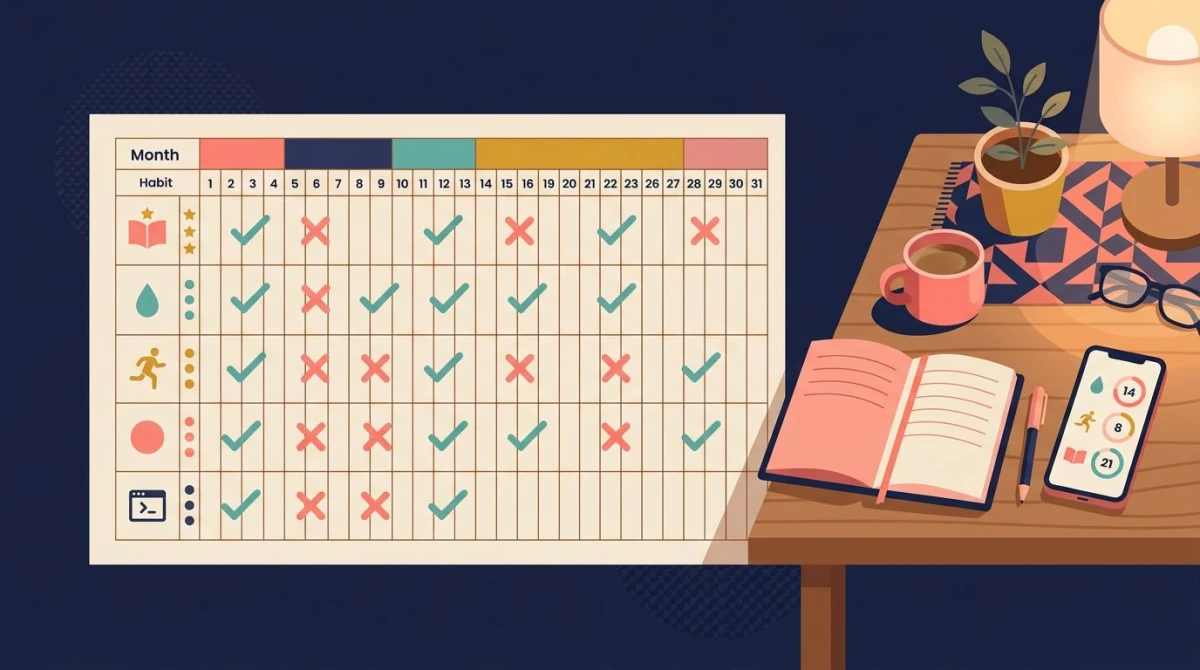
If you're new to logging at all, our guide to tracking habits covers the methods (paper, app, spreadsheet) before you commit to a list. If you lean toward paper, our free printable habit tracker builds a custom weekly or monthly grid you can print in seconds.
How to read the table: binary, count, duration
Before the list, a quick note on measurement. Every habit you track falls into one of three measurement types, and picking the wrong one is a common reason habits feel "off."
Binary habits are yes/no. Did you meditate today? Tap once. These are the easiest to track and to keep up with. Most beginners should start here.
Count habits track a number — glasses of water, push-ups, pages read. They work when volume matters more than the act. The risk: a count habit on a tired day still feels like failure if you only hit half. (Hydration is the classic count habit — our water tracker app comparison covers tools built just for it.)
Duration habits track time — minutes meditated, focus session length, hours slept. Use these when you want to grow capacity over weeks. Pair them with a count habit at your peril; the bookkeeping will burn you out.
Pick the simplest type that captures what you care about. A reading habit set as "binary: read at least 10 minutes" beats "duration: read 30 minutes" every time. On a hard day you can hit 10 and keep the streak.
What habits to track: 120 good habits by category
The tables below are the menu — 11 categories, 120 habits, each with a measurement type and a short reason it's worth tracking. Skim to the area you care about, mark three, ignore the rest.
Health & fitness (14 habits)
| Habit | Why track it | Measurement |
|---|---|---|
| Drink water | Dehydration hurts mood and focus, per Cleveland Clinic | Count (glasses) |
| Daily steps | Most-studied metric; lowers mortality | Count |
| Workout / strength session | Twice weekly meets CDC guidelines | Binary |
| Stretch / mobility | Beats desk-worker stiffness and text neck | Duration |
| Eat fruit or vegetables | Easier than counting calories | Count (servings) |
| Take vitamins / medication | Compliance is the whole point | Binary |
| No alcohol today | Loss-aversion streaks work here | Binary |
| Outdoor time | Morning daylight resets your clock | Duration |
| Protein at every meal | Anchors appetite and muscle repair | Count (meals) |
| 10-minute walk after eating | Blunts post-meal blood-sugar spikes | Binary |
| No food after set time | Curbs mindless late-night snacking | Binary |
| Cook one meal at home | Cheaper, you control the ingredients | Binary |
| Floss | The dental habit everyone skips | Binary |
| Posture reset at your desk | Undoes the hourly slouch | Binary |
Sleep & rest (10 habits)
| Habit | Why track it | Measurement |
|---|---|---|
| In bed by set time | Biggest lever on next-day energy | Binary |
| Hours slept | Adults need 7-9, per Sleep Foundation | Duration |
| No phone in bed | Removes the top sleep saboteur | Binary |
| Consistent wake time | Stability beats an early alarm | Binary |
| No caffeine after 2pm | Its half-life keeps you wired | Binary |
| Wind-down routine | Signals your brain it's night | Duration |
| Dark, cool bedroom | Sets the stage for deep sleep | Binary |
| No screens 30 min before bed | Cuts the blue-light delay | Binary |
| Short daytime nap | Under 20 minutes restores focus | Duration |
| Same bedtime on weekends | Prevents Monday social jet lag | Binary |
Focus & deep work (12 habits)
| Habit | Why track it | Measurement |
|---|---|---|
| Deep work session | One block beats four fragments | Duration |
| Inbox zero by end of day | Stops the psychic-clutter creep | Binary |
| One frog finished | Hardest task done before noon | Binary |
| Phone-free first hour | Protects the morning for priorities | Binary |
| Plan tomorrow tonight | Cuts morning decision fatigue | Binary |
| Single-tasking block | Trains attention on one thing | Duration |
| Pomodoro sprints | Count focused 25-minute rounds | Count |
| Time-block the calendar | Turns intentions into appointments | Binary |
| No meetings before set time | Guards your peak-focus window | Binary |
| Weekly review | Reset priorities every Friday | Binary |
| Close all tabs at day's end | Clears tomorrow's mental startup cost | Binary |
| One task done, then break | Reward completion, not busyness | Binary |
Money & finances (11 habits)
| Habit | Why track it | Measurement |
|---|---|---|
| Log spending | Awareness alone trims spending | Binary |
| No-spend day | Builds the "I can wait" muscle | Binary |
| Review bank balance | 30 seconds kills overdraft surprises | Binary |
| Save / invest set amount | Tracking reinforces the identity | Count |
| Pack lunch instead of buying | Small daily win, big monthly total | Binary |
| Check subscriptions | Cancel what you forgot you pay for | Binary |
| Round up spare change to savings | Small amounts compound quietly | Count |
| 24-hour rule on impulse buys | Wait a day before you click buy | Binary |
| Note one money win | Curbs the comparison spiral | Binary |
| Review one bill for savings | Renegotiate or cut something weekly | Binary |
| Add to emergency fund | Peace of mind, one deposit at a time | Count |
Relationships & connection (11 habits)
| Habit | Why track it | Measurement |
|---|---|---|
| Reach out to one person | Relationships decay without contact | Binary |
| Quality time with partner | Presence over hours | Binary |
| Compliment or appreciation | Said out loud, not thought | Binary |
| No phone during meals | Top request from couples and families | Binary |
| Text a friend you miss | One message reopens a door | Binary |
| Call a family member | Voice beats a like every time | Binary |
| Listen without interrupting | Presence is the real gift | Binary |
| Plan a weekly date or hangout | Protects the relationship on the calendar | Binary |
| Say thank you to someone | Names the good you noticed | Binary |
| One small act of kindness | Do one helpful thing for someone | Binary |
| Follow up on a detail | Ask about the thing they mentioned | Binary |
Personal growth (10 habits)
| Habit | Why track it | Measurement |
|---|---|---|
| Journal | Three lines beats none | Binary |
| Gratitude — three things | Most-replicated positive-psychology finding | Binary |
| Reflect on the day | Name one win, one lesson | Binary |
| Set a daily intention | Aim the day before it starts | Binary |
| Read a page of wisdom | Feed the mindset, not the feed | Binary |
| Reconnect with a core value | Remember what actually matters | Binary |
| Review your goals | Keep the target in view | Binary |
| Track your mood | Spot patterns before they spiral | Binary |
| One step outside your comfort zone | Growth lives at the edge | Binary |
| Let go of a small grudge | Put down what's weighing you | Binary |
Mindfulness & mental health (12 habits)
| Habit | Why track it | Measurement |
|---|---|---|
| Meditate | Five minutes builds the floor | Duration |
| Box breathing | Slows a racing nervous system | Count (rounds) |
| Name your emotion | Labeling lowers its intensity | Binary |
| One mindful moment | Do one task with full attention | Binary |
| Screen-free meal | Eat without scrolling | Binary |
| Body scan | Notice tension, then release it | Duration |
| Worry window | Contain anxiety to 10 set minutes | Duration |
| Gratitude pause | One thing you're thankful for now | Binary |
| Digital sunset | Unplug an hour before bed | Binary |
| Time in nature | An easy, low-effort way to unwind | Duration |
| Self-compassion check | Talk to yourself like a friend | Binary |
| Log one small win | Trains the brain to notice progress | Binary |
Learning & growth (11 habits)
| Habit | Why track it | Measurement |
|---|---|---|
| Read a book | 10 pages a day is 10+ books a year | Duration or count |
| Practice a skill | The timer is the teacher | Duration |
| Learn new vocabulary | Five words a day compounds fast | Count |
| Take one course lesson | One module keeps momentum | Binary |
| Write to think | 200 words untangles an idea | Count (words) |
| Podcast or audiobook | Turn a commute into a classroom | Duration |
| Practice a language | Daily reps beat weekend cramming | Duration |
| Review flashcards | Spaced repetition locks it in | Count |
| Teach or explain one thing | Teaching reveals your gaps | Binary |
| Watch an educational video | Curiosity, not doomscrolling | Binary |
| Note one thing you learned | Capture it or lose it | Binary |
Digital & screen time (10 habits)
| Habit | Why track it | Measurement |
|---|---|---|
| Screen-time check | Awareness shrinks the number | Duration |
| No phone in the first hour | Protects your morning attention | Binary |
| Phone-free meals | Presence over notifications | Binary |
| One social-media-free day | Resets the dopamine baseline | Binary |
| Grayscale mode on | Dulls the pull of bright apps | Binary |
| Unfollow one draining account | Curate what shapes your mood | Binary |
| No phone in the bathroom | Reclaim the micro-scrolls | Binary |
| Notifications off after set time | Guard your evening quiet | Binary |
| One offline hobby session | Trade the screen for your hands | Duration |
| Charge phone outside the bedroom | Removes the midnight temptation | Binary |
Home & environment (10 habits)
| Habit | Why track it | Measurement |
|---|---|---|
| Make your bed | A two-minute win that sets the tone | Binary |
| Tidy for 10 minutes | Small resets beat rare deep cleans | Duration |
| Wash dishes before bed | Wake to a clean kitchen | Binary |
| Clear one surface | Visible order lowers stress | Binary |
| Water the plants | A small caretaking ritual | Binary |
| Do a load of laundry | Chip away, don't pile up | Binary |
| Prep clothes for tomorrow | Cuts morning friction | Binary |
| Empty one physical inbox | Mail, counter, or junk drawer | Binary |
| Take out trash or recycling | Keep entropy from winning | Binary |
| Declutter one item | Own less, breathe easier | Count |
Creativity (9 habits)
| Habit | Why track it | Measurement |
|---|---|---|
| Write morning pages | Three pages clear the mind | Count (pages) |
| Sketch or doodle | Lowers the stakes on making | Binary |
| Play an instrument | Ten minutes keeps the skill alive | Duration |
| Capture one idea | Write the spark before it fades | Binary |
| Take one photo | Train your eye to notice | Binary |
| Work on a creative project | Progress over perfection | Duration |
| Free-write for five minutes | Beat the blank page daily | Duration |
| Learn one creative technique | Steal like an artist | Binary |
| Share one thing you made | Shipping beats hoarding | Binary |
That's 120 good habits across 11 categories. Mark three.
How to know your tracked habit is wrong
A tracked habit that doesn't move in four weeks is sending you a message. Three signals say the habit needs a change, not more effort.
Signal 1: You hit it under 50 percent for four weeks. This is the clearest signal. The habit is too big for your current life. Cut it in half. "Workout for 45 minutes daily" becomes "10 minutes of movement daily." Shrinking the bar is not failure. It's how Fogg's Tiny Habits method works on purpose — the same logic behind micro habits. The point is consistency, not intensity. Once you hit 90 percent for three weeks, scale up.
Signal 2: You hit the habit but feel nothing. You meditated for 30 days and you still feel like you're checking a box. This usually means the habit isn't tied to a real goal. You picked it because it sounded good on a list, not because you wanted the outcome. Habits tend to stick when they are tied to an outcome you actually care about. Drop the habit and pick one tied to something you'd be sad to lose.
Signal 3: The cue is too vague. "Be more productive" is not a habit. "Plan tomorrow tonight at 9pm" is one. If you can't picture exactly when, where, and how you'd do the habit, you're tracking a wish. James Clear's framing — "I will [behavior] at [time] in [location]" — fixes most of these. If you can't fill those blanks, the habit is too abstract.
When in doubt, change one thing at a time. Make it smaller, change the cue, or drop it. Don't redesign the whole list. You're trying to learn what works for you, not redecorate the dashboard.
Common bad picks (and what to swap them for)
A handful of habits show up on every "100 habits" listicle and almost never make it past the first month. They share one flaw. They are vague, too intense, or aimed at someone you are not yet.
"Be more productive." Not a habit — a vibe. Swap for plan tomorrow tonight or finish the hardest task before noon.
"Wake up at 5am." A schedule, not a habit, and it depends on what time you went to bed. Swap for consistent wake time or in bed by 11pm.
"Eat healthy." Too broad. Swap for one fruit or vegetable serving at lunch or no second helping at dinner.
"Workout daily for an hour." Almost always too big for a new routine. Swap for 10 minutes of movement daily and scale up after three weeks of 90 percent compliance.
"Read more." No measurement, no anchor. Swap for read 10 minutes after coffee. Pair it with an identity-based habit ("I'm a person who reads") and habit stacking to give it both meaning and a cue.
The pattern is the same in every case. Replace the abstract goal with one thing you could do at 9pm tonight without thinking.
What about HabitBox?
If you want to track all three measurement types in one place — binary check-ins for yes/no habits, count logging for water or push-ups, and goal-based targets for meditation or reading — HabitBox is built for that mix. The app supports each habit type on its own, so you don't have to force a duration habit into a checkbox or pretend a count habit is binary. It's free on iOS and Android at habitbox.app. If you'd rather compare a few options first, our roundup of the best habit tracker app picks weighs them side by side.
Frequently asked questions
What habits should I start tracking?
How many habits should I track at once?
What are the best habits for beginners?
Should I track every habit I do?
What habits help with mental health most?

Mira Hartwell
Editor, HabitBoxEditor at HabitBox. Writes about habit science and productivity, grounding every post in named research (Lally, Wood, Walker, Huberman) instead of recycled advice. Read full bio →