55 Examples of Bad Habits by Category (2026)
TL;DR: This guide lists 55 examples of bad habits across five categories — health, money, productivity, social, and digital. A bad habit is an automatic behavior that hands you a small reward now and a bigger cost later. Below, each one comes with a simple swap so you can break it without relying on willpower.
Everyone has bad habits. Researcher Wendy Wood, author of Good Habits, Bad Habits (2019), estimates that about 43% of what we do each day runs on autopilot rather than conscious choice. That is good news: if a behavior is automatic, it can be re-trained.
This is a scannable catalog, not a lecture. Use it to spot your own patterns, then jump to the swap that fits.
A quick note before the list: do not try to fix all of these at once. People who attempt a dozen changes at the same time usually abandon all of them within a few weeks. Skim the categories, flag the two or three habits that cost you the most, and start there. The science section and the swap method at the end will show you how to work on one without relying on motivation.
What makes a habit "bad"
A bad habit is not defined by morality. It is defined by a trade: a short-term reward that comes at a long-term cost.
Hitting snooze feels good for nine minutes and costs you a groggy, rushed morning. Doomscrolling soothes boredom for a moment and costs you an hour and your focus. The reward is immediate and certain; the cost is delayed and easy to ignore. That mismatch is exactly why these behaviors stick.
Charles Duhigg, in The Power of Habit, describes the mechanism as a three-part loop: a cue triggers a routine, which delivers a reward. Repeat that loop enough times and the brain stops deliberating — it just runs the routine. We break down the full mechanism in our guide to the habit loop, and the science of why automatic behavior is so durable in our habit formation explainer.
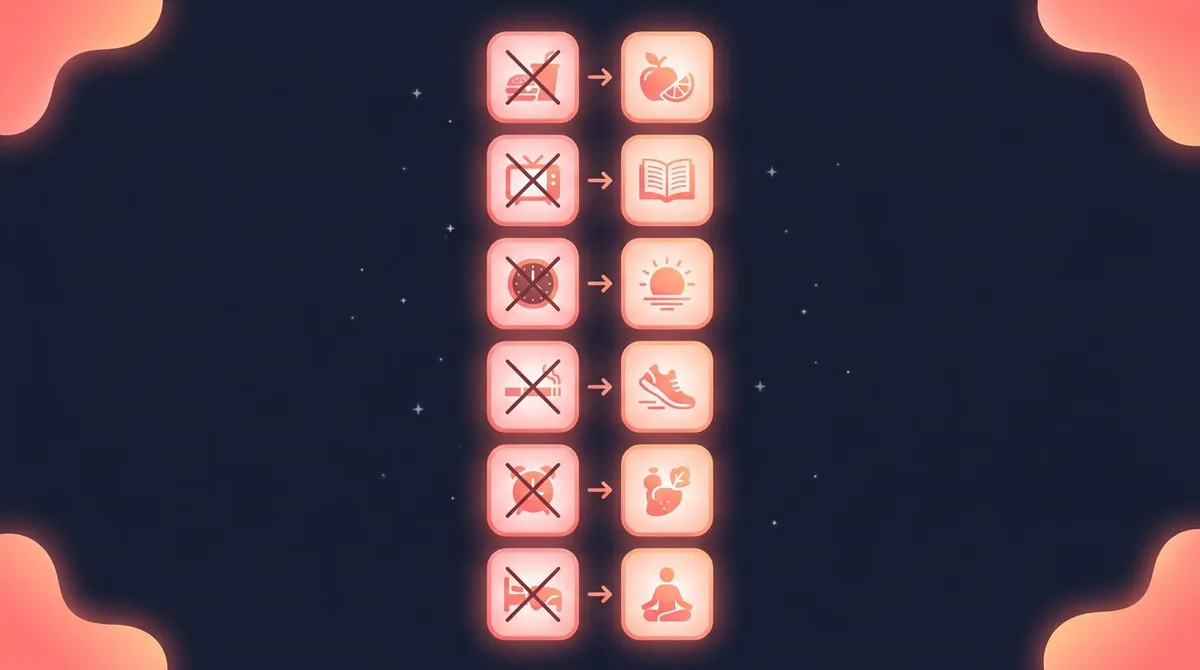
The practical takeaway: you rarely break a bad habit by force. You break it by keeping the cue and the reward, then swapping the routine in the middle for something less costly.
This also explains why bad habits feel so personal and so stubborn. They are not character flaws — they are well-rehearsed loops your brain runs to save energy. That reframe matters. If a habit is just a loop, you do not need more discipline; you need to redesign the loop. Every category below is organized around that idea.
Health and body bad habits
These show up in your energy, sleep, and long-term health. Many feel trivial day to day, which is exactly what makes them easy to repeat — the cost only arrives weeks or years later.
- Skipping breakfast when it leaves you ravenous and over-eating by noon. The morning saving turns into an afternoon binge.
- Late-night snacking in front of a screen, when you are not actually hungry. The TV is the cue, not your stomach.
- Nail biting as a stress response — a behavior the APA links to anxiety and tension. It soothes the nerves for a second and damages the nail bed over time.
- Poor posture — slumping over a phone or laptop for hours, which loads the neck and lower back.
- Sitting for long unbroken stretches. The American Heart Association warns that prolonged sedentary time raises cardiovascular risk, even for people who exercise. A quick hourly posture reset — stand, stretch, sit back tall — interrupts it.
- Scrolling in bed under bright screens. Harvard Health notes that blue light at night suppresses melatonin and pushes your body clock later.
- Chronic shallow sleep from an inconsistent bedtime, so you never bank a full night.
- Mouth breathing and clenching your jaw when concentrating, which leaves you tense and dry-mouthed.
- Mindless stress-eating of sugar or salt to manage emotions rather than hunger.
- Skipping water until you are already dehydrated and headachy, then over-correcting with caffeine.
Money bad habits
Money habits are quiet. A single impulse buy barely registers, but the pattern compounds month after month until it shows up in your savings — or the lack of them.
- Impulse buying to get a quick mood lift, then regretting it at the next statement.
- Leaving subscriptions running for services you no longer use, sometimes for years.
- Paying only the minimum on a credit card and carrying interest that quietly outpaces the original purchase.
- Never checking your balance until something bounces or a card gets declined.
- Lifestyle creep — spending more every time you earn more, so a raise never feels like one.
- Buy-now-pay-later splurges that hide the real total behind four small payments.
- No emergency buffer, so every surprise — a car repair, a medical bill — becomes debt.
- Emotional spending after a bad day, treating a purchase as a reward.
- Ignoring small recurring fees that look harmless but add up to hundreds over a year.
- Avoiding your statements because looking feels stressful, which lets problems grow unseen.
Productivity and time bad habits
These steal hours without you noticing, usually because they feel like work. Busyness is not the same as progress.
- Procrastination — swapping the important task for an easy one that delivers a faster sense of completion.
- Multitasking, which fragments attention rather than doubling it, so every task takes longer.
- Hitting snooze and starting the day behind before it has even begun.
- Checking notifications the moment they arrive, breaking your train of thought each time.
- Saying yes to everything until your calendar is unmanageable and nothing gets your full attention.
- Skipping breaks until your focus collapses in the afternoon and the work slows to a crawl.
- Working without a plan, reacting to whatever is loudest instead of what matters most.
- Perfectionism that stops you from shipping anything, disguised as high standards.
- Endless "research" as a comfortable way to avoid starting the real work.
- Context-switching between apps every few minutes, paying a small attention tax on each jump.
For deeper fixes here, see our guides on how to stop wasting time and how to focus better.
Social and relationship bad habits
These erode trust slowly. Each one feels minor in the moment, which is why they rarely get addressed until the damage is done.
- Interrupting instead of letting people finish their thought.
- Chronic lateness, which quietly signals that your time matters more than theirs.
- Gossiping to feel connected, at someone else's expense.
- Avoiding hard conversations until small frustrations harden into resentment.
- Phone-checking mid-conversation ("phubbing"), telling the other person they have your half-attention.
- Negative self-talk that spills into how you treat the people around you.
- Keeping score in relationships instead of giving freely.
- Over-apologizing for things that need no apology, which can read as insecurity.
- Venting without ever listening in return, turning support into a one-way street.
- Cancelling plans at the last minute out of habit, until people stop making them with you.
Digital bad habits
The most modern category — and often the hardest to see, because the device is always within reach and every app is engineered to keep you there.
- Doomscrolling through bad news for an hour, feeding anxiety while feeling informed.
- Phantom phone checks — reaching for it with no reason, dozens of times a day.
- Notification overload from apps you never silenced, each ping pulling you out of the moment.
- Autoplay binges that quietly turn one episode into five.
- Comparison scrolling on social media, measuring your life against everyone's highlight reel.
- Tab hoarding — 40 open tabs standing in for a to-do list you never finish.
- Reflexive unlocking the second you feel a flicker of boredom.
- Reading email at 2 a.m. when nothing can be done about it anyway.
- Replying instantly to every message, training others to expect you on demand.
- Using the phone as a fidget to fill every idle moment, so your mind never gets to rest.
If digital habits dominate your list, a structured reset helps — see how to do a dopamine detox.
Bad habits by category: cost and swap table
This is the part most lists skip. Enumerating bad habits is easy; the useful information is what each one quietly costs you and what to do instead. For each category below, here is a representative habit, the hidden cost it carries, and a healthier swap you can actually track day to day.
| Category | Example habit | Hidden cost | Healthier swap |
|---|---|---|---|
| Health | Scrolling in bed | Delayed melatonin, worse sleep | Charge the phone outside the bedroom; read a page instead |
| Health | Late-night snacking | Excess calories, poor sleep | Keep a glass of water by the couch; brush teeth after dinner |
| Money | Impulse buying | Lifestyle creep, no savings | Add a 24-hour wait before any non-essential purchase |
| Money | Forgotten subscriptions | Silent recurring drain | Audit subscriptions on the 1st of each month |
| Productivity | Hitting snooze | Rushed, groggy mornings | Put the alarm across the room; one stretch on standing |
| Productivity | Multitasking | Lost focus, more errors | Single-task in 25-minute blocks |
| Social | Phone-checking mid-talk | Weaker relationships | Phone face-down and out of reach during conversations |
| Social | Chronic lateness | Eroded trust | Set the departure alarm, not the arrival time |
| Digital | Doomscrolling | Lost hours, raised anxiety | Replace the unlock reflex with a 3-breath pause |
| Digital | Autoplay binges | Sleep loss, time loss | Turn autoplay off; decide the episode count first |
How to break one: the cue-routine-reward swap
You do not need 55 fixes. Pick the single habit from the list above that costs you the most, and run it through the loop below. Once it sticks, come back and pick the next one.
- Find the cue. Note where you are, what time it is, your emotional state, and what just happened before the behavior. Most habits fire on the same few triggers.
- Name the real reward. Doomscrolling is rarely about the news — it is about escaping boredom or stress. Identify what the routine actually gives you.
- Swap the routine. Keep the cue and the reward; change the action in the middle. Bored at your desk? Trade the phone for a two-minute walk that delivers a similar break.
- Make the old routine harder. Add friction. Log out, delete the app from the home screen, move the snack to a high shelf. Small obstacles beat raw willpower.
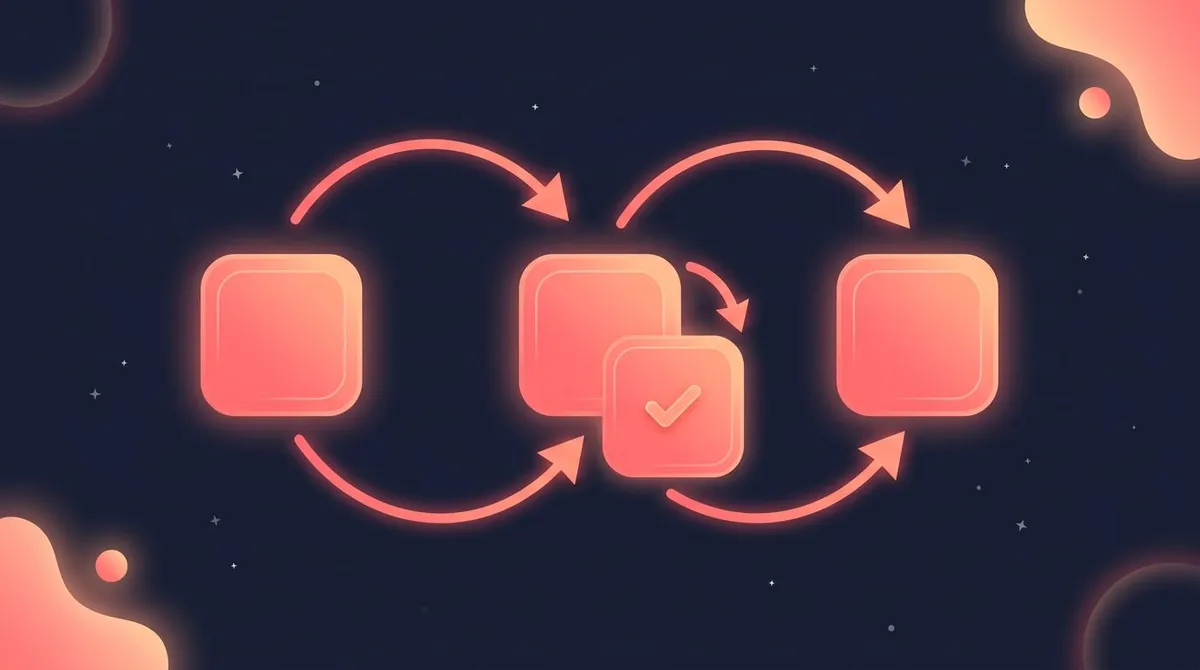
This is the core of our full how to break a habit method, and it works best when paired with one strong keystone habit that pulls the others into line.
One overlooked move: track the replacement, not the avoidance. "Don't doomscroll" is invisible — there is nothing to check off. "Take a 2-minute walk at the 3 p.m. slump" is a clear, positive action you can mark done each day. Watching that streak grow is far more motivating than counting the days you white-knuckled an urge.
That is the angle a simple tracker like HabitBox is built for: you log the new routine, see the streak build on a calendar heatmap, and let the visible progress do the reinforcing. The old habit fades because the new one is winning the loop. If you are still picking a tracker for that job, our best habit tracker app roundup compares the main options.
FAQ
What counts as a bad habit?
What are the most common bad habits?
Why are bad habits so hard to break?
What is the fastest way to break a bad habit?
Can a bad habit be replaced instead of stopped?

Mira Hartwell
Editor, HabitBoxEditor at HabitBox. Writes about habit science and productivity, grounding every post in named research (Lally, Wood, Walker, Huberman) instead of recycled advice. Read full bio →