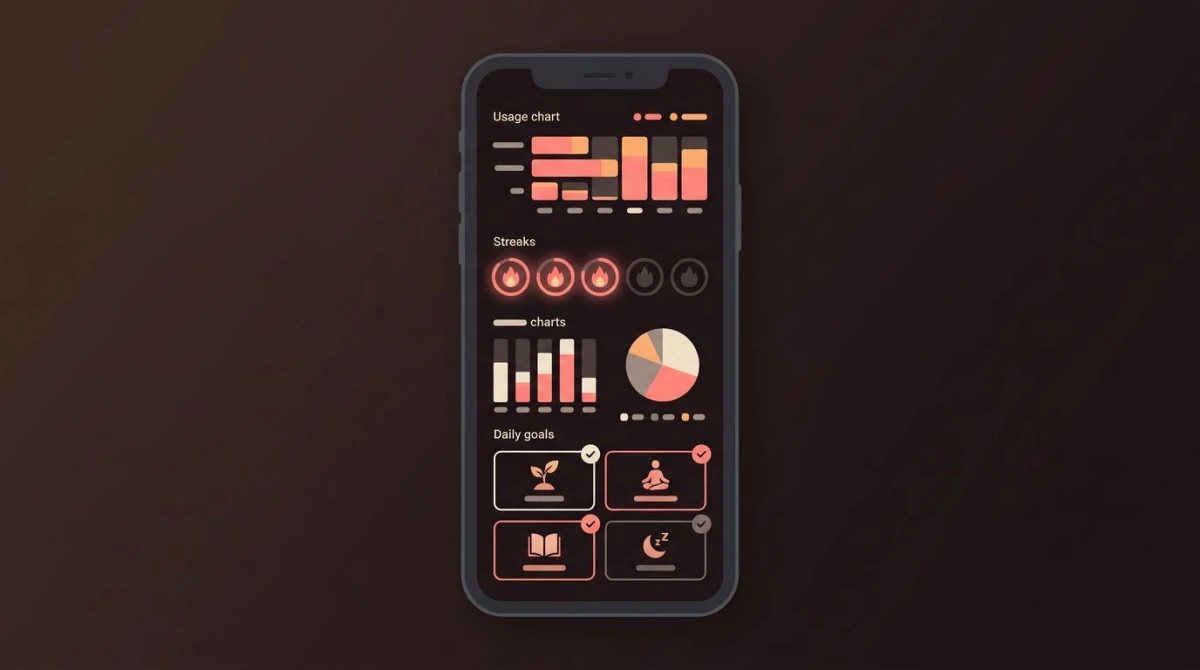
How to Do a Dopamine Detox: A Practical 2026 Plan
TL;DR. Here is how to do a dopamine detox without the pseudoscience. You cannot "reset" your dopamine in 1 day. You need dopamine to move, sleep, and feel motivated at all. What you can do is take a 24-hour break from a few high-stimulation habits — endless scrolling, gaming, junk food, autoplay video. That break weakens the cravings and resets your behavior. The psychologist who coined the term, Dr. Cameron Sepah, designed it as cognitive behavioral therapy, not brain chemistry (Cleveland Clinic). Below is a realistic 1-day reset and a 1-week plan. You will also get a way to make the change stick by tracking it as a daily habit.
If you have ever finished a two-hour scroll session feeling worse than when you started — restless, foggy, vaguely guilty — a "dopamine detox" probably sounds appealing. The promise is seductive: starve your brain of cheap stimulation for a day and walk out the other side with the focus of a monk.
That promise oversells the science. But there is a real, useful practice underneath the hype. It has nothing to do with detoxing a neurotransmitter. This guide separates the myth from the method. It gives you a plan you can run this weekend. And it shows you how to turn a one-off reset into a habit that changes your relationship with your phone.
This guide is lifestyle support for everyday overstimulation. It is not treatment for addiction, depression, or anxiety. If compulsive gaming, scrolling, or substance use is interfering with your daily life, please reach out to a clinician. The APA stress management page and the NHS Every Mind Matters hub are good starting points.
What a dopamine detox actually is (myth vs. reality)
A dopamine detox is a deliberate break from high-stimulation, low-effort activities — social media, video games, autoplay streaming, junk food, online shopping. You take that break for a set period, usually 24 hours. That is the honest definition. The popular definition is different. It says you can "reset your dopamine receptors" or "rewire your reward system" in a day. The science does not support that claim.
Here is what the research says. Dopamine is not a "pleasure chemical" you can drain and refill. It is a signaling molecule your body needs constantly. As Cleveland Clinic psychologist Dr. Susan Albers puts it, "we need dopamine in every system in our body — to move, to sleep, to experience pleasure" (Cleveland Clinic). Chronically low dopamine is linked to serious problems, including Parkinson's disease and depression. You do not want to "reset" it to zero. And a day of avoiding TikTok would not do that anyway.
So why does the practice work for some people? Because the real mechanism is behavioral, not chemical.
Where the term came from
The phrase "dopamine fasting" was coined in 2019 by Dr. Cameron Sepah, a clinical psychologist at UCSF. He has been clear that the name was a catchy metaphor and "shouldn't be taken literally." His actual protocol is a form of cognitive behavioral therapy (CBT). That is a well-established method for changing compulsive behaviors by managing the cues and rewards around them (Cleveland Clinic).
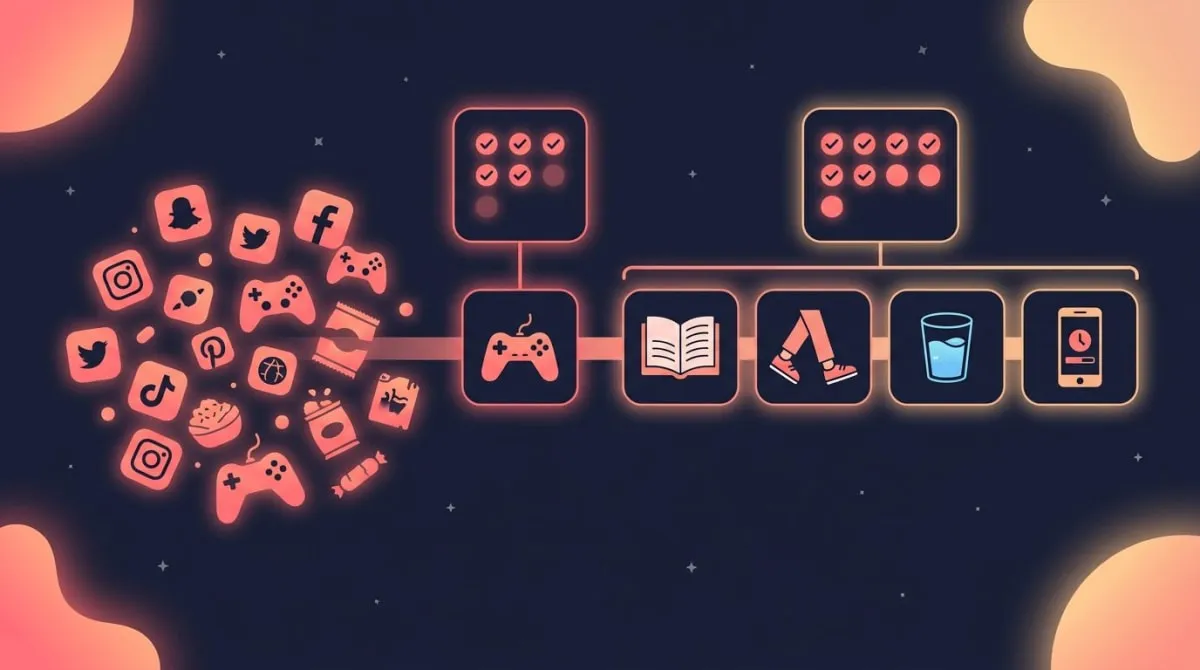
In other words, you are not detoxing dopamine. You are interrupting a habit loop. The trigger (boredom, anxiety, a notification) no longer leads automatically to the reward (a quick hit of stimulation), because you have removed the activity from the menu for a while. That break is what loosens the craving's grip.
Why the distinction matters
Getting this right changes how you do it. Say you believe a detox "resets your brain." Then you will expect a magic before-and-after, and feel like a failure when day two of normal life feels normal. Now say you understand it as a behavior reset. Then you set realistic goals: notice your triggers, prove to yourself that boredom is survivable, and use what you learn to build better daily limits. That framing is the difference between a one-day stunt and a lasting change.
The 1-day and 1-week dopamine detox plan
There is no single "correct" length. A 24-hour reset is enough to break the autopilot. It shows you how often you reach for your phone. A one-week version builds on that. It replaces the cut habits with better defaults, so the change has a chance to stick. Run the 1-day plan first. If it helps, roll into the week.
The table below maps both versions. The columns are deliberately simple: what you cut, what you still allow (because total deprivation backfires), and the goal for that phase.
| Phase | What to cut | What to allow | Goal |
|---|---|---|---|
| Day 0 (prep) | Nothing yet — just plan | Delete or log-out of your top 2 apps; tell people you'll be slow to reply | Remove friction so day 1 is easy to start |
| Day 1 (the reset) | Social media, short-form video, games, news feeds, junk food | Books, walks, real conversations, chores, one planned meal out | Survive boredom; notice every craving without acting on it |
| Days 2–4 | Keep feeds and games off; no phone before noon | Long-form content (books, one movie, podcasts), exercise, cooking | Replace the gaps with activities that feel good afterward |
| Days 5–7 | Re-introduce one app with a daily time limit | Everything from above plus intentional, time-boxed use | Set sustainable limits you can keep past the week |
A few notes on running it. On day 1, the hardest moments are the small gaps — waiting in line, the first five minutes of boredom after dinner. That is the whole point. The goal is not to hate your phone. It is to feel a craving arrive, sit with it, and watch it pass without acting. Most people are surprised how quickly the urge fades when there is nothing to scroll.
The deprocrastination approach adds a smart tweak. Make an actual physical list of go-to offline activities before you start. Then, when boredom hits, you reach for the list instead of your pocket. Walking, cooking, a quick workout, calling a friend — anything that leaves you feeling better afterward, not emptier.
The habits to reduce vs. the ones to keep
The biggest mistake people make is treating a dopamine detox as a war on all pleasure. It is not. The aim is to cut the compulsive, low-effort, high-stimulation loops. You keep the things that genuinely restore you. The difference is usually how you feel 30 minutes later.
Reduce or pause the activities that leave you flat or agitated afterward:
- Infinite-scroll feeds (the ones with no natural stopping point)
- Short-form video and autoplay binges
- Compulsive gaming sessions you keep "just one more"-ing
- Doom-scrolling the news
- Mindless snacking on hyper-palatable junk food
- Reflexive online shopping
Keep — even lean into — the activities that leave you calmer or more capable:
- Reading a real book or a long article
- Walking, stretching, or any movement
- Cooking a proper meal
- In-person conversation
- A single planned movie instead of an endless queue
- Slow, single-tasked work
The signal to watch is intent. Watching one episode you chose is restorative. Letting autoplay choose six is a loop. Same activity, different relationship to it.
The video above, from Dr. Alok Kanojia (a psychiatrist known online as Dr. K), walks through the science-based version of the practice and is a useful companion if you want the clinical reasoning behind why behavior — not chemistry — is the lever.
How to make it stick: track the detox as a daily habit
A one-day reset feels great and changes nothing by Wednesday. What moves the needle is turning the lessons from your detox day into one or two small daily limits. You keep those limits every day. This is where a one-off becomes a habit.
Pick the single behavior that gave you the most trouble during your reset. Turn it into a measurable daily target. Good ones include:
- No phone before noon — a clean, binary habit you either kept or didn't.
- A screen-time cap — for example, under 45 minutes of social apps per day.
- One scroll-free evening — phone in another room after 9 p.m.
Why track it instead of just trying to do better? Because a streak gives the behavior visible stakes. The dopamine you actually want is the small, earned hit of checking off a habit and not breaking the chain. That is a far healthier loop than the one you are trying to leave. A dedicated tracker like HabitBox lets you log a daily check-in for "no phone before noon" and watch the streak build. That low-friction feedback is exactly what keeps a new limit alive past week one.
If your main problem is raw hours on the device, pairing the detox with a screen time tracker gives you the real number to aim under, and our digital detox challenge lays out a longer 30-day structure if a single day was not enough. For the deeper skill of holding attention once the distractions are gone, see how to focus better.
Realistic expectations (and who should skip it)
Be honest with yourself about what a dopamine detox can and cannot do. It will not fix burnout, cure an addiction, or permanently rewire your motivation. What it reliably does is interrupt autopilot. It shows you how often you reach for stimulation out of habit rather than desire. And it gives you a clean baseline to set better limits from.
Most people notice the difference within the day itself — a quieter mind, more time than they expected, a few cravings that came and went. But the lasting benefit only shows up if you convert that insight into ongoing limits. That is why the tracking step matters more than the detox day.
Skip the strict version, or talk to a professional first, if any of these apply:
- You are using gaming, scrolling, or food to cope with depression, anxiety, or trauma — removing the coping mechanism without support can backfire.
- You have a history of disordered eating (the "cut junk food" framing can be risky).
- The compulsion feels genuinely out of your control. That is a sign to seek help, not to white-knuckle a fast.
For a structured way to check in on your overall wellbeing alongside any digital reset, our mental health checklist covers the daily habits that support mood and focus over the long run. A dopamine detox is a useful tool in that toolkit — not a substitute for the rest of it.
Dopamine detox FAQ
Does a dopamine detox actually work?
Not in the way the hype claims. You cannot reset your brain chemistry in a day, and you would not want to. But the behavioral version works for many people. A 24-hour break from high-stimulation habits weakens cravings. It also exposes how often you reach for your phone on autopilot. Cleveland Clinic frames the effective version as cognitive behavioral therapy, which has strong evidence behind it. The lasting benefit comes from the daily limits you set afterward, not the detox day itself.
How long should a dopamine detox last?
There is no required length. A 24-hour reset is enough to interrupt the autopilot and notice your triggers. A one-week version works better for lasting change. It gives you time to replace the cut habits with better defaults. Dr. Cameron Sepah's original protocol allows anything from one hour to longer windows. Start with a single day. Only extend if it felt useful rather than punishing.
What can you do during a dopamine detox?
Plenty — the goal is not to sit in an empty room. Allow long-form, low-compulsion activities: reading, walking, cooking, exercise, in-person conversation, or a single planned movie. The activities to pause are the high-stimulation loops with no natural stopping point. That means infinite feeds, short-form video, compulsive gaming, news scrolling, and mindless snacking. Make a physical list of offline go-to activities before you start. Then boredom does not send you back to your phone.
Is a dopamine detox science-based?
The neuroscience framing ("reset your dopamine") is not — dopamine is essential and cannot be reset by avoiding apps for a day. The underlying behavioral practice is science-based: it is cognitive behavioral therapy in disguise, a well-established method for changing compulsive habits. Psychologist Cameron Sepah, who coined "dopamine fasting," has said the name is a metaphor and should not be taken literally. So judge it as behavior change, not brain chemistry.
How do you track a dopamine detox?
Turn the single habit that troubled you most into a measurable daily target and check it off every day. Common ones are "no phone before noon," a screen-time cap, or a scroll-free evening. Tracking it as a streak gives the new limit visible stakes — you do not want to break the chain — which is what keeps it alive past the first week. A habit tracker like HabitBox makes the daily check-in one tap and shows the streak building, turning a one-day reset into a lasting limit.

Mira Hartwell
Editor, HabitBoxEditor at HabitBox. Writes about habit science and productivity, grounding every post in named research (Lally, Wood, Walker, Huberman) instead of recycled advice. Read full bio →