Intrinsic Motivation: 12 Examples & How to Build It
TL;DR. Here are 12 intrinsic motivation examples plus the science behind them. Intrinsic motivation means doing something because it is satisfying in itself, not for a reward or deadline. Self-Determination Theory, developed by psychologists Edward Deci and Richard Ryan in 1985, says it grows from three needs: autonomy (you chose it), competence (you are getting better), and relatedness (it connects you to others). Habits built on intrinsic motivation outlast habits built on rewards, because the reward is already inside the action.
You already know the difference between doing something because you want to and doing it because you have to. One feels light. The other feels like a chore you are counting down. That gap has a name. And knowing how it works is one of the most useful things you can learn about your own behavior.
This post walks through what intrinsic motivation is. It gives 12 clear examples from everyday life. It shows how intrinsic motivation differs from the reward-driven kind. And it covers the part most articles skip: why intrinsic motivation makes habits stick, and how to build more of it into yours.
Most guides stop at a list of examples. This one ties each idea back to the habits you are trying to keep, so you can use it today.
What intrinsic motivation is
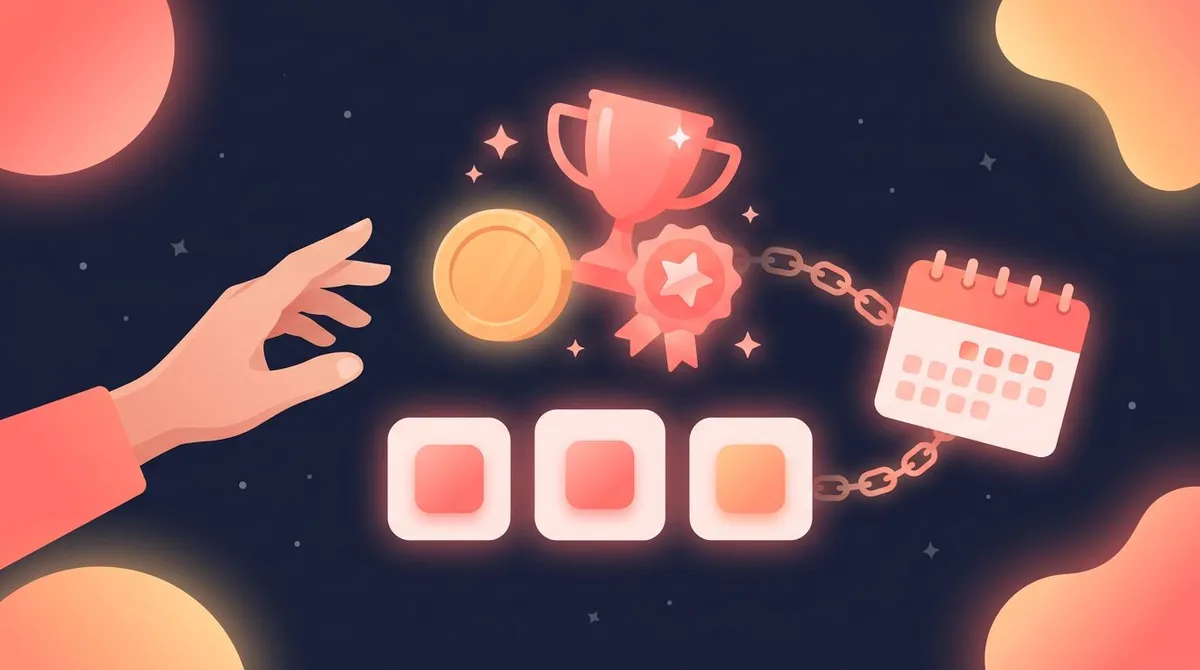
Intrinsic motivation is the drive to do something because the activity itself is rewarding. There is no outside payoff attached. No money, no grade, no gold star. The satisfaction comes from the doing.
Think of a kid stacking blocks. No one pays them. No one is watching. They stack because stacking is fun. That is intrinsic motivation in its purest form, and adults have it too — we just bury it under to-do lists and deadlines.
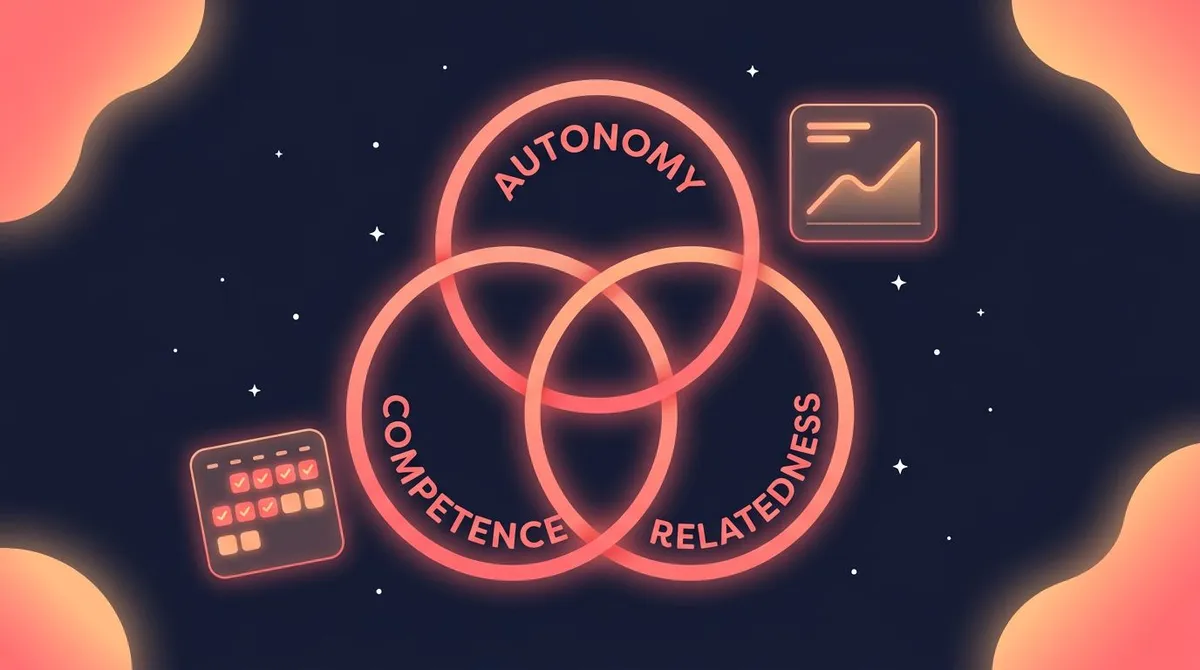
The clearest framework for it is Self-Determination Theory. Deci and Ryan proposed that humans have three basic psychological needs. When an activity meets those needs, intrinsic motivation follows on its own:
- Autonomy — you feel you chose the activity, rather than being pushed into it.
- Competence — you feel capable and see yourself improving.
- Relatedness — the activity connects you to other people or to something you care about.
The famous evidence for this is the "undermining effect." In a 1971 experiment, Deci paid some people to solve puzzles they already enjoyed. Then the payments stopped. The paid group now spent less free time on the puzzles than people who were never paid at all. The reward had quietly replaced the joy.
A 2022 review in the journal Neuropsychopharmacology confirmed why this happens. Adding an outside reward shifts your sense of why you are acting. It moves from inside to outside, and the inner drive fades. In plain terms: once you get paid to do a thing you loved, your brain starts to see it as work.
The key insight is that intrinsic motivation is not a trait you either have or lack. It is a response to conditions. And you can shape those conditions, which is what the rest of this post is about.
12 intrinsic motivation examples
Real examples are easier to learn from than definitions. Here are 12, grouped by the psychological need each one satisfies.
Learning and curiosity
- Reading a novel late into the night because you cannot wait to find out what happens — not because a class assigned it.
- Learning a language for fun before a trip, enjoying the small wins of understanding a menu or a song lyric.
- Falling down a research rabbit hole on a topic that has nothing to do with your job, purely because it fascinates you.
Mastery and competence
- Practicing an instrument in the evening because nailing a difficult passage feels satisfying in itself.
- Trying to beat your own running time, not to win a medal, but for the private satisfaction of improving.
- Refactoring code or fixing a tricky bug because solving the problem is its own reward.
- Cooking a new recipe from scratch and enjoying the process of getting the technique right.
Meaning and relatedness
- Volunteering at a shelter because helping feels meaningful, with no one keeping score.
- Helping a friend move and finding satisfaction in being useful to someone you care about.
- Mentoring a junior colleague because watching them grow is rewarding on its own.
Play and flow
- Playing a sport for the love of the game, where losing track of time in the flow is the whole point.
- Gardening, painting, or any hobby you do on weekends with no goal beyond enjoying it.
Notice that none of these depend on a prize. In each case, the reward is baked into the activity. That is exactly why these behaviors tend to last. No one has to remind you to do the thing you already enjoy.
You may also spot a pattern in the list. Learning feeds your need to grow. Mastery feeds your need to feel capable. Meaning feeds your need to belong. Play feeds your need to be free. These are the three needs from earlier, showing up in real life.
Intrinsic vs extrinsic motivation
Extrinsic motivation is the opposite. You do something for an outside reward, or to dodge a punishment. Working for a paycheck, studying for a grade, and running to win a medal are all extrinsic.
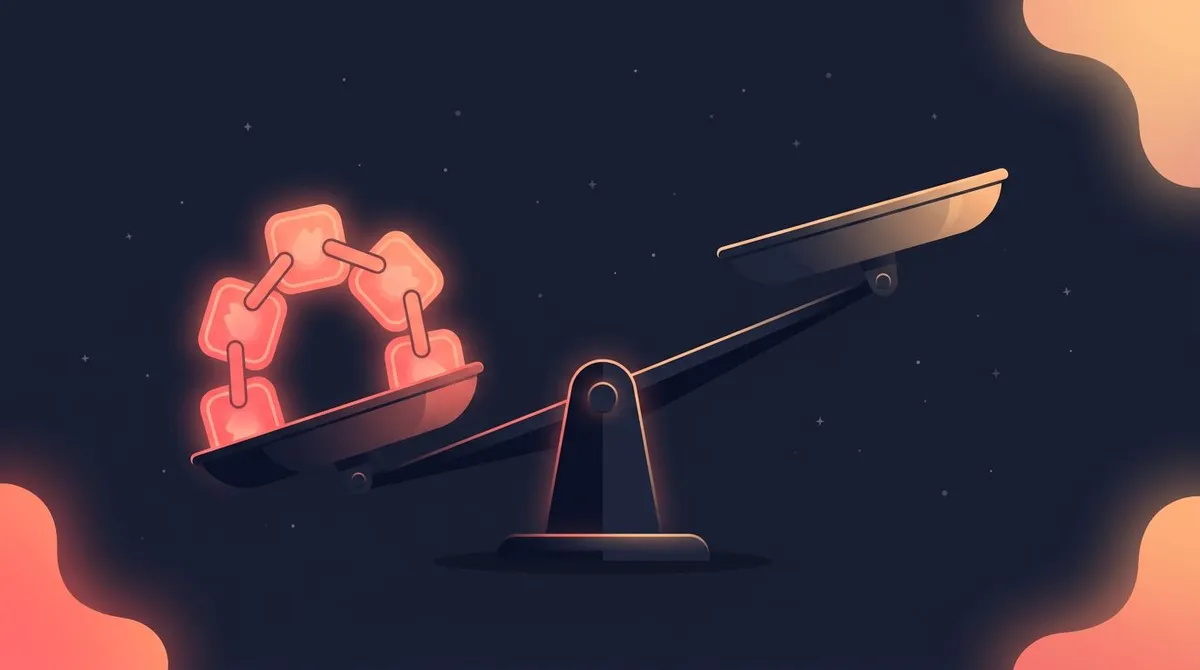
Both types are useful. But they behave very differently over time. A 2014 meta-analysis by Cerasoli, Nicklin, and Ford pulled together data from more than 200,000 people. It found that intrinsic motivation is the stronger predictor of the quality of your work, while incentives better predict quantity. In other words, rewards make you do more; interest makes you do it well.
Here is how the two compare across the things that matter for building habits.
| Dimension | Intrinsic motivation | Extrinsic motivation |
|---|---|---|
| Source of drive | The activity itself is satisfying | An outside reward or deadline |
| Example | Reading for pleasure | Reading to pass an exam |
| Feeling | Absorbed, autonomous | Pressured, transactional |
| What happens when the reward stops | Behavior continues | Behavior usually stops |
| Effect on long-term habits | Durable, self-sustaining | Fragile, needs constant fuel |
| Best used for | Habits you want to keep for life | Kickstarting or hitting a target |
The practical takeaway is not "extrinsic bad, intrinsic good." Rewards are great for getting started. A cash prize or a deadline can get you off the couch on day one.
But a habit that runs only on outside fuel needs that fuel forever. The moment it dries up, so does the behavior. The goal, then, is to start with whatever gets you moving and slowly hand the wheel over to the intrinsic kind.
Why intrinsic motivation makes habits stick
A habit is a behavior you repeat until it runs on autopilot. Reward-driven habits have a hidden flaw. The reward sits apart from the action. So the moment the streak-bonus or the paycheck stops, the reason to act disappears with it.
Intrinsically motivated habits do not have this weak point. The reward is the action. There is nothing to remove. You cannot take the fun out of a hobby you do for fun.
This is why intrinsic motivation pairs so well with identity-based habits. When you read because "I am a reader," not because a challenge told you to, the habit is expressing who you are. As James Clear argues, that is the most durable form of motivation there is. Every rep is a small vote for the person you want to be.
Each of Deci and Ryan's three needs maps onto something that keeps a habit alive:
- Autonomy keeps you from resenting the habit. Resentment is what quietly kills most streaks, because a habit that feels forced becomes one more thing you want to escape.
- Competence is the visible sense that you are improving. It is a renewable source of satisfaction, because there is always a next small win to chase.
- Relatedness ties the habit to people or a purpose you will not walk away from. It is hard to quit a morning run when it is also how you catch up with a friend.
Get all three working at once and the habit stops feeling like a task. It starts feeling like part of your day you would miss if it were gone.
This ties back to the difference between motivation and discipline. Motivation gets you moving. But intrinsic motivation is the version that does not run out. It is the reason some people keep a habit for years without ever forcing it. Learning the science of habit formation makes it clear why the inner version wins over the long run.
How to build intrinsic motivation into your habits
The good news is that you can engineer for all three needs. Here is how.
Reframe the why
Outside pressure crowds out intrinsic motivation. So start by removing the "have to." Instead of "I have to exercise," try "I get to move my body and feel strong." Instead of "I have to read tonight," try "I get to spend time in a good book."
The activity is the same. The words are not. And that small shift moves your sense of control back inside, which is exactly what protects the inner drive. Watch how often you say "have to" this week. Each one is a chance to flip the frame.
Track progress to feel competence
Competence is the easiest of the three needs to control. It grows every time you can see yourself getting better. This is where a tracker earns its place.
Picture looking back at a calendar heatmap and watching a run of green days grow. Or seeing your completion rate climb month over month. That is direct proof that you are improving, and that proof feeds the intrinsic loop. The better you feel, the more you want to do it, which makes you better still.
A simple tracker like HabitBox's progress analytics exists for exactly this. Not to shame a missed day, but to make your own progress visible enough to enjoy. When the growth is easy to see, the satisfaction takes care of itself.
Reduce external pressure
Deadlines, comparison, and rewards all pull your motivation outward. Where you can, strip them out of habits you want to keep for life.
Drop the punishment for missing a day. Stop comparing your progress to other people's. Let the streak be a mirror, not a scoreboard. A mirror shows you where you are so you can enjoy the view. A scoreboard just tells you whether you are winning or losing, and that pressure is the very thing that saps the fun.
Start small enough to enjoy
Competence and enjoyment both collapse when a habit is too hard on day one. If the first run leaves you gasping, your brain files exercise under "pain," not "reward."
So shrink the first rep. One page. Two minutes. A single set. A small start keeps the activity inside the zone where it still feels good, and that zone is where intrinsic motivation lives. You can always do more once the habit is fun.
This is also the foundation of staying consistent. Easy, chosen, and satisfying beats heroic and resented every time. The person who reads one page a night for a year reads more than the person who swears to read fifty and quits by February.
FAQ
What is intrinsic motivation?
What are examples of intrinsic motivation?
What is the difference between intrinsic and extrinsic motivation?
Why is intrinsic motivation better for building habits?
How do you increase intrinsic motivation?
Ready to put this into practice? Intrinsic motivation grows fastest when you can see yourself improving — and a simple tracker like HabitBox makes that progress visible, one green day at a time.

Mira Hartwell
Editor, HabitBoxEditor at HabitBox. Writes about habit science and productivity, grounding every post in named research (Lally, Wood, Walker, Huberman) instead of recycled advice. Read full bio →