75 Hard Diet Rules: Food List & Sample Day (2026)
TL;DR: The 75 Hard diet has no official menu. You pick any structured diet — whole-food, Mediterranean, low-carb, or macro-based — and follow it for 75 days straight with zero cheat meals and no alcohol. Break the diet even once and you restart at day 1. That single rule is what trips most people up, which is why the real skill is tracking your compliance every single day.
If you have started (or are eyeing) 75 Hard, you have probably hit the same wall everyone does. The program tells you to "follow a diet" but never says which one. That gap is deliberate. It is also the single biggest source of confusion.
Below is exactly what the diet rule requires. Then how to choose a plan you can stick to, a sample compliant day, a food-swap cheat sheet, and an honest look at where the challenge goes sideways.
What the 75 Hard diet rule actually says
75 Hard was created by entrepreneur Andy Frisella as a mental-toughness program, not a fitness plan. It runs 75 days. It has five daily non-negotiable tasks. Only one of them is about food, and its wording is open-ended on purpose.
According to Cleveland Clinic, the nutrition rule is to "follow a nutrition plan of your choice." There is one hard condition: no cheat meals and no alcohol for the full 75 days. The program itself sets no calorie target and no banned-food list. There is no official menu at all.
Here are all five daily rules, since the diet does not stand alone:
- Follow a structured diet with no cheat meals and no alcohol
- Do two 45-minute workouts, one of them outdoors
- Drink one gallon (3.8 liters) of water
- Read 10 pages of a nonfiction book
- Take a daily progress photo
The catch that defines the whole thing is simple. Miss any one task and you start over at day 1. As Cleveland Clinic notes, there is "no partial credit" and no variations permitted. That restart rule is why the diet feels harder than the food on your plate.
Physical books are required for the reading rule, and the two workouts must be spaced apart. Those details are not about food, but they shape your day. When you are juggling five daily tasks, the diet is easiest to defend when it runs on autopilot. That is the case for keeping your food simple and repeatable.
Notice what the food rule does not include. It does not tell you to eat less. It does not ban carbs or fat or any food group. It only asks you to pick a plan and hold it without a single exception. In other words, 75 Hard tests your consistency far more than your menu.
Choosing your diet for 75 Hard
Because the program does not name a diet, your first real decision is picking one you can hold for 75 unbroken days. The best diet for 75 Hard is not the strictest. It is the one you are least likely to break under stress, travel, or a bad day.
That reframe matters. A lot of people start 75 Hard on the most aggressive diet they can find, thinking harder is better. Then they crash in week two and restart. A slightly less strict plan you can actually finish beats a perfect plan you abandon on day 12. Consistency wins every time.
Here is how the common choices compare:
| Diet | Best for | Pros | Watch-outs |
|---|---|---|---|
| Whole-food / clean eating | Most beginners | Simple rules, hard to "accidentally" cheat, filling | "Clean" is vague — define it in writing before day 1 |
| Mediterranean | Balanced, sustainable eaters | Well-researched, flexible, includes carbs and healthy fats | No alcohol removes the traditional wine element |
| Low-carb / keto | People targeting fat loss | Curbs snacking, steady energy for some | Strict enough that one slip is easy; harder when dining out |
| Macro-based (IIFYM) | Data-driven trackers | Flexible foods, precise control | Requires weighing and logging every meal for 75 days |
| Plant-based | Existing vegetarians/vegans | Naturally high fiber, whole-food friendly | Needs planning for protein on two-workout days |
Whatever you pick, write down your specific rules before day 1. Spell out what counts as compliant. List your hard "no" foods. Decide in advance how you will handle restaurants and travel. A diet you can define clearly is a diet you can track cleanly. If you want a precise macro-based plan, our macro calculator sets your protein, carb, and fat targets from your goals.
One more tip: match the diet to your life, not to a highlight reel. If you travel for work, keto is hard to hold in airports. If you cook for a family, a whole-food plan bends more easily. The "best" diet for 75 Hard is the boring one you can repeat 75 times without drama.
A 75 Hard food list to stock your kitchen
Because 75 Hard bans cheat meals but names no foods, your grocery list does the heavy lifting. Keep compliant staples on hand and the daily decision gets easy. Run out of them and a slip gets tempting.
This list works for a whole-food plan and adapts to most others. Trim or add based on the diet you chose.
Proteins
- Chicken breast and thighs
- Eggs and egg whites
- Lean ground beef or turkey
- Fish and canned tuna or salmon
- Greek yogurt and cottage cheese
- Tofu, tempeh, and lentils
Carbs and grains
- Oats and quinoa
- Brown rice
- Sweet potatoes and regular potatoes
- Whole-grain bread or wraps (if your plan allows)
- Beans and chickpeas
Vegetables and fruit
- Leafy greens like spinach and kale
- Broccoli, peppers, zucchini, carrots
- Berries, apples, bananas, oranges
- Frozen vegetables for quick sides
Fats
- Avocado and olive oil
- Nuts and natural nut butter
- Seeds like chia and flax
Drinks
- Water (you need a full gallon a day)
- Black coffee and plain tea
- Sparkling water for the "I want a drink" moments
Notice what is not here: alcohol, soda, candy, chips, pastries, and anything labeled a "treat." If it does not fit your plan, it does not enter the cart. The kitchen is where 75 Hard is quietly won or lost. Kicking a soda habit before you start makes the no-alcohol, no-sugary-drink rule far easier to hold.
If cutting sugary drinks is your sticking point, quitting them ahead of time removes one of the most common 75 Hard triggers before day 1 even begins.
A sample compliant 75 Hard day
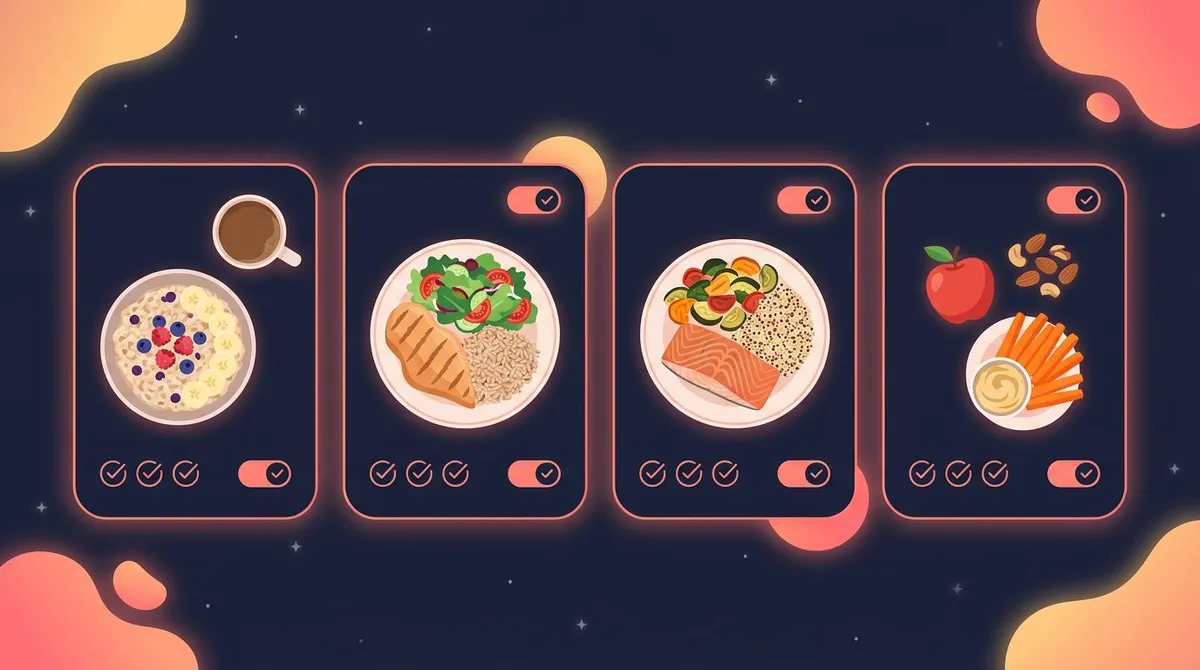
There is no single right menu. This is one realistic whole-food day that stays compliant, with no alcohol and no cheat meals. It is also built to support two workouts. Adjust portions to your own plan and calorie needs.
| Meal | Example | Why it fits |
|---|---|---|
| Breakfast | Three-egg omelet, spinach, oats, berries | Protein plus slow carbs before the first workout |
| Lunch | Grilled chicken, brown rice, roasted vegetables | Balanced, easy to prep in batches |
| Snack | Greek yogurt, almonds, an apple | Bridges the gap between two workouts |
| Dinner | Baked salmon, sweet potato, big green salad | Protein and fiber to recover overnight |
| Drinks | Water toward your daily gallon, black coffee, unsweetened tea | Zero alcohol, no sugary drinks |
Meal prepping two or three of these in advance is the quiet secret of people who finish 75 Hard. When the food is already made, there is nothing to decide. There is also nothing to "accidentally" break. Hitting the daily water gallon takes the same planning; our 14-day plan to drink more water makes that habit stick before you stack it with everything else.
A 75 Hard food swap cheat sheet
Most people do not fail 75 Hard on their planned meals. They fail on the off-plan grab: the vending machine at 3 p.m., the drink at dinner, the "harmless" treat. The fix is to plan the swap before the craving hits.
Here are compliant stand-ins for the foods that usually break a streak:
| Craving | Off-plan trigger | Compliant swap |
|---|---|---|
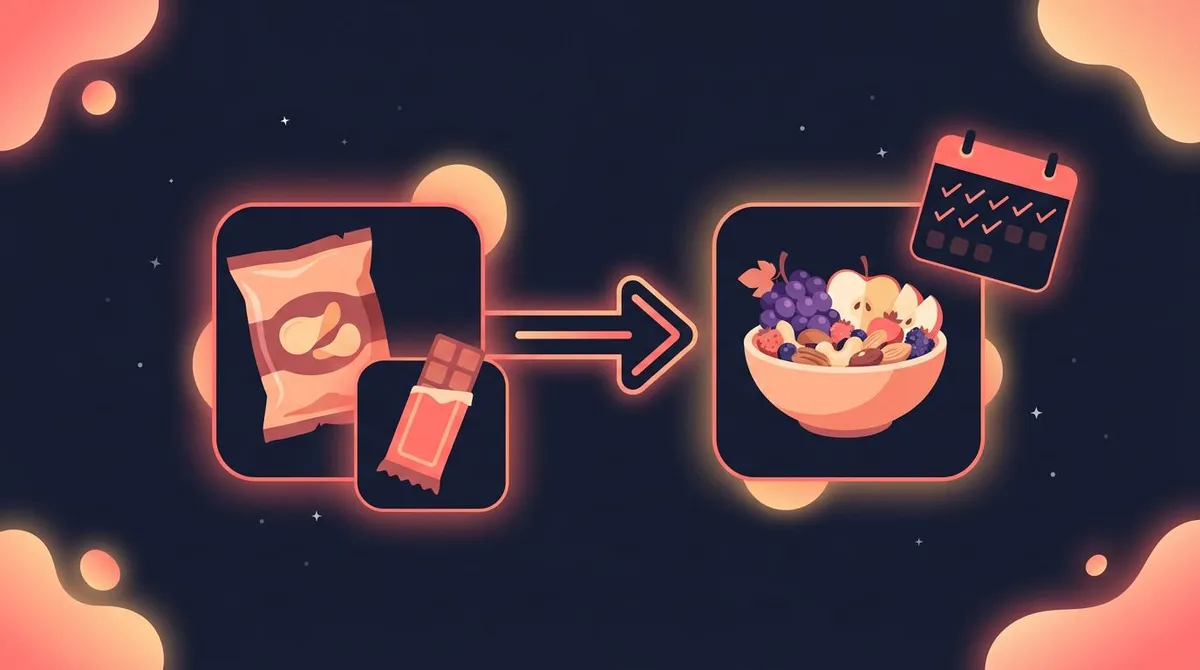
| Something sweet | Cookies, candy, ice cream | Berries, Greek yogurt, a piece of dark fruit |
| Salty crunch | Chips, crackers | Almonds, roasted chickpeas, veggie sticks |
| A drink | Beer, wine, cocktail | Sparkling water with lime, unsweetened iced tea |
| Fast food run | Burger and fries | Pre-cooked chicken bowl from the fridge |
| Sugary coffee | Flavored latte, frappe | Black coffee or coffee with milk, no syrup |
| Late-night snack | Cereal, toast, leftovers | Cottage cheese or a boiled egg |
None of these swaps are magic. They work because the decision is already made. When a compliant option is within reach, the off-plan choice loses most of its pull. That is the whole game on 75 Hard. You remove the moments where a slip is even possible.
Fueling the two daily workouts
The diet does not live on its own. On 75 Hard you train twice a day, 45 minutes each, with one session outdoors. That is real output, and your food has to keep up.
Two habits matter most here. First, eat enough protein. Protein supports recovery between sessions and keeps you full so cravings stay quiet. A common target is around 0.7 to 1 gram per pound of body weight, though your plan and doctor should guide the exact number. Our protein calculator turns that range into a daily gram target for your weight and training.
Second, time your carbs around movement. A meal with slow carbs before your first workout gives you steady energy. A carb source after training helps you refuel. This is not required by the rules, but it makes two-a-days far more sustainable.
Do not fall into the trap of eating too little "to see faster results." Under-eating on a two-workout day leaves you drained by evening. That is exactly when willpower is lowest and a slip becomes likely. Enough food is not a cheat. It is what keeps the streak alive.
How to handle restaurants, travel, and social events
Real life does not pause for 75 days. Weddings, work trips, and dinners out will land inside your window. Planning for them is the difference between finishing and restarting.
At restaurants, decide before you walk in. Scan the menu online and pick a compliant option in advance. Grilled protein with vegetables fits almost any plan. Ask for dressings and sauces on the side so nothing hidden breaks your rules.
For travel, pack a backup. A few protein bars that fit your plan, some nuts, or a pre-made meal can save a day when the only nearby option is fast food. Airports and gas stations are where undefined diets fall apart.
Social pressure is its own challenge. People will offer you a drink or a slice of cake. A simple line handles it: "I'm doing a 75-day thing, I'm good." You do not owe anyone an explanation. Protecting your streak is reason enough.
It also helps to eat before you go. Arriving at an event already fed takes the edge off temptation. A hungry version of you at a buffet is far more likely to rationalize a slip. A full version of you can enjoy the company and skip the risk. Small logistics like this are what separate a finished challenge from a restart.
What counts as a cheat meal (and why one restarts day 1)
This is where most 75 Hard attempts end. A cheat meal is any food or drink outside the plan you committed to. A slice of birthday cake counts. So does a "just one" fry off someone's plate, or a beer at a wedding. Under the official rules, there is no such thing as a small slip.
Alcohol is a hard no for all 75 days, with no exceptions. Not for holidays. Not for celebrations. WebMD lists the zero-alcohol and no-cheat-meal rule as core to the challenge. Break either one and your count resets to day 1.
The reason this rule bites so hard is psychological. Restarting a 40-day streak over one cookie is a steep penalty. That penalty can push people toward rigid, anxious eating. It is the exact all-or-nothing trap we will cover next.
So the practical move is to decide your plan's edges before day 1. Write down what is compliant and what is not. When the rules are clear, "is this a cheat?" is never a judgment call in the moment. It is just a yes or a no.
Is the 75 Hard diet safe?
The food itself can be perfectly healthy. A whole-food or Mediterranean plan with no alcohol is, for most people, an upgrade. The concern is the structure around it, not the groceries.
Registered dietitians have flagged real issues. In a review from RubyOak Nutrition, a registered dietitian cautions that 75 Hard has no rest days and no nutrition guardrails. The restart-on-any-slip rule, she notes, can encourage all-or-nothing eating rather than a healthy relationship with food. Penn State Health makes a similar point. The challenge's rigidity is where people get hurt or burn out, and a gentler version like 75 Soft suits many people better.
None of this means you should skip it. It means going in clear-eyed. Pick a genuinely balanced plan. Do not use the challenge as cover to under-eat. And if the restart rule is spiking anxiety around food, treat that as a signal to loosen the structure, not to white-knuckle through it.
This is general information, not medical advice. Check with your doctor or a dietitian before big diet changes. That matters most if you have any history of disordered eating.
75 Hard vs 75 Soft: a gentler diet rule
If the restart-at-day-1 rule feels like too much, you are not weak. You are being realistic. Many people choose 75 Soft instead, and the diet rule is where the two differ most.
On 75 Hard, the diet is absolute. Zero cheat meals. Zero alcohol. One slip and you restart. On 75 Soft, the food rule is softer by design. You eat well and cut back on alcohol, but an occasional treat does not blow up your whole run.
Here is the diet-side comparison:
| Rule | 75 Hard | 75 Soft |
|---|---|---|
| Diet | Strict plan, no cheat meals | Eat well, allow reasonable flexibility |
| Alcohol | Banned entirely | Limited, often weekends only |
| A slip | Restart at day 1 | Keep going, no reset |
| Rest days | None | Built in |
Neither version is "better." 75 Hard builds a specific kind of mental toughness through zero tolerance. 75 Soft builds a habit you can carry past day 75 without the anxiety. If the strict diet is making food stressful, switching is a smart call, not a failure.
Common 75 Hard diet mistakes to avoid
A few predictable traps end most attempts. Knowing them ahead of time is half the battle.
- Leaving the diet undefined. "Eat clean" is not a rule. Write exact yes and no foods before day 1.
- Forgetting drinks count. Juice, soda, and syrupy coffee can quietly break a plan. Decide your drink rules too.
- Under-eating on two-workout days. Two 45-minute sessions burn real energy. Eat enough to recover.
- No meal prep. Willpower fails when you are tired and hungry. Prepped food removes the decision.
- Not logging the day. If you do not track it, you cannot prove you did it — and doubt itself can restart you.
Handle these five and the diet becomes far less dramatic. Most of finishing 75 Hard is just removing the chances to slip.
How to track your diet compliance daily
Since one missed day means starting over, 75 Hard is really a tracking challenge wearing a diet costume. The people who finish are not the ones with the most willpower. They are the ones who never lose track of where they stand.
The simplest system is a daily yes/no check. Did I follow my diet today, with zero cheat meals and no alcohol? One tap, one honest answer. Seeing that streak grow taps into loss aversion. After 30 clean days, you protect the chain because breaking it costs so much. A habit tracker like HabitBox lets you log that daily check and watch the streak build across all five 75 Hard tasks in one place, so nothing slips through unlogged.
Consistency, not intensity, is what carries you to day 75. If your discipline tends to fade around week three, our guide on how to be consistent breaks down the friction-based tactics that outlast motivation. And fitness consistency covers keeping the two-workout habit alive when your energy dips.
Ready to start counting? Pick your plan, define your rules, and log day 1. HabitBox makes it easy to track your streak and see how far you have come — download it free.
What the first two weeks feel like
Knowing the shape of the challenge helps you push through the worst of it. The 75 Hard diet does not stay equally hard the whole way. The front end is the steepest.
Week one is an adjustment. If you cut sugar, alcohol, or processed food, expect a few low-energy days. Some people get headaches or crave their old snacks hard. This is normal and it passes. Drink your water, eat enough, and hold the line.
Week two is where old routines fight back. The novelty fades. A work event or a stressful day tempts you to "just this once." This is the danger zone, and it is exactly why the swap list and grocery list matter. When compliant food is easy to reach, week two gets much quieter.
By weeks three and four, most people report the diet feels more automatic. The meals repeat. The rules are second nature. This is habit formation in action. Research on habit strength suggests behaviors get easier as repetition builds, and a visible streak makes each clean day reinforce the next.
The takeaway is simple. Do not judge the whole challenge by its first week. The hardest part is usually the earliest part. Track each day, expect the dip, and let the routine carry you once it kicks in.
Putting your 75 Hard diet plan together
Here is the whole thing in one place, as a short checklist you can act on today:
- Pick one diet you can repeat for 75 days without drama.
- Write your rules — exact yes foods, no foods, and drink rules.
- Stock the kitchen with the food list above so slips have no opening.
- Prep two or three meals ahead so tired-you never has to decide.
- Plan your swaps for the cravings you know will show up.
- Log day 1 and check off your diet every single day.
That is the entire diet side of 75 Hard. Notice how little of it is about the food itself. Most of it is about removing friction and tracking honestly. Do those two things and the menu takes care of itself.
FAQ
What can you eat on the 75 Hard diet?
Are cheat meals allowed on 75 Hard?
Can you drink alcohol on the 75 Hard diet?
Do you have to count calories on 75 Hard?
Is the 75 Hard diet healthy?

Mira Hartwell
Editor, HabitBoxEditor at HabitBox. Writes about habit science and productivity, grounding every post in named research (Lally, Wood, Walker, Huberman) instead of recycled advice. Read full bio →