75 Hard Alternatives: 6 Gentler Challenges (2026)
Looking for a 75 Hard alternative? There are 6 solid ones, and the best pick depends on why 75 Hard felt too hard. If the two daily workouts, the zero-rest-day rule, or the restart-on-any-slip penalty broke you, a gentler challenge will get you further. For most people, 75 Soft is the top choice - same 75-day length, but one workout, a weekly rest day, and social drinking allowed.
The reason gentler often wins is simple: a challenge only builds discipline if you actually finish it. Below you'll find all six alternatives in one comparison table, an honest look at what each demands, and a short decision guide so you can pick the one you'll realistically complete.
Why look for a 75 Hard alternative
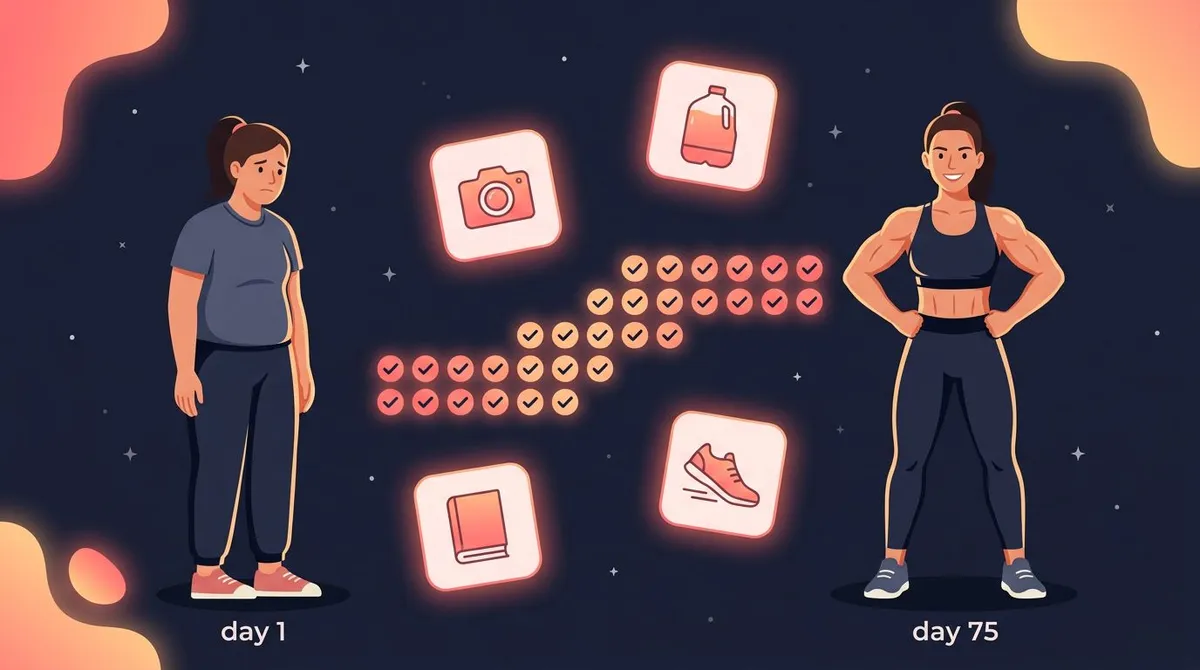
75 Hard, created by entrepreneur Andy Frisella, runs for 75 days and asks a lot every single day: two 45-minute workouts (one must be outdoors), a strict diet with zero alcohol, one gallon of water, 10 pages of nonfiction, and a daily progress photo. Miss any one task, and you restart at day one.
That last rule is where most people fall off. It's all-or-nothing by design, so a single missed workout on day 40 erases six weeks of effort. For a full breakdown of why rigid streaks snap and how to recover, see our guide on how to be consistent without the pressure of a perfect record.
The other two pain points are volume and rest. Two workouts a day is a big time commitment - often 90 minutes or more once you count changing and travel - and with no scheduled rest day, recovery gets squeezed for 75 days straight. Cleveland Clinic health and sports psychologist Dr. Matthew Sacco notes that for beginners, "if you have to start over anytime you take a break... it's going to be very difficult to find the motivation." His broader advice is to scale down: "it's better... if you try to tackle one small thing at a time until... you feel comfortable." A gentler challenge trades a little intensity for a much higher chance of crossing the finish line.
None of this means 75 Hard is bad. For people who thrive under rigid, non-negotiable structure, the all-or-nothing rule is the point - it removes the option to negotiate with yourself. But that same rule is why completion rates are low, and an unfinished challenge builds far less discipline than a finished easier one. The alternatives below keep the daily structure that makes challenges work while removing the single feature most likely to end your attempt early.
The 6 best 75 Hard alternatives compared
Here's every alternative side by side, so you can match the rules to your life before you commit. Difficulty is rated relative to 75 Hard, which sits at the top of the scale.
| Challenge | Duration | Core daily rules | Restart on a slip? | Difficulty | Best for |
|---|---|---|---|---|---|
| 75 Soft | 75 days | 1 workout (45 min), eat well, 3L water, 10 pages reading; one active-recovery day/week; alcohol only socially | No | Moderate | Beginners who want structure without the all-or-nothing penalty |
| 75 Medium | 75 days | 1 workout/day, semi-strict diet, one drink allowed per week, daily reading, water goal | No (community norm) | Moderate-hard | People who found 75 Soft too easy but 75 Hard too extreme |
| Operation 66 | 66 days | 1 workout (45-60 min), 90/10 diet, 16oz water on waking, 30-60 min on a personal goal, screen limits, 10 min stretch/meditation | No | Moderate | Habit-builders who want a lifestyle focus, not just fitness |
| Winter Arc | Flexible (often Oct-Dec) | Self-set rules: movement, sleep, screen limits, one focus goal; you define the bar | No | You decide | Self-starters who want to customize intensity and dates |
| 30-day challenge | 30 days | Single-focus (e.g. daily walk, water, or a plank progression) | Usually no | Easy-moderate | Anyone easing in or testing whether a challenge format suits them |
| Custom habit stack | You choose | 2-4 habits you pick, tracked daily, no external rulebook | No | You decide | People who want a challenge shaped entirely around their own goals |
75 Soft is the most popular alternative for a reason: it keeps the 75-day arc that makes 75 Hard feel meaningful, but removes the pieces that break people. Women's Health and TODAY both credit its rise to that balance - it feels like a real challenge without demanding two workouts and a gallon of water a day. The Cleveland Clinic breakdown of 75 Soft lists four daily rules: 45 minutes of exercise with one active-recovery day each week, eating well and drinking only socially, three liters of water, and 10 pages of reading. Nothing on that list requires a gym or a rigid meal plan, which is why beginners tend to finish it.
75 Medium is the unofficial middle rung. There's no single founder or rulebook - it emerged from communities who found 75 Soft too gentle but 75 Hard too punishing. The common version keeps one workout a day, tightens the diet toward "clean but not zero-flexibility," allows one alcoholic drink per week, and holds onto daily reading and a water target. Treat it as a dial you can turn: if 75 Soft bored you but 75 Hard scared you, this is your lane.
Operation 66, created by influencer Angelina Nicolle, leans on a different idea entirely. It runs 66 days "based on the premise that habits take 66 days to become automatic" - a nod to the well-known habit formation research finding that new behaviors take a median of 66 days to feel automatic (Lally et al., UCL), not the mythical 21. Its six daily tasks are broader than 75 Hard's: one workout, a 90/10 diet where 90% of food is whole and unprocessed, 16 ounces of water on waking, 30 to 60 minutes on a personal goal, screen limits at the start and end of the day, and 10 minutes of stretching or meditation. It's less a fitness program than a whole-day reset.
Winter Arc is the most flexible option on the list. It's a seasonal push - usually October through December - where you set your own rules around movement, sleep, screens, and one focus goal. That freedom is a double edge: it fits your life perfectly, but "flexible" collapses into "optional" the moment you skip writing the rules down. If you pick this one, define your daily bar in advance and treat it as fixed.
The last two options trade a named program for total control. A 30-day challenge narrows everything to one behavior - a daily walk, a water goal, a plank progression - which makes it the gentlest on-ramp here and a good way to test whether the challenge format even suits you. A custom habit stack goes further still: you choose two to four habits, track them daily, and answer to no external rulebook. Both work best for people who already know exactly which behaviors they want to build.
If you want to build a fitness routine specifically, a single-focus 30-day water challenge or 30-day plank challenge can be a smart on-ramp before you attempt a full 75-day program.
How to pick the one you'll actually finish
Start from the reason 75 Hard didn't work, not from which challenge sounds most impressive. The best alternative is the one whose hardest day you can still hit when you're tired, busy, or unmotivated.
Use these three questions to narrow it down:
- Was the problem the restart rule? Any alternative here fixes that, since none forces you back to day one for a single miss. Pick based on your other constraints.
- Was the problem the time? Two workouts a day is the biggest lift in 75 Hard. 75 Soft, 75 Medium, and Operation 66 all drop you to one daily workout - a roughly 50% cut in training time.
- Was the problem the rigidity? If you want to set your own rules, Winter Arc or a custom habit stack lets you define the bar. Just write the rules down before you start, or "flexible" quietly becomes "optional."
A useful gut check: read the daily rules and imagine your worst day of the week. If you can still picture yourself completing every task on that day, the challenge is sustainable. If even one rule makes you wince, scale it down. Finishing a moderate challenge beats abandoning a hard one on day 12.
If discipline itself is the sticking point rather than the rules, our guide on how to be more disciplined covers the systems that make daily follow-through easier regardless of which challenge you choose.
How to run and track any challenge
Every challenge on this list is really a multi-habit streak: a few daily tasks you have to hit for a set number of days. That makes tracking the single biggest predictor of whether you finish. When your progress is visible, a missed day feels like a slip to recover from, not a reason to quit.
Set it up in three steps:
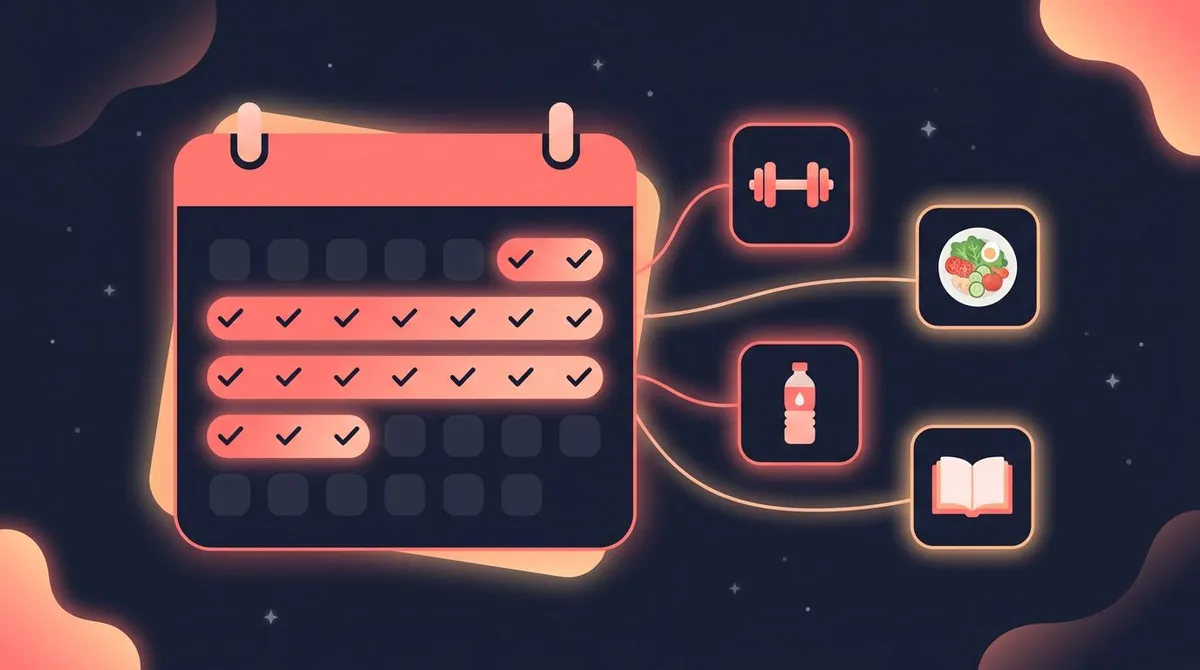
- List each rule as a separate daily habit. For 75 Soft, that's four check-ins: workout, water, reading, nutrition. Splitting them out means a missed workout doesn't erase your water and reading wins.
- Track every day and watch the streak. Seeing a chain of completed days taps into loss aversion - you don't want to break what you've built. It also surfaces slips early, before a bad week becomes a lost month.
- Review weekly. Most challenges have one habit that's harder than the rest. A weekly glance at your completion rates tells you which rule to shore up.
A dedicated tracker like HabitBox makes this easy - set the day up as one goal habit with a daily target of four (or six), tap once for each rule you finish, and use the calendar heatmap to spot patterns. Want each rule as its own streak, as in step 1? That's what Plus is for. The streak visualization works as a mild external nudge to keep you honest through the first few weeks, when motivation is thinnest and the habit hasn't set yet.
One more tip: plan your recovery in advance. Decide now what you'll do when you miss a day, because you will miss one. In an all-or-nothing program that means starting over; in every alternative here, it means logging today and moving on. Writing that rule down before you start removes the "I already blew it, why bother" spiral that ends most challenges.
The goal isn't a perfect record. It's a high enough completion rate that the behavior sticks past day 75 - which is the whole point of doing a challenge in the first place. Whichever one you pick, sustainable beats extreme: the challenge you finish is the one that actually changes how you live.
FAQ
What is a good alternative to 75 Hard?
What is easier than 75 Hard?
Is 75 Soft as effective as 75 Hard?
What is the 75 Medium challenge?
How do you choose a challenge you'll actually finish?

Mira Hartwell
Editor, HabitBoxEditor at HabitBox. Writes about habit science and productivity, grounding every post in named research (Lally, Wood, Walker, Huberman) instead of recycled advice. Read full bio →