30 Day Squat Challenge: Plan + Chart
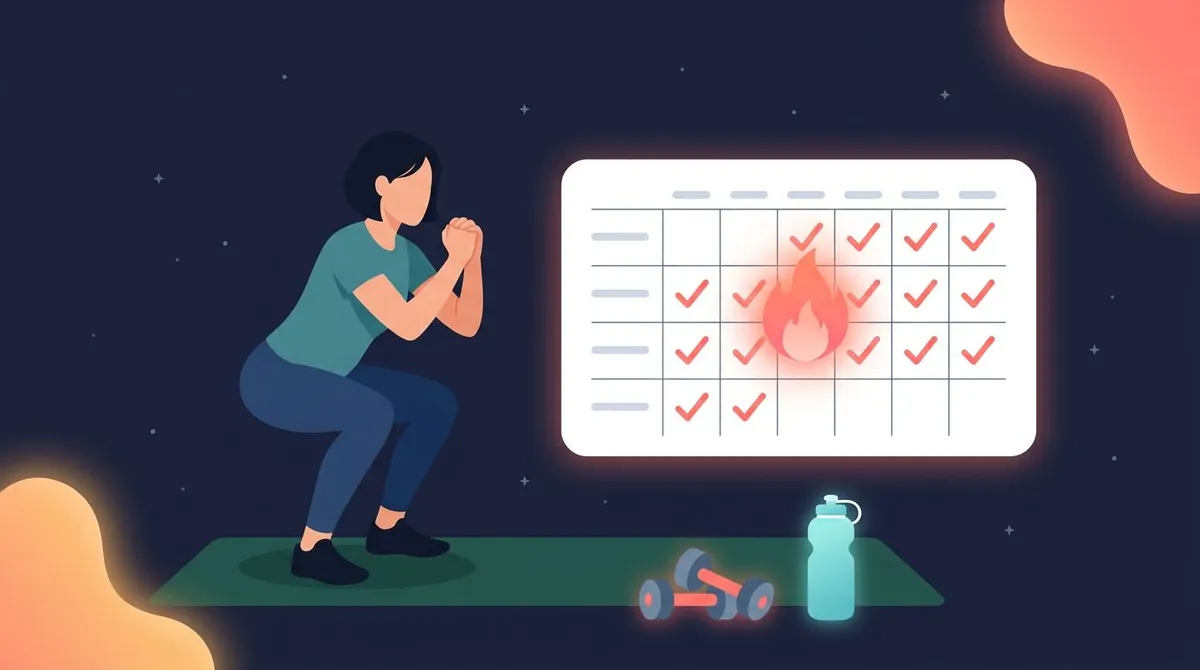
TL;DR: This 30 day squat challenge builds from 20 to about 150 bodyweight squats a day using a progressive plan with 5 built-in rest days — the piece most challenges skip. The end of the first week is often where a squat streak breaks, so plan for it: the usual culprit isn't difficulty but a no-rest linear ramp that leaves you sore, discouraged, and off-schedule. Below you get the full day-by-day chart, proper form, ways to scale up or down, honest results, and a simple streak system so you actually reach day 30.
Why squat challenges often stall after the first week
Search "30 day squat challenge" and you'll find the same chart everywhere: 50 squats on day one, climbing a few reps daily, no days off, ending somewhere near 250. It looks motivating. It also ignores how muscles adapt.
Squats load your quads, glutes, and hamstrings. Those muscles get stronger during recovery, not during the reps. Pile on more volume every single day and delayed-onset muscle soreness stacks up faster than your legs can repay it.
On a no-rest plan, day 8 can land with sore legs and a rep count that now feels punishing. You miss a day. Then the "chain" feels broken, and the whole thing quietly ends. The good news is that this is a scheduling problem, not a willpower problem — and it's fixable.
The U.S. Physical Activity Guidelines for Americans recommend muscle-strengthening activity on 2 or more days a week, with recovery time between sessions that work the same muscles. A challenge that trains legs hard seven days a week runs against that basic recovery logic. Rest days aren't a break from the plan — they're part of it.
The day-by-day 30 day squat challenge chart
This plan builds gradually and includes a rest or active-recovery day roughly every fifth day. On rest days you do zero squats — you walk, stretch, or just let your legs recover. Reps are bodyweight squats; split them into 2 or 3 sets across the day if a single set is too much.
| Day | Squats | Notes |
|---|---|---|
| 1 | 20 | Focus on form, not speed |
| 2 | 25 | Split into 2 sets if needed |
| 3 | 30 | |
| 4 | 35 | |
| 5 | Rest | Walk or stretch |
| 6 | 40 | |
| 7 | 45 | |
| 8 | 50 | Sore? A rest day is two days away |
| 9 | 55 | |
| 10 | Rest | Active recovery |
| 11 | 60 | Split into sets freely |
| 12 | 70 | |
| 13 | 75 | |
| 14 | 80 | |
| 15 | Rest | Halfway — check your form |
| 16 | 85 | |
| 17 | 90 | |
| 18 | 100 | Three sets is fine |
| 19 | 105 | |
| 20 | Rest | Active recovery |
| 21 | 110 | |
| 22 | 115 | |
| 23 | 120 | |
| 24 | 125 | |
| 25 | Rest | Stretch, hydrate |
| 26 | 130 | |
| 27 | 135 | |
| 28 | 140 | |
| 29 | 145 | |
| 30 | 150 | Finish strong |
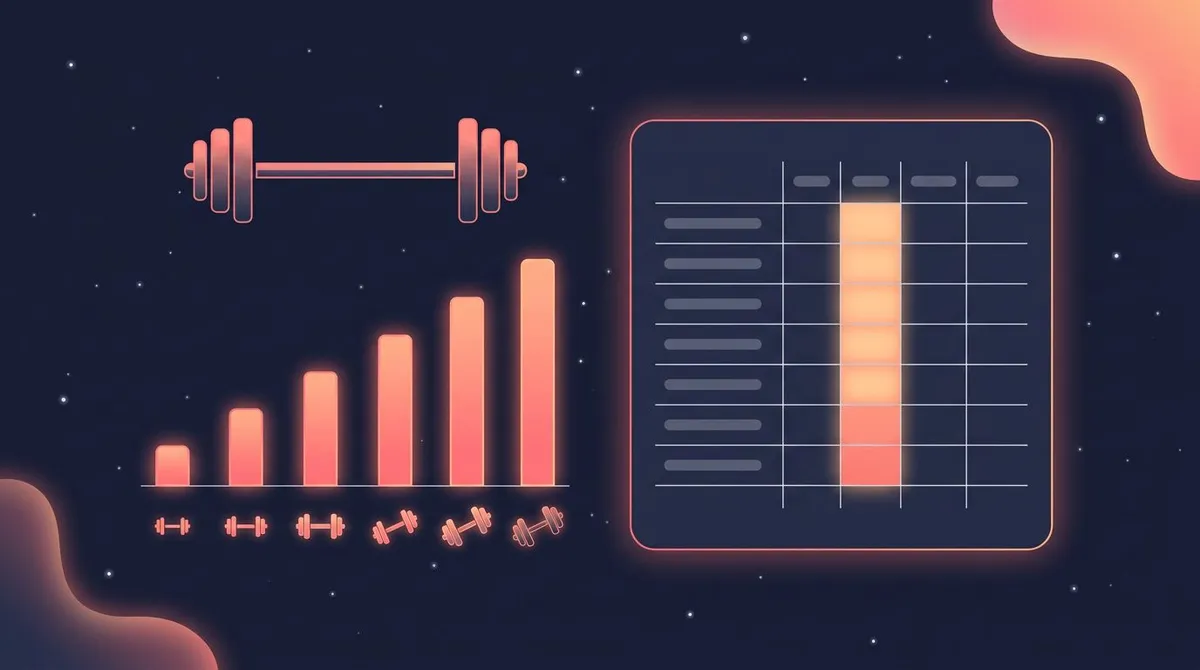
By day 30 you're doing about 150 bodyweight squats — a genuine jump from day one, reached without training your legs into the ground. If any day feels too easy, add a pause at the bottom of each rep. If a day feels too hard, repeat the previous day's number instead of climbing. The chart is a guide, not a contract.
Proper squat form (and the mistakes that cause knee pain)
Volume only helps if the reps are clean. A bad squat repeated 150 times builds a bad pattern, and it's the fastest route to sore knees. Here's the bodyweight squat, step by step.
- Stand with feet about shoulder-width apart, toes turned out slightly.
- Push your hips back as if reaching for a chair behind you.
- Bend your knees and lower until your thighs are roughly parallel to the floor (or as low as you can go with a flat back).
- Keep your chest up and your weight in your midfoot and heels, not your toes.
- Drive through your heels to stand back up, squeezing your glutes at the top.
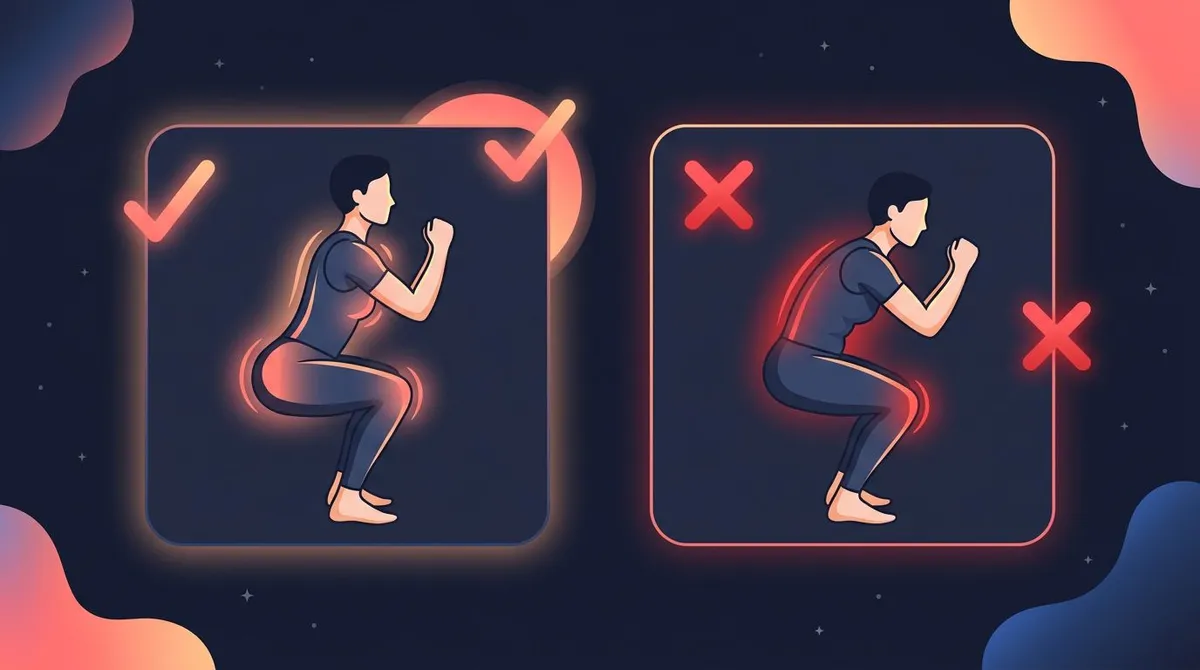
The most common mistakes are letting the knees cave inward, rounding the lower back, and rising onto the toes. Each one shifts load away from the muscles you want to work and onto joints and connective tissue that aren't built to absorb it rep after rep.
Research on squat mechanics — including work by Brad Schoenfeld in the Journal of Strength and Conditioning Research — has found that a controlled squat to at least parallel, performed with a neutral spine, is safe and effective for building lower-body strength when form holds. Depth matters here: squatting to parallel recruits the glutes and hamstrings far more than a shallow quarter-squat, which is why the plan values clean, deep reps over a higher count of half reps.
Pro tip: film one set from the side on your phone. Seeing your own hip and knee path once tells you more than any written cue. And a health note worth repeating — squats should challenge your muscles, not sharpen into knee pain. If you feel a specific joint pain (not general muscle fatigue), stop and scale back.
Variations to scale the challenge up or down
The same chart works whether you're brand new or already training, because you swap the squat variation to match your level. Keep the rep counts from the plan; change the difficulty of each rep.
- Chair squats (easiest): Sit down to a chair and stand back up. Perfect if you're new to squatting or rebuilding after a break.
- Box or bench squats: Lower until you lightly tap a surface, then stand. Teaches depth and control.
- Standard bodyweight squats: The default for this plan.
- Tempo squats: Take 3 seconds to lower and pause 1 second at the bottom. Adds difficulty with no extra reps.
- Bulgarian split squats: One leg elevated behind you. Count each leg's reps separately for a serious step up.
- Jump squats (hardest): Explode off the ground at the top. Use these only if your knees feel good and your form is solid.
If you want to bias the work toward your glutes, push your hips back further and pause at the bottom — that increases the stretch on the glute muscles. Building any exercise into your week is far more about consistency than intensity, which is exactly why a repeatable plan beats an all-out one.
Realistic results: what 30 days of squats actually does
Here's the honest part most challenge posts skip. Thirty days of bodyweight squats will noticeably improve your lower-body strength, endurance, and how squatting feels — climbing stairs, standing from a chair, and holding a squat all get easier. Many people also feel their legs and glutes look a little more toned.
What 30 days will not do is dramatically reshape your body. Visible muscle growth and fat loss are slow processes driven by progressive overload, total weekly training, sleep, and nutrition over months — not a single 30-day bodyweight block. The CDC's adult activity guidance frames strength work as a long-term, ongoing habit for exactly this reason.
You may also notice benefits that have nothing to do with your legs. Squatting daily improves hip and ankle mobility, and many people report better balance and less stiffness from sitting all day. Those quality-of-life wins tend to show up faster than any visible muscle change.
So treat this challenge as what it is: an on-ramp. Its real payoff is proving to yourself that you can show up for 30 days straight, and building a base you can carry into weighted squats or a longer routine afterward. That mindset shift — from "transform in a month" to "start a habit that lasts" — is what actually changes bodies over time.
How to actually finish all 30 days
Finishing is a consistency problem, so solve it with a consistency system, not more motivation. Three things move the needle most.
Anchor it to something you already do. Attach your squats to an existing daily cue — right after you brush your teeth, or before your morning shower. A fixed trigger removes the daily "when will I do this?" decision that quietly kills challenges. This is the same cue-based approach behind making exercise a lasting habit.
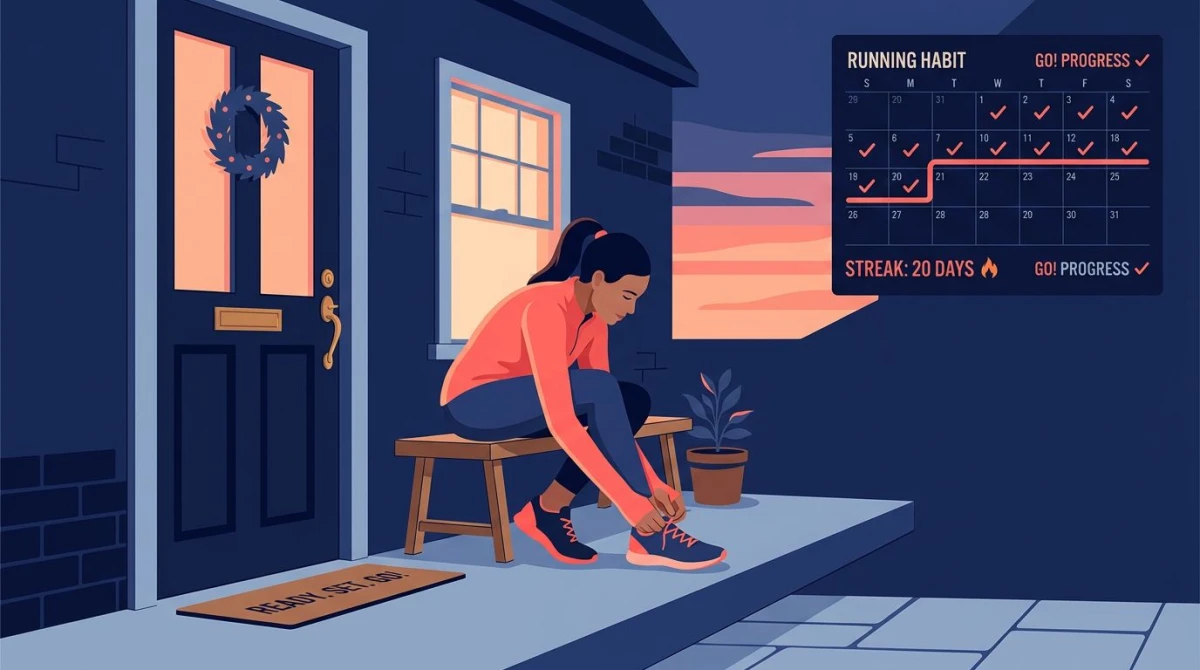
Track a visible streak. Marking each completed day builds a chain you don't want to break — the same loss-aversion pull that makes a running streak so sticky. Seeing 12 days in a row is a real reason to make it 13. A tracker like HabitBox turns this into a one-tap daily check-in, with a streak counter and calendar heatmap so all 30 days sit in front of you.
Have a restart rule before you need one. Missing a day does not break the challenge — treating one miss as total failure does. The rule is simple: never miss twice. If you skip a day, just do that day's number the next day and continue; don't try to double up. This "never miss twice" idea is the backbone of staying consistent with any habit.
If you're layering squats onto a broader plan, it fits naturally into a morning workout routine, and the same finish-the-30-days logic applies if you're starting to run. Pick your cue, track your streak, and let the rest days do their job.
FAQ
What is a 30 day squat challenge?
How many squats should I do per day?
Will a 30 day squat challenge give results?
Should I take rest days during a squat challenge?
Is it bad to do squats every day?

Mira Hartwell
Editor, HabitBoxEditor at HabitBox. Writes about habit science and productivity, grounding every post in named research (Lally, Wood, Walker, Huberman) instead of recycled advice. Read full bio →