Finch App Review 2026: Is It Free? Pros & Cons
This Finch app review covers the self-care app where you grow a virtual bird by doing small wellness tasks. Finch is one of the highest-rated wellness apps anywhere: 4.9 stars from more than 754,000 US App Store ratings and another 624,000 on Google Play. It is best for anxious beginners who want a low-pressure way to show up for themselves each day. But its habit-tracking is shallow next to a real tracker like HabitBox (our own app), the pet can start to feel like a chore, and there is a 2.4-star Trustpilot score that deserves a straight explanation rather than a scare headline. Here is how it works, what Finch Plus actually costs in 2026, what people complain about, and who should pick something simpler.
How this review is put together: every number below — ratings, review counts, in-app purchase prices, store badges — was re-checked against the primary source on 21 September 2026: Apple's App Store listing, Finch's Google Play listing, Finch's own site, and the Trustpilot profile. The qualitative read comes from those listings' reviews and from published reviews we link to, not from a claim to have lived in the app. Where a figure could not be verified at a primary source, it was cut rather than rounded.
The real question most people ask before downloading Finch is simple: does turning self-care into caring for a virtual bird keep you consistent? For a lot of users the answer is yes, at least at first — and whether it keeps working depends on whether you need gentle emotional support or hard data on your habits. This review walks through both.
What Finch is and who it's for
Finch is a self-care app built around a single hook: you adopt a baby bird, name it, and help it grow by taking care of yourself. Each small act of self-care — drinking water, taking three deep breaths, writing a few lines in a journal — sends your bird off on an adventure and earns rewards you can spend on accessories and furniture.
The bird is the emotional engine of the whole experience. It greets you in the morning, cheers you on, and reflects your effort back at you. It never dies if you skip a day, which removes the guilt that makes many wellness apps feel like another source of pressure.
Under the cute surface, Finch blends a few tools. Its App Store listing names a goal tracker, guided bullet journaling, breathing exercises, a mood tracker with trends, quizzes that track anxiety, depression and body image over time, sleep wind-downs, and a combined insights view. It is closer to a gentle wellness companion than a pure habit tracker.
That gap matters. Say you want a calendar heatmap, streak stats, and one-tap check-ins for fifteen habits. Finch is not built for that. But if you want a soft nudge to look after your mental health, it is one of the best apps in the category.
Best for: people who are anxiety-prone, new to habit-building, easily discouraged by strict trackers, or who simply respond well to a warm, gamified tone. The Finch self-care app leans hard into emotional support, and that is its biggest strength.
How Finch works day to day
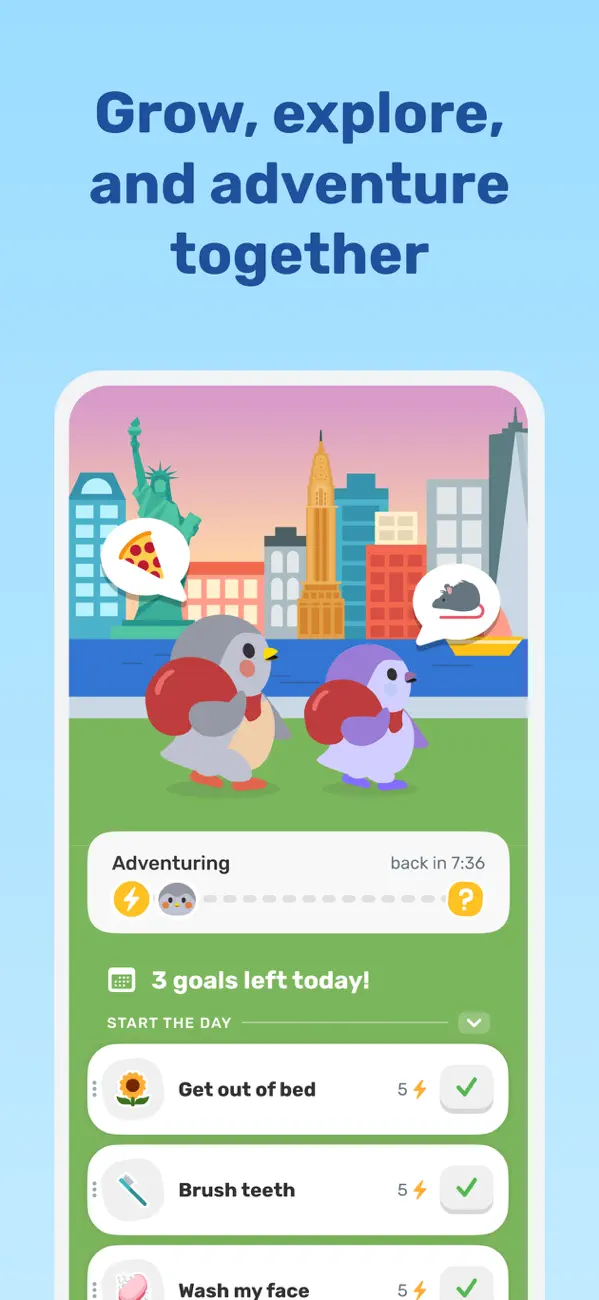
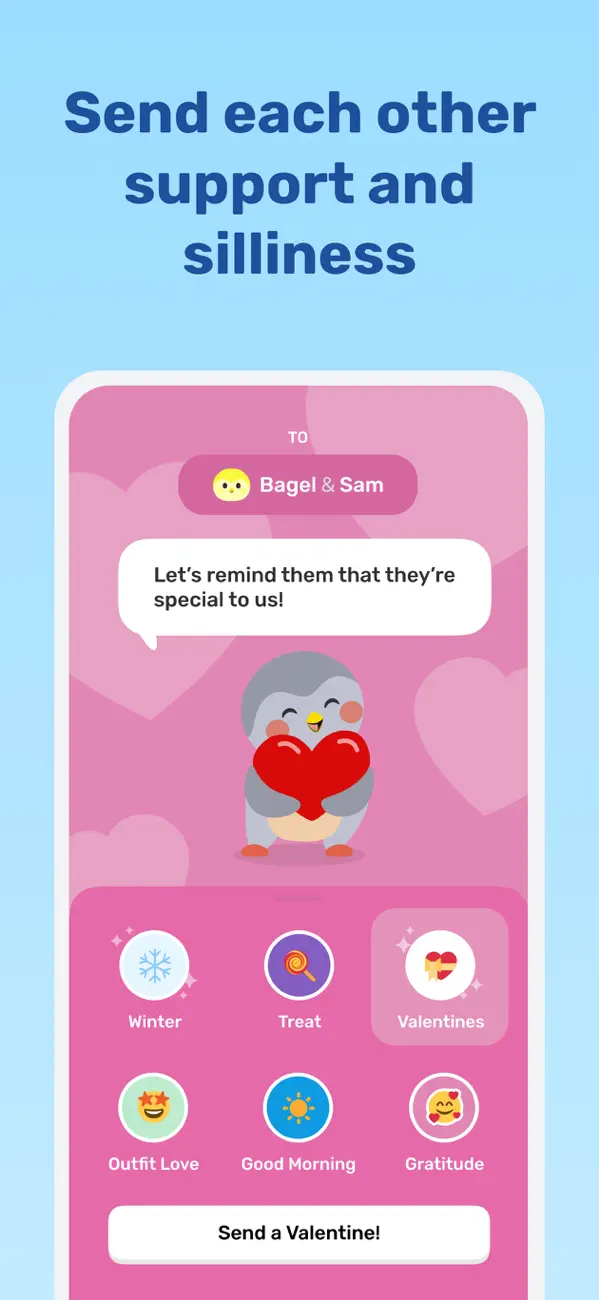
Open Finch in the morning and your bird greets you, often with a small personalized message. From there, your day runs on a short loop of rituals, tiny goals, and a closing reflection. Understanding that loop is the fastest way to judge whether the app fits your routine.
Set tiny, customizable goals
Finch lets you build a list of daily goals that stay small on purpose: "drink one glass of water," "step outside," "journal three lines," "stretch for two minutes." You can use the app's ideas or write your own. One reviewer at Polyglossic added reading and language goals without paying a cent. That shows how flexible the free goal system is.
This small-goal design is sound behavior science. Shrinking a habit until it feels easy lowers the energy you need to start. That is exactly how self-care habits tend to stick.
Complete rituals and check in on your mood
Throughout the day you complete "rituals" — bundles of guided activities like breathing exercises, grounding techniques, short meditations, and soundscapes. Each completed task helps your bird grow and earns rainbow stones, the in-app currency.
Mood check-ins are woven in as well. You log how you feel, and Finch surfaces patterns in an insights view that combines your mood entries, journal tags, goals and quiz results. It is lighter than a dedicated tracker but enough to spot trends.
Reflect in the evening
The day closes with reflection: bullet-journal prompts, gratitude entries, and the occasional self-assessment quiz. The tone is consistently gentle, and that emotional warmth is what keeps many users coming back.
You can also connect with friends through a friend code for quiet, pressure-free accountability — no public feed, no social-media performance. It is a thoughtful touch for people who want support without exposure.
The loop is satisfying, and the first few weeks can feel genuinely uplifting. The honest caveat is that the same loop can flatten into routine once the novelty fades, which is where some users drift away.
Finch pricing: free vs paid (Finch Plus) in 2026
Finch is free to download, and the free tier is unusually generous. Finch's own about page puts the core loop on the free side: caring for your bird and sending it on adventures, setting personal goals, writing reflections, sending good vibes to friends, and joining seasonal events. There are no ads either — the Google Play listing carries an "In-app purchases" badge but no "Contains ads" badge, checked 21 September 2026.
Finch Plus is the paid upgrade, and Finch does publish the headline numbers: its help centre's pricing article lists a yearly subscription at $69.99 and a monthly at $9.99. The App Store listing, checked 21 September 2026, shows nine separate Finch Plus in-app purchases ranging from $5.99 to $69.99 — including $34.99, $39.99, $41.99, $49.99 and $59.99 — so the annual figure you are actually offered may land well below the $69.99 list price. That is why different reviews quote different annual numbers. A separate $7.99 Guardian Program purchase sits alongside them.
One wrinkle is worth a flag, and it comes from Finch itself: the about page shows no price and points you at the help centre, which in turn tells you to check the offer shown inside your own app before subscribing. Take that literally. The offer varies by platform, region and promotion, and the number on your screen is the only one that will be charged.
| Tier | What you get | Cost (Sep 2026) |
|---|---|---|
| Free | Bird care and adventures, personal goals, reflections, mood check-ins, good vibes to friends, seasonal events, no ads | $0 |
| Finch Plus | Extra reflection prompts, more goal and good-vibe emoji, expanded activities and timer options, extra seasonal rewards and shop options | $9.99/month or $69.99/year list price; Apple also lists offers at $5.99, $34.99, $39.99, $41.99, $49.99 and $59.99 |
What you actually give up on the free tier
This is the question most "free vs paid" searches are really asking, and the answer is reassuring: nothing structural. The daily loop — goals, rituals, mood check-ins, journaling, the bird itself — is available without paying. By Finch's own description, Plus adds more of the same: extra reflection prompts, more emoji choices for goals and good vibes, expanded activities and timer options, and more seasonal rewards and shop items. It is a depth-and-cosmetics upgrade, not a gate on the core product.
The practical effect is that free users hit variety fatigue rather than a wall. When you run out of prompts and activities you want to use, that is the moment Plus starts to make sense.
The billing flow deserves one caution, because it is the single most common complaint about Finch anywhere online. The subscription pitch arrives early, often before you know what Plus even means, and it pairs a free trial against a discounted price. Finch's own FAQ describes two different trials — a 3-day Plus trial that "ends automatically, no subscription," and a 7-day trial that "turns into a subscription unless manually canceled" — and neither store listing says which one you are being shown. So read the offer on your screen, manage the subscription through your Apple or Google settings rather than inside the app, and set a reminder a day before the trial ends. That one habit prevents nearly every billing story in the next section.
Pro tip: try the free tier for two to three weeks first. Finch's core is strong enough that you will know quickly whether the pet mechanic motivates you — and that is the only thing the subscription amplifies.
What Finch does well
Finch earns its 1.38 million app-store ratings for a few clear reasons, and it is worth being specific rather than waving at "it's cute."
The tone is truly low-pressure. Your bird never dies, streaks never punish you, and missing a day costs you nothing. For people who have quit stricter apps out of shame, this matters a lot. Research on healthy habits from the American Psychological Association points to steady effort and self-kindness over perfection. Finch is built around that idea.
It is warm without being clinical. The greetings, the small wins, and the gentle language make self-care feel doable rather than like one more chore list. Reviewers single this out as the thing that sets Finch apart.
It is strong for anxious and burned-out users. Across reviews, Finch comes up again and again as a help for people with anxiety or burnout. The grounding exercises, breathing routines, and mood check-ins give you tools for the moment, not just tracking. Pairing Finch with a few calming self-care rituals can be a good daily anchor.
The free tier respects you. No ads, no aggressive upsells, and real functionality without paying. That is increasingly rare, and it builds trust.
Where Finch falls short
A fair review names the limitations too. None of these are dealbreakers for the right user, but they matter if you are choosing Finch as your main habit system.
Habit-tracking depth is limited. Because Finch's streaks never penalize missed days, the app deliberately softens accountability. That is compassionate, but it also means you do not get the streak stats, completion-rate analytics, or long-term calendar view that serious habit-builders rely on. As the Polyglossic review put it, the lack of consequences can reduce accountability for people who thrive on a "don't break the chain" mechanic.
The interface has a learning curve. Finch packs a lot — pet care, currency, quizzes, activities, soundscapes — into one app. New users can find the early experience dense before it clicks.
Goal completion can feel all-or-nothing. Goals are marked done or not done, with limited support for partial progress or count-based tracking (like "7 of 10 glasses of water"). Time-based reminders are also less flexible than in dedicated trackers.
The gamification can become a chore. This is the most common long-term complaint. The same pet mechanic that delights you in week one can start to feel like one more thing to tend in month three. Our guide to game-style habit systems covers why gamification fades with the novelty and how to build for the boring middle.
Support and stability draw recurring gripes. Finch ships features fast, and a subset of long-time users say the app has become less stable as it has grown, with crashes and lag around big seasonal events, and slower, more generic support replies. This is a minority report rather than what most people experience — but it is worth knowing before you commit to an annual plan.
Finch's rating split: 4.9 on the App Store, 2.4 on Trustpilot
Search around for Finch reviews and you will eventually hit a number that looks alarming. Checked on 21 September 2026, Finch holds 4.9 stars from 754,061 US App Store ratings and 4.9 (4.88 before rounding) from 623,766 ratings on Google Play, with over 10 million Play downloads. On Trustpilot, the finchcare.com profile sits at 2.4 out of 5, labelled "Poor."
That gap reads like a scandal. It is not one. Here is the honest reconciliation.
The two samples are not remotely comparable. That 2.4 is built from fourteen reviews. Fourteen — against roughly 1.38 million ratings across the two app stores. One bad month in a support inbox moves a score that small by a full star, which makes it closer to anecdote than measurement.
The two platforms collect from different moments. App stores ask you inside the app, usually while things are going well and you are mid-streak. Trustpilot is somewhere you go deliberately, after a company has done something to you — an unexpected charge, an email nobody answered, a refund refused. Nobody opens Trustpilot to report that their bird looked nice today. This selection effect applies to almost every consumer app with a Trustpilot page.
Nothing is pulling the other side in. Trustpilot flags the finchcare.com profile as unclaimed and adds its own caveat that the company "hasn't invited their customers, so reviews may not be representative." Companies that actively solicit reviews get a broad sample; companies that don't get only the self-motivated — and frustration is a far stronger motivator than contentment.
What the complaints are actually about
A tiny sample is useless as a score but still useful as a list of themes. Reading the reviews Trustpilot displays — the most recent of which dates to June 2026 — the complaints cluster into four groups:
- Trial and subscription billing. By some distance the most repeated theme, in roughly five of the reviews. People describe starting a free trial, never seeing the reminder they expected, and finding a charge on their card. One is titled "Poor information on app fees." This is the complaint with a real fix: manage the subscription in your platform's own settings and diary the trial end date.
- Support responsiveness. The largest theme by count: seven of the thirteen reviews Trustpilot currently displays mention support, several from long-term paying users, saying replies are slow, generic, unrelated to what was asked, or absent.
- App stability. Two reviews describe crashes and lag, one of them tied to the pace of recent updates.
- Data loss, rarely. A single reviewer reports losing three years of history. Rare, but a reminder to use the backup options in Finch's own "Your Data" settings.
So is there a "Finch controversy"?
Not in the sense the phrase implies. There is no ethics story, no data scandal, no bait-and-switch on what the app does. What exists is a set of business-model frictions around an app that most of its users genuinely love: a trial-to-paid flow that catches people out, two different trial lengths that the store listings never distinguish, and a feature-release pace that has outrun stability for some users. Those are fair criticisms. They are not a reason to avoid the app.
The right conclusion from the Trustpilot score is narrow and useful: Finch is a well-made product with an ordinary consumer-subscription business attached to it. Judge the product on the app stores. Judge the billing on the complaints — and then go set that calendar reminder.
Finch features vs what each is good for
Here is the honest breakdown of Finch's main features, what each does well, and where each runs into limits.
| Feature | Where it shines | Where it falls short |
|---|---|---|
| Pet & gamification | Emotional warmth, novelty, and a reason to show up daily | Can become a chore once novelty fades; not for people who dislike gamification |
| Mood check-ins | Easy logging with trend insights over time | Lighter than a dedicated mood tracker; fewer granular metrics |
| Habit/ritual tracking | Gentle, guilt-free, flexible custom goals | No real streak stats or calendar heatmap; all-or-nothing completion |
| Reflections & journaling | Strong prompts, grounding exercises, breathing tools | More prompts sit behind Finch Plus |
| Pricing | Generous, ad-free free tier; nothing core is paywalled; list prices published in the help centre | The offer in your app may differ from the list price; trial-to-paid billing catches people out |
The pattern is consistent: Finch is excellent at emotional support and gentle consistency, and merely okay at the hard mechanics of habit tracking. Which side of that line you care about determines whether it is the right app for you.
Finch vs Habitica: two flavors of gamification
Because both apps gamify self-improvement, people often compare them. Habitica turns your habits into a full role-playing game — you earn experience points, level up a character, fight monsters in parties, and lose health if you skip your dailies. It is built for people who love mechanics and competition, and it is free and open source, though its Android listing does carry ads.
Finch is the gentle opposite. There is no health bar to drain, no party raids, no failure state. If a punishing streak motivates you, Habitica (or one of these Habitica alternatives) will fit better. If stakes stress you out, Finch is the kinder choice. Be honest with yourself about which one you actually are.
Who should pick a dedicated habit tracker instead
Finch is a wonderful self-care companion. It is not the right tool if your goal is tracking many concrete habits with real data behind them.
Reach for a focused habit tracker if you want a calendar heatmap of every day you showed up, current-and-longest streak stats, completion-rate analytics, count-based goals (like "drink 8 glasses"), and quick one-tap check-ins without a pet to tend in between. People juggling ten or fifteen concrete habits usually find the pet layer gets in the way.
This is the gap a simpler app like HabitBox, our own app, is built to fill. It gives you clean streak tracking and a calendar heatmap without the gamification layer — one tap to check off a habit, clear stats on your consistency, and no account to create. It is free to start, with Plus when you want to run more habits at once, and it is mobile only: on iPhone you also get a home-screen widget and optional iCloud sync, while on Android your habits stay on the device.
Be clear-eyed about the trade. If the pet is the reason you open Finch every morning, HabitBox will not replace it — there is no character, no story, no shop, no one cheering you on. It replaces the tracking, not the companionship. You can compare the leading options in our best habit tracker apps for 2026 roundup, our best mood tracker app choices, and our guide to a genuinely free habit tracker. If you have already decided to move on, our guide to apps like Finch sorts the alternatives by the reason people leave.
If the pull is structure rather than a pet, a coaching-led app is the other branch worth weighing — our Fabulous app review covers what that costs and how to cancel it.
The honest framing: use Finch if you need emotional support and gentle momentum. Use a dedicated tracker if you need data and depth. Plenty of people run both.
The verdict
Finch is one of the best-designed self-care apps available in 2026, and the 4.9-star average across roughly 1.38 million app-store ratings is earned. Its low-pressure tone, emotional warmth, and generous ad-free free tier make it a standout for anyone who is anxiety-prone or starting fresh with self-care. Be realistic about three things: the gamification can fade into a chore, the habit-tracking depth is shallow by design, and the subscription's trial-to-paid flow is where almost every genuine complaint originates. None of those is a reason to skip it — they are reasons to go in informed.
Try the free version first. If the pet mechanic keeps you showing up after a few weeks, Finch Plus is a fair price for the extra depth. If you find yourself wanting hard numbers on your streaks instead of a bird to feed, that is your signal to move to a dedicated tracker.
FAQ
Is Finch free?
How much does Finch Plus cost per month?
Finch free vs paid: what do you actually lose without Plus?
Is the Finch app safe, and what age is it for?
Is Finch good for ADHD?
Is there a better app than Finch?
Why does Finch have 2.4 stars on Trustpilot when the App Store says 4.9?
Is there a Finch app controversy?
Is Finch good for habit tracking?
Finch vs Habitica — which is better?
Is Finch worth it for adults?

Mira Hartwell
Editor, HabitBoxEditor at HabitBox. Writes about habit science and productivity, grounding every post in named research (Lally, Wood, Walker, Huberman) instead of recycled advice. Read full bio →