9 Best Goal Setting & Tracking Apps (2026): Free Picks
TL;DR
The best apps for goal setting and tracking depend on the kind of goal you set. There are 9 picks below, and they split into three camps: apps for SMART goals, apps for OKRs, and apps for habit-style goals you repeat every day. Pick the camp that matches how you plan, then choose the app that fits your phone and budget. If you mostly track simple daily progress, a lightweight tracker beats a heavy goal suite.
What a goal tracking app actually does
A goal tracking app turns a big intention into something you can see and update. It holds the goal, breaks it into steps or numbers, and shows how far along you are. Some apps add reminders, charts, deadlines, and progress bars. The point is to keep the goal in front of you so you act on it.
Structure helps, and the research backs that up. Edwin Locke and Gary Latham spent decades on goal-setting theory. Their work shows that specific, challenging goals lead to higher performance than vague ones like "do your best." A goal app is one way to make a goal specific and visible.
There's also some support for writing goals down. Dominican University psychologist Gail Matthews studied how writing goals, committing to actions, and being accountable for them affect goal achievement, and her results are often cited as evidence that written goals get done more often. It was a conference presentation rather than a peer-reviewed journal article, and it's about writing goals, not about any one app, so treat an app as a modern notebook. The tool helps because it makes you commit the goal to a concrete place you'll revisit.
It helps to know what kind of goal you're tracking before you pick a tool, because the apps below fall into three camps. Some are built for SMART goals with a number and a deadline. Some are built for habit-style goals you repeat every day. A few try to do both. Match the camp to how you actually plan, and the choice gets much easier.
The reason structure matters comes down to attention. A goal you can't see is a goal you forget, and a forgotten goal is one you stop working toward. Locke and Latham found that clear targets and steady feedback both raise performance. A good goal app supplies both at once: it states the target plainly and shows you feedback every time you open it. That loop of see-the-goal, log-progress, see-it-again is what keeps a goal alive past the first burst of motivation.
The 9 best apps for goal setting and tracking
Here's the quick comparison, then a short review of each app. Prices are current as of mid-2026 but change often, so check each app's store listing before you buy. We frame pricing in general terms (free tier, paid plans, one-time purchase) rather than exact figures where the number isn't a well-known fact.
| App | Platforms | Free tier | Best for | Price |
|---|---|---|---|---|
| Habitica | iOS, Android, Web | Yes | Gamified, habit-style goals | Free + paid plans |
| Strides | iOS, Web | Yes (limited) | SMART + numeric goals | Free + paid plans |
| Way of Life | iOS, Android | Yes (limited) | Long-term yes/no tracking | Free + paid plans |
| HabitBox | iOS, Android | Free to start (Plus for more) | Private daily count-based goals | Free + optional Plus |
| Productive | iOS, Android | Yes (limited) | Routine-based goals | Free + paid plans |
| Streaks | iOS only | No (paid app) | Apple users, daily goals | $5.99 one-time |
| Goalmap | iOS, Android, Web | Yes (limited) | Mixed personal goal types | Free + paid plans |
| GoalsWizard | iOS, Android | Yes (limited) | Step-based goal breakdown | Free + paid plans |
| Coach.me | iOS, Android, Web | Yes | Community + optional coaching | Free + paid coaching |
A few patterns stand out. Most apps here cap goal counts or gate deeper features on the free tier, and unlock the rest with a paid plan. And only a few keep your data on your phone with no account. Use the table as a filter, then read the write-ups for your shortlist.
1. Habitica — best for gamified, habit-style goals
Habitica turns goals into a roleplaying game. You build a character, earn rewards for tasks done, and lose health for missed ones. It works on iOS, Android, and the web, and it has a free tier with optional paid plans. It fits people who love games and want goals to feel like quests. You can also join parties and tackle group challenges, which adds social pressure that motivates some people and stresses out others. If the game layer feels like a second job, see our best habit tracker app roundup for simpler picks. Habitica leans toward habit-style goals more than formal SMART plans or OKRs.
2. Strides — best for SMART and numeric goals
Strides handles several tracker types: yes/no habits, target goals (reach a number by a date), average goals (hit a number per day or week), and project goals with milestones. That range makes it a strong fit for SMART goals and quantified targets like mileage, savings, or weight. It runs on iOS and the web, with a free tier that caps how many trackers you get. Paid plans unlock more. The dashboard view, which shows every goal's progress at a glance, is the standout. It also flags when a goal is falling behind pace, so you can course-correct before the deadline instead of after. The main downside is the lack of a native Android app, which rules it out for many people.
3. Way of Life — best for long-term yes/no tracking
Way of Life uses a color grid to mark each day as yes, no, or skip. Over weeks and months, trends are easy to spot. The skip option is handy, because it lets you mark a planned rest day without breaking the chain or skewing your trend line. It runs on iOS and Android with a free tier that limits how many items you can track. A paid upgrade removes the cap. It's a good fit for simple goals you check off daily and want to watch over a long stretch, like "no alcohol" or "write every day." It's less suited to numeric SMART goals or team OKRs.
4. HabitBox — best for private daily count-based goals
HabitBox is a mobile-first goal and habit tracker for iOS and Android. It centers on a simple loop: set a goal, check in, and watch your streak and calendar fill up. It handles count-based goals well, like "read 20 pages," "drink 8 glasses of water," or "do 30 pushups," and the daily check-in is fast. It's free to start, with an optional Plus upgrade for more.
The privacy angle is the main draw. There's no account to make, and your data stays on your device by default. That suits people who don't want their goals on a third-party server. For a deeper look at no-cost options, our free habit tracker guide covers the same ground.
Be honest about the limits, though. HabitBox is built for personal daily tracking, not for teams. There's no OKR framework, no shared dashboards, no social feed, and no B2B features. If you need to roll goals up across a department, set quarterly objectives with key results, or track a partner's progress, this is the wrong tool. It's a focused personal tracker, and that focus is the point.

5. Productive — best for routine-based goals
Productive is a cross-platform habit and routine builder for iOS and Android. You group goals into morning, afternoon, and evening routines, then follow a daily plan. It fits people whose goals are really repeated routines, like a fixed morning block. The free tier limits how many habits you can track, and paid plans unlock the rest. The design is clean and color-coded, with a calm daily timeline instead of a game layer. The scheduling is flexible too: you can set a goal for weekdays only, a few times a week, or every other day, which suits goals that don't run on a daily cadence.
6. Streaks — best for Apple users with daily goals
Streaks is a polished, iOS-only tracker built around the "don't break the chain" idea. It's a one-time purchase of $5.99 as of mid-2026, not a subscription, which many people prefer over a recurring fee. It links tightly with Apple Health and Shortcuts, so some goals check themselves off when the data is already on your phone. It caps how many goals you can track at once, which nudges you to focus on what matters this month rather than listing every wish. The catch is platform: there's no Android version, so switching phones means losing your history unless you back it up first.
7. Goalmap — best for mixed personal goal types
Goalmap lets you set goals across areas of life, like health, money, and learning, with both yes/no and numeric tracking. It runs on iOS, Android, and the web, with a free tier and paid plans for more features. It sits between a habit tracker and a full goal planner. That makes it flexible for personal goals, though it's lighter on formal OKR structure. You can sort goals by life area and see them grouped, which helps if you're balancing several different ambitions at once. The mix of goal types is its main appeal, and the trade-off is that it's not as deep on any single type as a specialist app.
8. GoalsWizard — best for step-based goal breakdown
GoalsWizard focuses on breaking a goal into smaller steps and sub-goals, then tracking progress through them. It runs on iOS and Android with a free tier and paid options. The step-by-step structure helps with bigger goals that need a plan, not just a daily check. If you like turning a large goal into an ordered list of actions, it's a sensible fit. This approach suits project-style goals, like launching a side project or planning a move, where the work is a sequence rather than a daily repeat. Positioning and features vary by version, so check the current store listing before you rely on a specific feature.
9. Coach.me — best for community and optional coaching
Coach.me pairs habit and goal tracking with a community layer and optional paid coaching. You track goals, get encouragement from others, and can hire a coach for accountability. It runs on iOS, Android, and the web; the tracker is free, and paid coaching starts around $25 per week as of mid-2026. It fits people who want outside support, not just a solo tracker. The community can answer questions and cheer you on, which helps if your goal is one you tend to drop when no one is watching. The trade-off is that the social and coaching layers add more than some people want from a simple goal app, and the paid coaching can get expensive.
How to pick the right one
If the table didn't narrow it down, answer these questions in order.
Solo or team? If you're tracking your own goals, almost any app here works. If you need shared dashboards or to roll goals up across a group, you've outgrown a personal goal app and want a dedicated OKR or project tool instead.
SMART, OKR, or habit-style? For SMART and numeric goals, Strides fits best. For habit-style goals you repeat daily, Habitica, Way of Life, HabitBox, Productive, or Streaks all work. For formal OKRs, none of these are ideal; reach for a team OKR platform.
Free or paid? If you want to start free with no account at all, HabitBox is the cleanest pick, with Plus if you later want more. If you don't mind paying once, Streaks is solid on iOS. Most other apps gate higher goal counts and deeper features behind a subscription.
iOS, Android, or both? Streaks is iOS only. The rest run on both, and several add a web app. If you switch phones, pick a cross-platform option so your history follows you. Our how to set goals guide can help you define the goal before you pick the tool.
Whichever app you land on, the habit it should reinforce is logging small daily progress. Stephen Duneier's TEDx talk makes that case well: ambitious goals get reached through tiny, consistently tracked steps, not bursts of motivation.
SMART goals vs OKRs vs habit-style goals
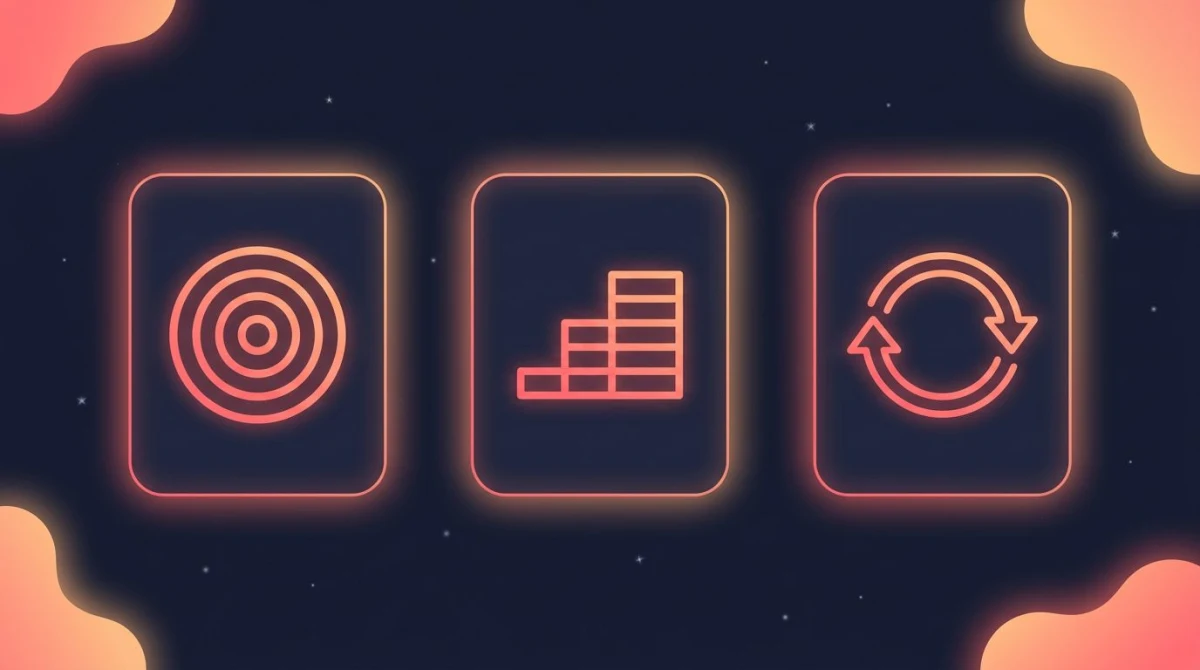
Match the app to the goal: SMART targets hit a number by a date, OKRs roll up across a team, and habit-style goals just keep a streak alive.
SMART goals are specific, measurable, achievable, relevant, and time-bound. They suit a single clear outcome with a deadline, like "save $3,000 by December." Apps with target and average tracking, such as Strides, handle these well because they track a number against a date. If you're still drafting the goal itself, our free SMART goals generator turns a vague intention into a specific, deadline-bound statement, and the savings goal calculator works out the monthly number for money goals.
OKRs (Objectives and Key Results) are a team method. You set an ambitious objective, then a few measurable key results that show progress toward it. OKRs usually need shared visibility, quarterly cycles, and roll-ups across people. Personal goal apps don't do this; a dedicated OKR platform does. If your "goal app" search is really about work objectives, that's the category you want.
Habit-style goals are the ones you repeat, like "meditate daily" or "read 20 pages." There's no finish line, just a streak you keep alive. Habit trackers shine here. HabitBox, Way of Life, Streaks, and Habitica all center on the daily check-in. Our daily habit tracker app guide goes deeper on this kind of goal.
When you don't need a goal app
Not every goal needs an app. If your goal is messy or exploratory, an app can get in the way. Goals like "figure out a career change" or "explore three new hobbies" don't fit neat progress bars yet. A notebook gives you room to think before you commit to a number.
A simple habit tracker is also enough for many people. If your goal is really a daily action, you don't need deadlines, milestones, or dashboards. You need a fast check-in and a visible streak. Adding a heavy goal suite on top of that just creates friction you'll abandon.
And sometimes paper wins. A sticky note on your monitor or a wall calendar you mark with an X can outperform any app, because there's nothing to open and no notification to ignore. The best system is the one you'll actually use tomorrow. If an app makes that easier, use it. If it doesn't, don't.
Goal Setting & Tracking App FAQ
What is a goal tracking app?
A goal tracking app is a tool that stores your goals, breaks them into steps or numbers, and shows your progress over time. Most add reminders, charts, and deadlines. The aim is to keep the goal visible so you act on it instead of forgetting it. Some focus on numeric targets, others on daily habits.
Is a goal tracker different from a habit tracker?
They overlap, but they're not the same. A goal tracker often handles one-time outcomes with a deadline, like "run a half marathon by spring." A habit tracker focuses on repeated daily actions, like "stretch every morning," and shows streaks. Many apps do both. If your goals are mostly daily repeats, a habit tracker is usually enough.
What's the best free goal tracking app?
It depends on the goal type. For private, daily, count-based goals with no account, HabitBox is free to download on iOS and Android, with a Plus upgrade for more. For numeric and SMART goals, Strides has a capable free tier with some limits. Habitica is free too if you want a gamified approach. Check current free-tier caps before you commit, since they change.
Do I need to use OKRs to use one?
No. OKRs are one method, mostly for teams setting quarterly objectives. Most personal goal apps don't use OKRs at all. You can track SMART goals, habit-style goals, or simple to-dos without ever touching the OKR framework. Only reach for OKRs if you're aligning goals across a group at work.
What are the best apps for goal setting?
For structured goal setting with numbers and deadlines, Strides and Goalmap are the strongest picks because they support target values and due dates. For daily, habit-style goals, HabitBox and Streaks work best. Habitica fits if you want goals gamified. All nine apps here handle basic goal setting; the difference is whether they're built for one-time targets or repeated daily actions.

Mira Hartwell
Editor, HabitBoxEditor at HabitBox. Writes about habit science and productivity, grounding every post in named research (Lally, Wood, Walker, Huberman) instead of recycled advice. Read full bio →