The Power of Habit Summary (2026): Key Takeaways
TL;DR
This is a one-page the power of habit summary you can act on today. In The Power of Habit (2012), Charles Duhigg argues that every habit runs on a 3-step neurological loop — cue, routine, reward — and that you change a habit not by erasing it but by keeping the same cue and reward while swapping the routine. That single idea, which he calls the Golden Rule of habit change, sits at the center of the book.
Below: who Duhigg is and why the book matters, the habit loop broken down part by part, the role of craving, the Golden Rule in practice, keystone habits and "small wins," how habits scale up to organizations and societies, a chapter-by-chapter takeaways table, a side-by-side comparison with Atomic Habits, and a concrete way to turn one routine into a tracked habit this week.
Who Charles Duhigg is, and why the book matters
Charles Duhigg is a Pulitzer Prize-winning journalist. He spent years reporting for The New York Times. His book The Power of Habit: Why We Do What We Do in Life and Business came out in 2012. It spent more than 60 weeks on the Times bestseller list.
What set the book apart was its scope. Most habit books focus on personal productivity. Duhigg went wider. He traced the same neurological pattern through individuals, companies, and entire social movements.
The book matters because it popularized a framework that behavior scientists had circled for decades — and made it usable. You can read the chapter on Pepsodent toothpaste and walk away understanding why you reach for your phone the moment you sit down. The official book page is a good reference for the publisher's own description.
One caveat is worth stating up front. This is a journalist's synthesis of science, not a textbook. Some of the studies Duhigg leans on have been debated since 2012. We will flag where the research is solid and where it is more illustrative than definitive.
What the book gets right, and where to be careful
The strongest part of the book is the loop itself. The idea that behavior follows cue, routine, and reward is well supported and genuinely useful. The same goes for the Golden Rule and keystone habits, which match what most behavior researchers believe.
The weaker parts are the studies the book uses as proof rather than illustration. The "ego depletion" willpower research, in particular, has not held up well in later replication attempts. None of this sinks the book. It just means you should treat the stories as vivid teaching tools, not airtight evidence.
The habit loop: cue, routine, reward
The core engine of the book is the habit loop. Duhigg breaks every habit into three parts. Those parts repeat until the behavior becomes automatic. He draws heavily on research from MIT neuroscientist Ann Graybiel. Her lab watched rats run a maze for chocolate and tracked which brain activity faded as the route became a habit.
Here is what the maze experiment showed. Early on, the rats' brains worked hard the whole way through. After enough repetitions, that changed. Mental activity spiked at the start (the cue) and the end (the reward) but went quiet in the middle.
The basal ganglia had taken over the routine. This freed the rest of the brain to rest. That is the neurological signature of a habit. The loop runs on autopilot, and your conscious mind checks out.
The loop has three parts:
| Part | What it is | Everyday example |
|---|---|---|
| Cue | A trigger that tells your brain which habit to run and to go into automatic mode | You sit down at your desk in the morning |
| Routine | The behavior itself — physical, mental, or emotional | You open your phone and scroll for ten minutes |
| Reward | The payoff that tells your brain the loop is worth remembering | A small hit of novelty and a break from a hard task |
Why does this matter for change? Because you cannot see a routine clearly until you can name its cue and its reward. Most people try to fight the routine head-on with willpower. They usually lose.
Duhigg's point is subtler. The routine is the only visible part of a deeper structure. The structure is what drives the behavior. Attack the visible part alone and the hidden parts pull it right back.
If you want the loop explained on its own, with a worksheet for diagnosing your cues, our habit loop guide goes deeper than we can here.
Cues almost always fall into five categories
The book offers one practical detail here. When researchers studied what triggers habits, nearly every cue fit into one of five buckets. Those buckets are location, time, emotional state, other people, and the immediately preceding action.
If you are trying to identify the cue behind a stubborn habit, start with those five categories. Write down where you were. Note what time it was. Note how you felt, who was around, and what you had just done. The pattern usually surfaces within a week.
Take a common example. You always grab a snack mid-afternoon. You log it for a few days and notice it happens at 3 p.m., at your desk, when work gets boring. The cue is not hunger at all. It is the time of day plus a dull task. That single insight changes which fix will actually work.
Craving: the engine that powers the loop
Here is the insight that separates The Power of Habit from a simple "trigger and response" model. The loop does not run on the reward itself. It runs on the craving for the reward.
Duhigg illustrates this with the story of Claude Hopkins. Hopkins was an advertising pioneer who made Pepsodent toothpaste a national habit in the early 1900s. At the time, most Americans did not brush their teeth. The challenge looked impossible.
Hopkins did not sell the dental benefit. Instead, he created a craving. He promised that brushing would remove the "film" on your teeth. Then he added mint to the formula, so brushing produced a cool, tingling sensation.
Soon people craved that tingle. If their mouth did not feel minty, it felt wrong. They brushed to chase the feeling. The tingle did nothing for dental health — it was a marketing flourish. But the craving for it is what made the habit stick.
The same pattern shows up with Procter & Gamble's Febreze. The product initially flopped. It solved a problem — bad smells — that people had stopped noticing in their own homes. There was no cue to trigger its use.
Sales took off only when P&G changed the pitch. They repositioned Febreze as a pleasant finishing spritz after cleaning. Now it was a reward you came to anticipate and crave at the end of a chore. Same product, new craving, new habit.
Here is the takeaway. A habit becomes durable when your brain anticipates the reward the moment it sees the cue. That anticipation is the craving. To build a good habit, attach a reward you will genuinely look forward to. To break a bad one, remember that the craving — not the routine — is what you are really fighting.
There is brain science under this idea. Researchers have shown that with a habituated reward, the dopamine spike shifts in time. It moves from the moment you get the reward to the moment you see the cue. In other words, the pleasure chemical fires in anticipation, before the routine even starts. That shift is the craving made physical. It is why the smell of coffee can pull you toward the kitchen before you have decided anything.
This also explains why cravings feel so strong when a cue appears but the reward is blocked. Your brain has already released the anticipation signal. Now it wants the payoff it was promised. Understanding that loop does not make the craving vanish, but it does make it easier to name — and a craving you can name is a craving you can plan around.
The Golden Rule of habit change
This is the most quoted idea in the book, and the one most worth internalizing.
The Golden Rule of habit change: You cannot extinguish a bad habit, you can only change it. Keep the same cue and the same reward, but insert a new routine.
Duhigg's argument is that habits are encoded in the brain. They never fully disappear. That is why people relapse under stress even after years of progress.
Trying to delete a habit by force leaves the cue and the craving intact. So the behavior comes roaring back the moment your willpower dips. The durable move is different. You redirect the loop instead of erasing it. Same trigger, same payoff, different behavior in the middle.
Duhigg grounds this in the story of Bill Wilson and Alcoholics Anonymous. AA works, in his reading, because it gives drinkers new routines and new rewards for the same old cues. He also points to a man whose memory was destroyed by illness. The man could no longer form new memories, yet he could still navigate his neighborhood by habit alone. The pattern held. The cues and rewards persisted, and only the routines were malleable.
In practice, the method is straightforward to describe and hard to do:
- Identify the routine — the visible behavior you want to change.
- Experiment with rewards — after the cue fires, try a different reward and see whether the craving is satisfied. Are you snacking because you are hungry, bored, or want a break to socialize?
- Isolate the cue — use the five categories (location, time, emotion, people, preceding action) to pin down the trigger.
- Have a plan — decide in advance what new routine you will run when the cue appears, and what reward it will deliver.
That last step is essentially an implementation intention. It pairs naturally with the Golden Rule. We walk through the full process, with examples, in our guide on how to break a habit.
The missing ingredient: belief
There is one part of the Golden Rule that summaries often drop, and it matters. Duhigg argues that the framework works most reliably when you also believe change is possible. He draws this from his study of Alcoholics Anonymous.
AA replaces the drinking routine with meetings, conversation, and ritual. But Duhigg noticed that the people who lasted shared something extra. They believed in a power larger than themselves, often through the group itself. That belief carried them through the hardest moments, when the new routine alone was not enough.
You do not need religion to use this. The practical version is simple. Surround yourself with people who are doing the habit you want, and let their belief become yours. A running club, an accountability partner, or a community that expects you to show up all provide the same scaffolding. Belief is contagious, and it stabilizes a new loop while it is still fragile.
Keystone habits and the power of small wins
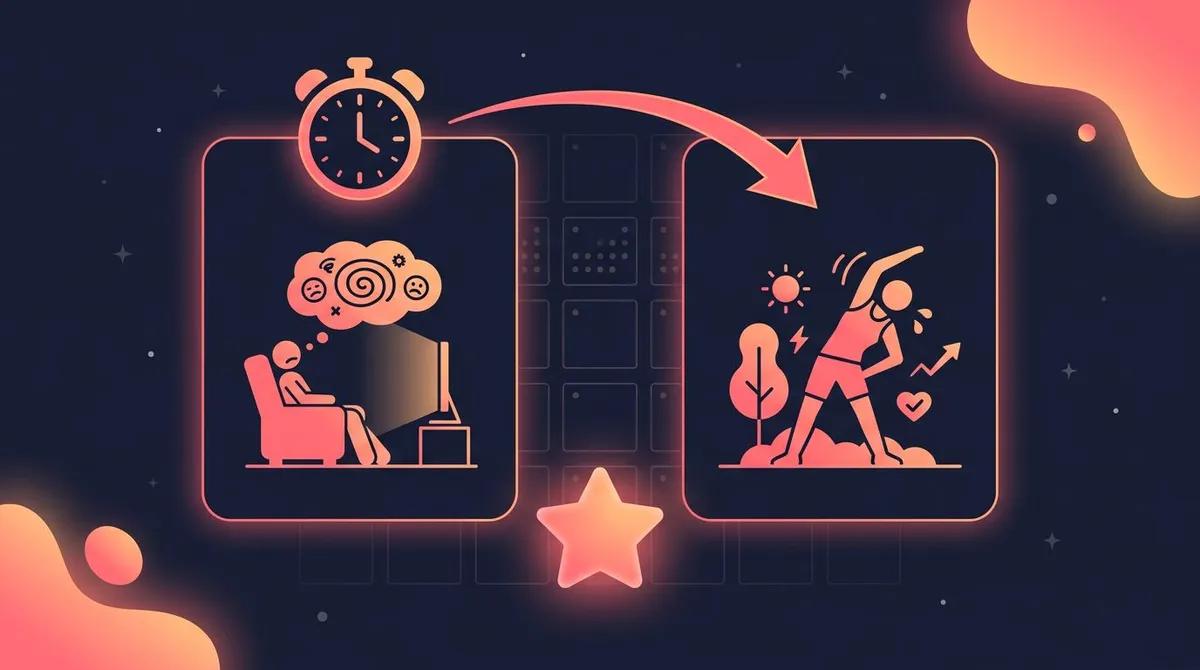
If the habit loop is the book's mechanics, keystone habits are its strategy. Duhigg's claim is that some habits matter more than others because changing them sets off a chain reaction. These are keystone habits — single behaviors that, once adopted, pull other good behaviors along with them.
The flagship example is Paul O'Neill. He became CEO of the aluminum company Alcoa in 1987. Investors were baffled by his first major speech. He did not talk about profit or efficiency. He talked about worker safety.
O'Neill made a bet. He believed that an obsessive focus on safety would force the company to fix everything else. To prevent injuries, Alcoa had to improve communication, accountability, and process across the board. Safety was a single habit that pulled the whole organization up with it.
He was right. Alcoa's safety record became one of the best in the world. Its profits hit record highs during his tenure. Safety was the keystone, and the rest followed.
On the personal side, Duhigg points to exercise. People who start exercising regularly often change other behaviors too — without intending to. They begin eating better, smoking less, and feeling more in control at work. The exercise did not directly cause those changes. It created momentum and a sense of capability that spilled into other areas of life.
Two mechanisms make keystone habits powerful:
- Small wins. A keystone habit produces an early, visible success. That success builds confidence. Duhigg cites research showing that small wins fuel further change by convincing you that bigger transformation is possible.
- New self-image. Swimmer Michael Phelps had a coach who built tiny pre-race routines into his training. Those routines became automatic anchors. They held under the pressure of Olympic finals. The habit reshaped how Phelps saw himself under stress.
The Phelps story is worth one extra beat. At the 2008 Beijing Olympics, water leaked into his goggles during a race. He could not see. But his pre-race routine had him counting his strokes by habit, so he swam blind and still won gold. The routine carried him when conscious focus failed. That is the practical power of a habit built deeply enough to run on its own.
Keystone habits are the highest-leverage place to start. That is why they deserve their own treatment. We rank the seven with the strongest research behind them in our keystone habits guide.
A third example deserves a mention because it is so concrete. When researchers wanted families to eat better, the single change with the most spillover was a shared family dinner. Families who started eating together also tended to develop better homework habits, more self-control, and more confidence. The dinner itself did little nutritionally. It was a keystone that reorganized the evening around connection and routine.
How to spot your own keystone habit
You do not need a CEO's budget to find a keystone habit. Look for a behavior that meets three tests. First, it creates a small, early win you can feel. Second, it gives you a sense of being in control. Third, it tends to make other good choices feel easier afterward.
Common personal keystones include a consistent wake time, a daily walk, making your bed, and a short evening planning ritual. None of these is dramatic on its own. The point is the spillover. Pick one, do it daily, and watch what else shifts over a few weeks.
How businesses use the loop on you — the Target story
One of the book's most talked-about chapters is also its most unsettling. Duhigg tells how retailers study and shape your habits without your knowledge. The headline example is Target.
Target's analysts learned that life's big disruptions — moving, marriage, and especially a new baby — break old shopping habits. During those windows, customers are open to new routines. So Target built a model to predict which shoppers were pregnant, based on shifts in what they bought, like unscented lotion and certain supplements.
The plan was to mail those shoppers baby coupons early, before competitors knew. But the targeting was too obvious and felt invasive. Target's fix was clever and a little eerie. They mixed the baby coupons in with random items — a lawnmower, wine glasses — so the ads felt coincidental rather than predictive.
The lesson cuts both ways. Companies are very good at engineering your cravings and routines. The same knowledge that lets them do it can let you take the wheel. Once you can see a loop, you can decide whether to keep it, change it, or let someone else drive it.
Willpower is a habit too — the Starbucks story
A standout chapter argues that willpower is not a fixed trait. It behaves more like a muscle. And, crucially, you can turn it into a habit. Duhigg cites the famous "ego depletion" research, which suggested self-control is a finite resource that gets used up across the day.
His most useful example is how Starbucks trains employees. Frontline baristas face constant willpower tests. Rude customers, sudden rushes, and small mistakes all chip away at composure. Telling someone to "stay positive" in those moments does not work.
So Starbucks did something smarter. They taught pre-scripted routines for the hard inflection points. One is the LATTE method: Listen, Acknowledge, Take action, Thank, and Explain. When a tough moment arrives, the employee does not have to summon willpower from scratch. They run the rehearsed routine. Willpower becomes automatic.
The lesson for your own habits is direct. Decide in advance how you will respond to the moment your resolve usually breaks. Say you always quit your evening workout when you feel tired walking in the door. Script the first two minutes: shoes on, one easy set. That removes the willpower decision entirely.
A fair-minded note belongs here. The ego-depletion findings Duhigg relied on have struggled to replicate in later studies. The "willpower as fuel tank" metaphor is shakier than the book suggests. But the practical advice still holds up. Rehearsing your response to predictable hard moments works whether or not willpower is a finite tank.
How habits scale: organizations and societies
The back half of The Power of Habit zooms out, and it is the part most personal-development summaries skip. The same loop that governs your morning coffee, Duhigg argues, governs companies and social movements.
Organizational habits. Companies run on "institutional routines." These are unspoken patterns that determine how decisions get made. No one writes them down, but everyone follows them.
Duhigg uses two cautionary tales. The 1987 King's Cross fire in the London Underground and a fatal error at Rhode Island Hospital both show the same thing. Bad institutional habits — especially rigid hierarchies that suppress dissent — can turn small problems into disasters. A junior employee sees a warning sign but the routine says "do not question your superior," so the problem grows.
The fix in both cases was the same. Leaders changed the routines around how information moved. They did not just punish individuals. They rebuilt the habits that decided who could speak up, and when.
Societal habits. Duhigg's most ambitious claim is that social movements run on habits too. He reframes the Montgomery bus boycott that followed Rosa Parks's 1955 arrest. In his telling, it is a story about three layers of social habit.
The first layer is the habits of close friendship. Parks was well known and liked, so her arrest moved her friends to act. The second layer is the "weak ties" of community acquaintance and the peer pressure that comes with them. The third layer is the new habits that leaders gave participants to keep the movement going once enthusiasm faded. He makes a parallel argument about how Rick Warren built the Saddleback megachurch by engineering habits of community among members.
You do not need the organizational chapters to build a personal habit. But they are a big part of why the book endured. They argued that the same simple loop scales from one brain to a whole society.
The three parts of the book
It helps to know how the book is organized. Duhigg builds his argument in three movements, each one zooming further out.
Part one is the habits of individuals. This is where the loop, the craving, the Golden Rule, and keystone habits live. It is the most practical section and the one most readers come for.
Part two is the habits of successful organizations. Here Duhigg covers Alcoa, Starbucks, the Rhode Island Hospital error, and Target's data machine. The lesson is that companies are bundles of routines, and the best ones design those routines on purpose.
Part three is the habits of societies. This is the most ambitious and most debated section, covering the Montgomery bus boycott and the rise of megachurches. It argues that social movements spread through layers of social habit. Whether or not you buy every claim, it shows the loop scaling beyond the individual.
Chapter-by-chapter takeaways
If you want the whole book at a glance, here is the throughline by section.
| Section | Core idea | The takeaway |
|---|---|---|
| The habit loop | Habits run on cue → routine → reward | Name all three before you try to change anything |
| The craving brain | Anticipation of the reward powers the loop | Durable habits need a reward you genuinely crave |
| The Golden Rule | Keep the cue and reward, swap the routine | You redirect habits; you do not delete them |
| Keystone habits | Some habits trigger cascading change | Start with the one habit that pulls others along |
| Willpower | Self-control can be made automatic | Script your response to predictable hard moments |
| The power of small wins | Early visible success fuels bigger change | Engineer a quick win to build momentum |
| Organizational habits | Companies run on institutional routines | Fix the routine, not just the person |
| Societal habits | Movements spread through social habits | Strong ties, weak ties, and new habits sustain change |
| The neurology of free will | Habits can be changed once you see them | Awareness plus a plan is the lever |
The five lessons to remember
If you take nothing else from the book, take these five. They are the through-lines that show up across every chapter and every case study.
- Every habit is a loop. Cue, routine, reward. Name all three before you try to change anything, because the routine is only the visible third.
- Craving is the engine. A habit lasts when your brain anticipates the reward at the cue. Build a craving you want, or fight the craving you do not.
- You redirect habits, you do not erase them. The Golden Rule keeps the cue and reward and swaps the routine. This is the single most useful tool in the book.
- Some habits are keystones. One well-chosen habit creates small wins and spills into the rest of your life. Start there, not everywhere.
- Belief makes change stick. Especially through community, believing change is possible stabilizes a new loop while it is fragile.
Keep those five in mind and you have the working core of the book. Everything else is evidence and illustration.
The Power of Habit vs Atomic Habits
These two books get recommended together, and readers often ask which to read. They are complementary, not competing. The Power of Habit is the better explanation of why habits work — the neuroscience, the craving, the loop. Atomic Habits is the better operating manual for how to build them, with a step-by-step system.
| The Power of Habit (Duhigg, 2012) | Atomic Habits (Clear, 2018) | |
|---|---|---|
| Core framework | The 3-part habit loop: cue, routine, reward | The 4 Laws of Behavior Change |
| Big idea | Change the routine, keep the cue and reward | 1% improvements compound; build identity-based habits |
| Strength | Why habits form, with vivid science and stories | A practical system you can apply step by step |
| Scope | Individuals, companies, and societies | Mostly individual habit design |
| Best for | Understanding the mechanics of behavior | Actually installing and tracking new habits |
A simple way to sequence them is this. Read The Power of Habit to understand the loop. Then read our Atomic Habits summary to get the build system.
The two frameworks line up neatly. Clear's 4 Laws map cleanly onto Duhigg's loop. "Make it obvious" sharpens the cue. "Make it attractive" works on the craving. "Make it easy" reduces friction in the routine. "Make it satisfying" strengthens the reward. Read together, they give you both the diagnosis and the prescription.
If you want the deeper history behind both books, the 4 Laws of Behavior Change breakdown shows how Clear extended the loop Duhigg made famous.
How to apply The Power of Habit this week
Reading a summary changes nothing on its own. The book's whole point is that habits change through repetition, not insight. Here is a concrete, one-week starting plan that turns the Golden Rule into something you can run.
Step 1: Pick one routine to change
Choose a single habit, not five. The book is clear that keystone habits give the best return. So pick something with spillover: a daily walk, a fixed bedtime, ten minutes of reading. Trying to overhaul everything at once is how most attempts fail.
Be specific about what "done" looks like. "Exercise more" is not a habit. "Walk for ten minutes after lunch" is. The narrower the routine, the easier it is to repeat and to track.
Step 2: Diagnose its loop
Spend two or three days observing before you change anything. When the urge hits, pause and take notes. Write down the five cue categories: where you were, what time it was, how you felt, who was around, and what you had just done. Then write down what reward you were actually chasing.
You are reverse-engineering your own loop, exactly as Duhigg recommends. Do not skip this step. Most failed habit changes come from fixing the wrong part of the loop, and the only way to know which part is to watch yourself first.
Step 3: Design the swap
Now keep the cue and the reward, and replace only the routine. Say your cue is the 3 p.m. energy slump and your reward is a mental break. Swap the candy-bar routine for a five-minute walk that delivers the same break.
Write it as an if-then plan. "If it is 3 p.m. and I feel restless, then I will walk to the end of the block and back." The new routine is now decided before the cue ever arrives, which is the whole point. You are not relying on willpower in the moment — you are running a plan you already made.
Step 4: Make the loop visible by tracking it
This is where most book summaries stop — and it is the step that determines whether the habit sticks. Duhigg's loop is invisible by design; it runs in the background. Tracking drags it into the open. A daily check-in turns "I should walk more" into a streak you can see.
A dedicated tracker like HabitBox helps here for a specific reason. The calendar heatmap makes your loop visible at a glance. Every completed day is a small win you can literally see. That is exactly the momentum effect Duhigg describes in the keystone chapter.
Streak counts add a second reward layer. You do not want to break the chain, so the streak itself becomes part of the reward you crave. If your habit is count-based — minutes walked, pages read, glasses of water — a goal-oriented habit lets you log the number instead of a simple yes or no. Over a few weeks, the heatmap turns an abstract intention into a concrete record you can review and adjust.
Step 5: Plan for the slump
Decide now what you will do on a day you do not feel like it. Script the first two minutes, Starbucks-style. The decision is already made, so you only have to start.
Missing one day does not undo a habit. Research from University College London found new habits take a median of 66 days to become automatic. A single missed day did not derail the process in that study. Consistency over weeks beats intensity over a weekend.
That 66-day figure is also a useful reality check. Duhigg's book is light on timelines, and the popular "21 days to a habit" claim is a myth. Plan for roughly two months of repetition before a new routine feels automatic. Tracking helps you stay patient across that window, because you can see progress even on days motivation is low.
Common mistakes when applying The Power of Habit
The framework is simple, but people misuse it in predictable ways. Avoiding these four mistakes will save you weeks.
Attacking the routine alone. The most common error is willpower-only change. You vow to stop scrolling, white-knuckle it for a week, then snap back. The cue and craving never went anywhere. Always pair a routine change with a replacement that satisfies the same craving.
Guessing the reward instead of testing it. People assume they know why they do something. Often they are wrong. The afternoon snack might be about boredom, not hunger. Spend a few days experimenting with different rewards before you commit to a fix.
Changing too many habits at once. Duhigg's keystone idea is the opposite of a total overhaul. Pick one habit with spillover and let it do the heavy lifting. Stacking five resolutions on January 1 almost always collapses.
Quitting after one missed day. A lapse is not a relapse. The all-or-nothing mindset turns one skipped workout into a month off. Treat a missed day as data, not failure, and run the loop again tomorrow.
A worked example: breaking the evening phone scroll
Theory sticks better with a real case. Here is the whole framework applied to one common habit — the late-night phone scroll that eats your sleep.
The routine is obvious: you lie in bed and scroll for an hour instead of sleeping. That is the visible behavior, and it is the part you want to change.
The cue is less obvious, so you observe for a few days. You notice it always starts the same way. You get into bed (location), around 10:30 p.m. (time), feeling a bit wired from the day (emotional state), with the phone on the nightstand (preceding setup). The cue is the combination of bed, late evening, and an unwound mind.
The reward takes some testing. At first you assume you are checking for messages. But you try leaving the phone in another room and notice the real pull is for a way to relax and stop thinking about the day. The reward is decompression, not information.
The swap keeps the cue and reward and changes the routine. Same bed, same 10:30, same wired feeling, same need to decompress. The new routine is ten minutes of reading a paper book or a few slow breaths. Both deliver decompression without the blue light and the endless feed.
The plan is an if-then statement: "If I get into bed and reach for my phone, then I will pick up the book on my nightstand instead." The phone charges in the kitchen, which adds friction to the old routine.
The tracking closes the loop. You mark each phone-free night in a tracker and watch the streak build. The visible chain becomes its own small reward, and within a few weeks the new routine feels normal. Notice that you never tried to "use less willpower." You redirected the loop and let the streak do the motivating.
Who should read The Power of Habit
Read it if you want to understand why your habits work the way they do — the book is at its best as an explanation, full of memorable stories that make the science stick. It is ideal for people who like narrative non-fiction and want the neuroscience without a textbook.
It is less ideal as a step-by-step manual. The framework is powerful but the "how to apply it" guidance is thinner than in Atomic Habits or BJ Fogg's Tiny Habits. If you already know you want a build-and-track system more than a deep explanation, start with Clear.
Best case: read both. Use Duhigg to understand the loop and the Golden Rule, then use a system and a tracker to actually run it. The ideas only pay off when you turn one routine into a habit you repeat — and the simplest way to keep repeating is to make the loop visible and watch the streak grow.
FAQ
What is the main idea of The Power of Habit?
What is the habit loop?
What are keystone habits?
What is the Golden Rule of habit change?
How is The Power of Habit different from Atomic Habits?

Mira Hartwell
Editor, HabitBoxEditor at HabitBox. Writes about habit science and productivity, grounding every post in named research (Lally, Wood, Walker, Huberman) instead of recycled advice. Read full bio →