How to Build Willpower: 6 Science-Backed Strategies (2026)
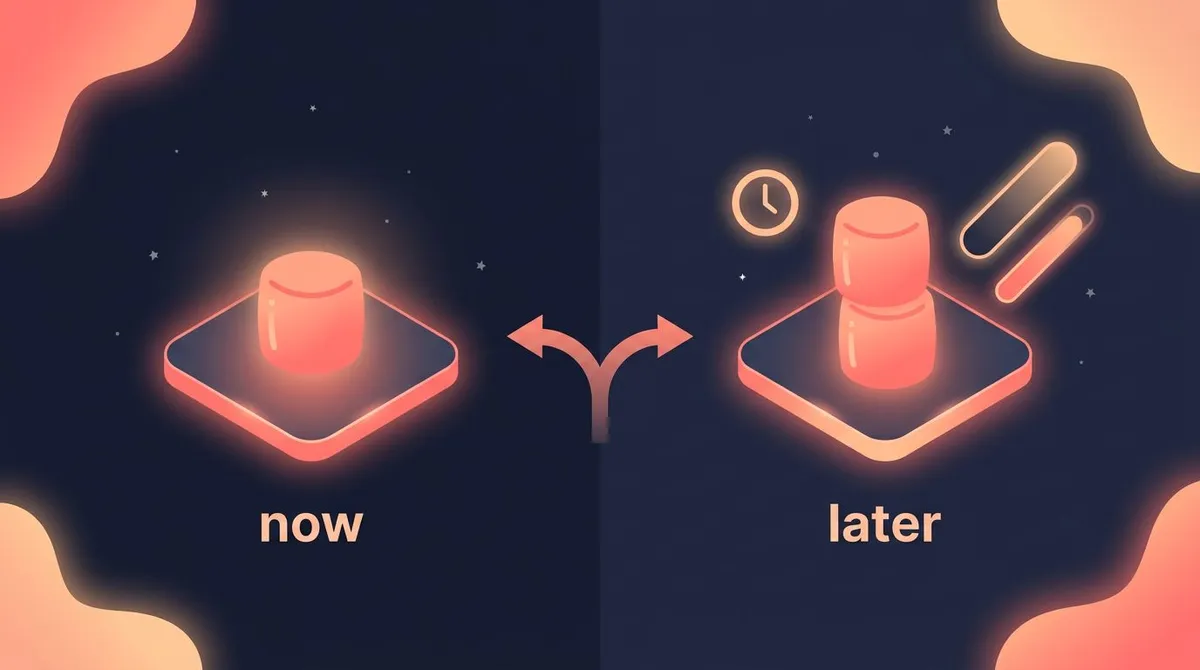
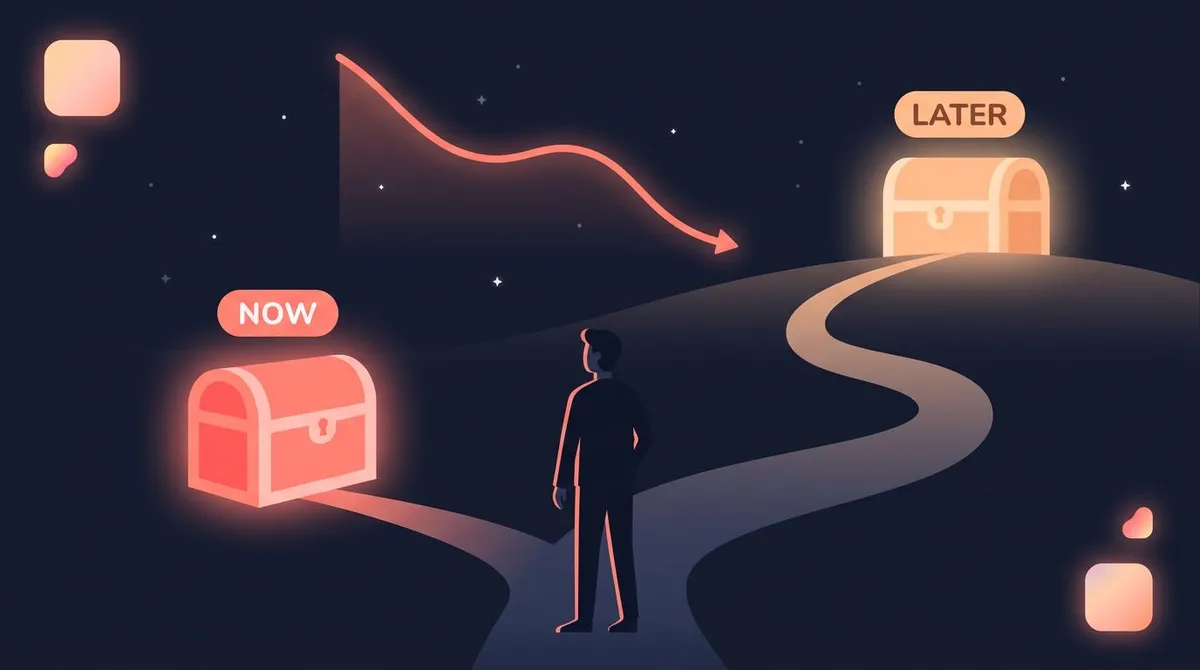
Learning how to build willpower starts with a twist most guides miss. The people who seem to have the most of it use it least. Willpower is your ability to resist a short-term temptation to reach a long-term goal - that is the American Psychological Association's definition of self-control. But research from USC psychologist Wendy Wood shows that roughly 43% of our daily actions are habits done on autopilot. So the real skill is designing your day to need raw willpower less. These 6 science-backed strategies do both. They strengthen the muscle and build systems that spare it.
What willpower actually is
Psychologists usually call willpower "self-regulation" or "self-control." It is the capacity to override an automatic impulse in favor of a goal you care about more. The APA frames it as resisting short-term temptation to meet long-term goals. In plain terms, it's the gap between wanting the cookie and reaching for the apple.
For years the leading model was Roy Baumeister's "willpower as a muscle" metaphor. His ego-depletion research suggested self-control draws on a limited resource that tires with use. Resist one temptation, the idea went, and you are weaker against the next.
The muscle metaphor is intuitive and partly useful. Rest, sleep, and food do affect self-control. But the depletion claim has not held up. A 2016 multi-lab replication led by Martin Hagger spanned 23 labs and 2,141 people. It failed to find the ego-depletion effect. A separate replication across dozens of labs found an effect size near zero.
So treat willpower as trainable, not as a fuel tank on a fixed schedule. Your beliefs matter too. Studies on glucose and self-control found that people who view willpower as limited tire faster. Those who don't keep going. The takeaway is practical. You can build willpower, and you can build a life that asks less of it.
The willpower myth: why relying on it fails
Here's the problem with willpower as a strategy. It only shows up when you're already in the fight. By the time you face the snooze button or the third tab of social media, the temptation has the home-field advantage.
This is where Wendy Wood's research reframes things. Her work at USC found that about 43% of our daily behaviors are habits. These are actions repeated in the same context, often while our minds are elsewhere. Nearly half your day runs before conscious choice even gets a vote.
That cuts both ways. If your defaults are good, you coast toward your goals. If they're bad, you spend willpower all day to swim upstream. People who look disciplined usually aren't gritting their teeth. They've arranged their world so the right action is the easy one.
This connects to the habit loop of cue, routine, and reward. Once a behavior loops on autopilot, it stops costing willpower. Building willpower and building habits aren't separate projects. Habits are how you bank your willpower for the moments that truly need it.
How to build willpower: 6 evidence-based strategies
You can train self-control directly. More importantly, you can design around it. Here are six strategies the research supports, roughly in order of leverage.
1. Reduce decisions and friction
Every choice you make is a small withdrawal from your attention. So cut the number of decisions between you and the right action. Lay out your gym clothes the night before. Delete the app instead of fighting to ignore it. Keep the fruit on the counter and the chips out of the house.
The British Heart Foundation's willpower guidance puts it bluntly. Avoid temptation entirely rather than resisting it in the moment. Removing the cue beats out-muscling the craving every time.
2. Use implementation intentions
Vague goals like "I'll exercise more" leave the decision for later, when willpower is lowest. Implementation intentions hand the decision to a specific moment instead. The format is simple: "When X happens, I will do Y."
Decades of research from psychologist Peter Gollwitzer show this if-then planning lifts follow-through. You've pre-loaded your response to a cue. Try it: "When I pour my morning coffee, I'll do 10 push-ups." Our guide on implementation intentions has templates you can copy.
3. Pre-commit before temptation arrives
Pre-commitment means locking in the good choice while your resolve is high. Then future-you can't easily back out. Schedule the workout class with a cancellation fee. Use a website blocker during deep-work hours. Tell a friend your deadline.
You're not relying on willpower at the moment of weakness. You removed the moment of weakness in advance. It's the same logic Ulysses used tying himself to the mast.
4. Protect sleep and basic energy
Self-control sags when you're exhausted or running on fumes. The strict glucose-depletion model is contested. But the everyday version holds: tired, hungry, stressed people make worse choices.
Neuroscientist Andrew Huberman points to the anterior midcingulate cortex. It's a brain region tied to persistence and the will to push through hard tasks. Sleep and stress management keep that system working. Don't schedule your hardest behaviors for your most depleted hours.
5. Habit-stack the hard behavior
Attach the behavior you struggle with to one you already do without thinking. This is habit stacking. For example: "After I brush my teeth, I'll meditate for two minutes."
The existing routine becomes a built-in cue. So the new behavior borrows momentum instead of demanding fresh willpower. Start absurdly small - two minutes - so there's almost nothing to resist.
6. Track streaks so the behavior turns automatic
Repetition in a stable context turns a willpower-heavy action into a no-willpower habit. Tracking gives you a visible record. It reminds you, and it motivates you not to break the chain - a mild form of loss aversion.
A 2010 UCL study by Phillippa Lally found new habits take a median of 66 days to feel automatic, with a wide range. Tracking carries you across that bridge. After it, the behavior costs almost no willpower at all. If you struggle to keep going, our guide on how to be consistent digs into the daily mechanics.
Willpower drain to design fix: a quick reference
Most willpower failures aren't character flaws. They're predictable drains you can engineer around. Here's how the common ones map to fixes.
| Willpower drain | What it looks like | The design fix |
|---|---|---|
| Decision overload | Debating whether to work out each morning | Pre-decide; lay out clothes the night before |
| Tempting cues nearby | Phone on the desk, snacks in reach | Remove the cue (different room, out of the house) |
| Vague intentions | "I'll read more this year" | Implementation intention: "When X, I'll do Y" |
| Low energy windows | Caving on hard tasks at 9pm | Schedule the behavior for a high-energy hour |
| Starting from scratch | New habit floats with no anchor | Habit-stack it onto an existing routine |
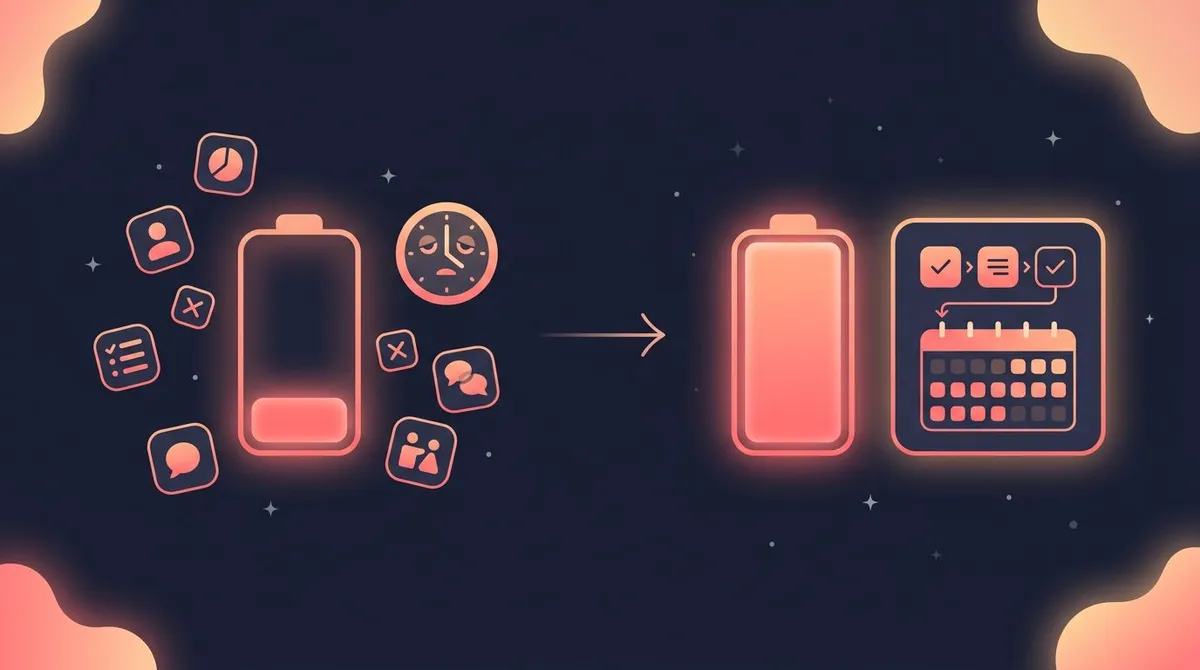
The pattern is consistent. Every column on the right swaps a moment of effort for a bit of structure. Build enough of these and your day stops feeling like a series of battles.
Make willpower optional with habit tracking
Notice what every strategy above shares. They all move a behavior out of the willpower budget and into the autopilot column. That's the whole game. You're not trying to white-knuckle your way through life. You're trying to need willpower less.
This is where a habit tracker earns its place. Habit-stacking and streak visualization are the levers that turn a hard behavior automatic. A dedicated app like HabitBox keeps them in one tap-friendly place. You set the cue, log the check-in, and watch the calendar heatmap fill in. The behavior gets reinforced until it runs on its own.
The streak view works because of loss aversion. Once you've strung together 12 days, you don't want to break the chain. That mild pull does the motivating, so your willpower can sit on the bench. To go deeper on the discipline side, motivation vs discipline and how to be more disciplined are good companion reads.
Ready to spend less willpower? HabitBox makes it easy to stack new habits onto your routine and track your streaks until they stick - it's free to try.
Frequently asked questions about building willpower
What is willpower?
Can you actually build willpower?
Does willpower run out (ego depletion)?
What's the difference between willpower and discipline?
How long does it take to build willpower?

Mira Hartwell
Editor, HabitBoxEditor at HabitBox. Writes about habit science and productivity, grounding every post in named research (Lally, Wood, Walker, Huberman) instead of recycled advice. Read full bio →