Commitment Devices: Lock In Your Habits (2026)
TL;DR: A commitment device is a choice you make now to constrain your future self, like Odysseus tying himself to the mast so he could not steer toward the Sirens. Behavioral economists Gharad Bryan, Dean Karlan, and Scott Nelson (2010) documented how these arrangements help people follow through, and across studies commitment savings accounts alone raised balances by around 80% in one year. This guide covers the 2 main types, why they work, and a 4-step way to build one for any habit.
You already know the feeling. On Sunday night you promise yourself the gym at 6 a.m., and by Wednesday you are hitting snooze. Nothing changed about your goals. What changed is that the version of you making the promise and the version of you keeping it are two different people with two different moods.
A commitment device closes that gap. Instead of relying on Wednesday-morning-you to be strong, you let Sunday-night-you set a trap that makes quitting harder than continuing. It is one of the most practical ideas in behavioral economics, and it works for savings, deadlines, screen time, and daily habits alike.
What is a commitment device?
A commitment device is an arrangement you make now that restricts the options available to your future self. A good decision sticks even when willpower fades. The term comes from Homer's Odyssey. Odysseus wanted to hear the Sirens' song but knew it would lure him to his death. So he had his crew tie him to the mast and refuse any order to release him. He removed his own future ability to make a bad choice.
Economist Richard Thaler put it plainly: a commitment device is "an arrangement that a person makes in the present to restrict the options available to their future self." The idea sits at the heart of Nudge (2008) by Thaler and Cass Sunstein, and it was formally reviewed by Gharad Bryan, Dean Karlan, and Scott Nelson in their 2010 paper "Commitment Devices" in the Annual Review of Economics.
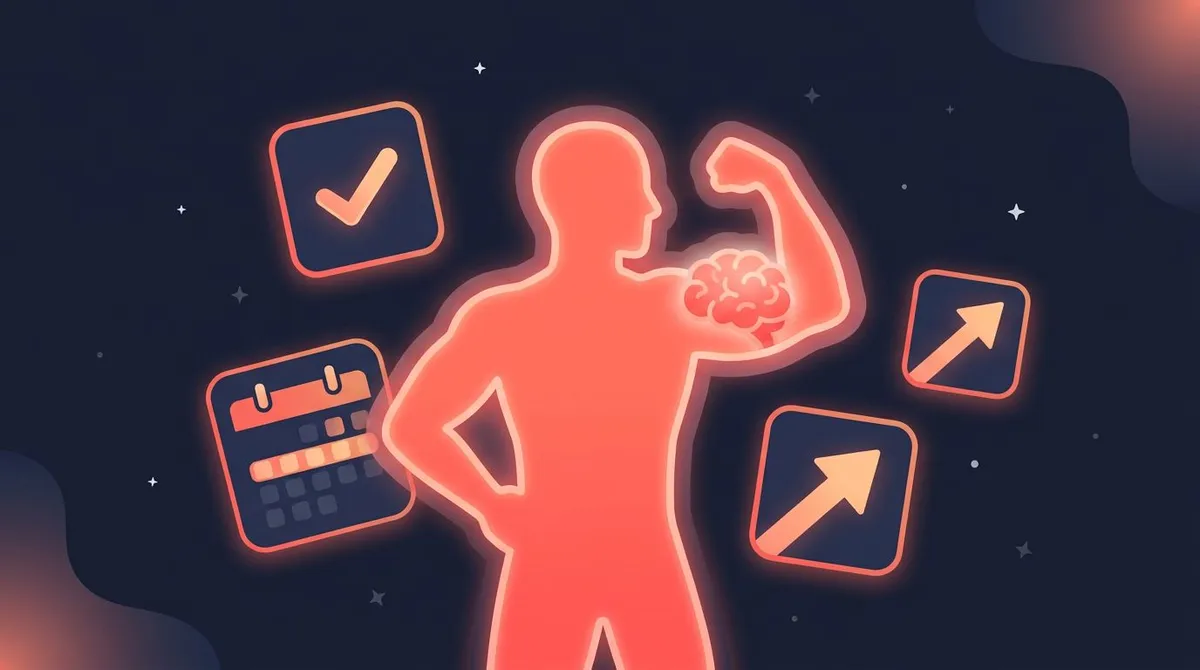
The key insight is that you are not one consistent decision-maker. You are a planner who wants long-term outcomes. You are also a doer who wants immediate comfort. A commitment device lets the planner win. It tilts the field before the doer shows up.
The two types: hard vs soft commitment devices
Commitment devices fall on a spectrum, but it helps to split them into two families.
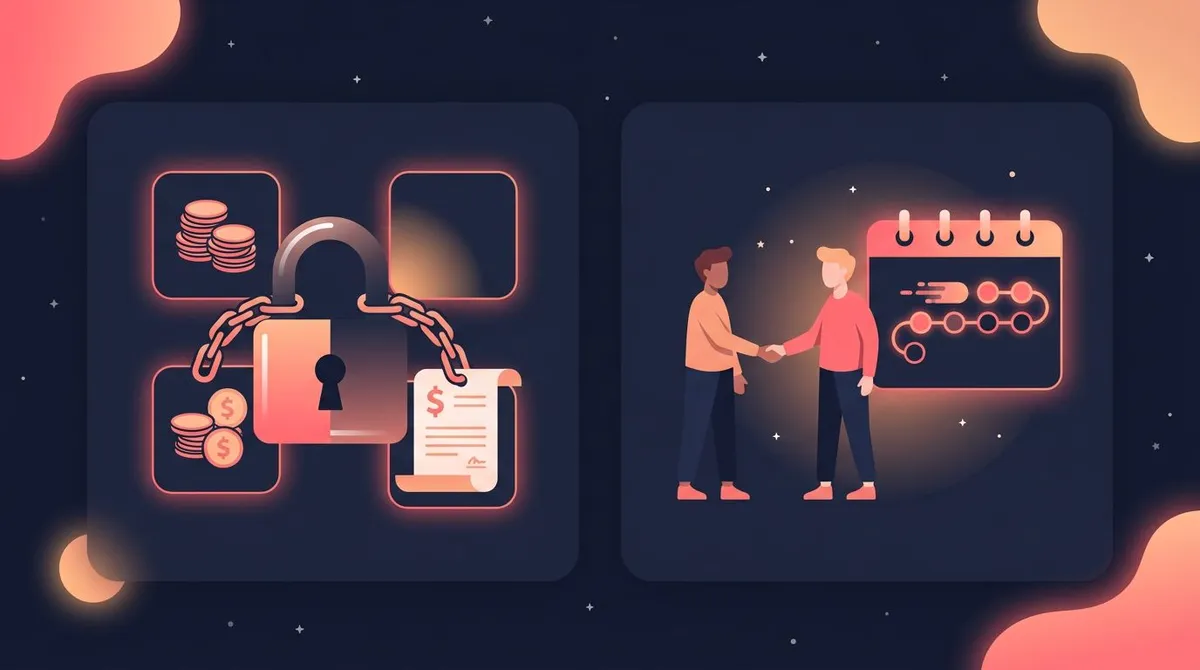
Hard commitment devices put something real on the line, usually money or access. If you fail, you lose something concrete. A stickK contract that donates $100 to a cause you hate if you skip a workout is a hard device. So is an automatic payroll deduction into a locked savings account, or a website blocker that you cannot disable during work hours.
Soft commitment devices rely on social and psychological pressure rather than a financial penalty. Telling your friends you are running a marathon, texting a workout buddy a photo each morning, or keeping a visible streak going are all soft devices. The stake is your word, your reputation, or the satisfying chain you do not want to break.
Neither type is universally better. Hard devices tend to be stronger for high-temptation goals where you know you will cave. Soft devices are easier to set up and sustain for everyday habits. Many of the best setups combine both.
Commitment device examples and how they bind
Here is how common devices actually constrain your future self, and where each one shines.
| Commitment device | How it binds you | Best for |
|---|---|---|
| stickK contract with a stake | You forfeit real money if you fail | High-temptation goals you keep abandoning |
| Automatic transfer to locked savings | Money moves before you can spend it | Saving, investing, debt payoff |
| Website or app blocker | Removes access during set hours | Focus, screen time, doomscrolling |
| Public declaration | Puts your reputation on the line | Big goals where social pressure motivates you |
| Accountability partner | Someone checks whether you followed through | Exercise, writing, studying |
| Prepaid or pre-booked commitment | You already paid, so quitting wastes money | Classes, coaching, race entries |
| A visible daily streak | Breaking the chain feels like a loss | Small daily habits and consistency |
Notice the range. A dopamine detox blocker is a hard device for screen time. An accountability partner who expects your morning check-in is a soft one. The best device is the one that matches how you actually fail.
Why commitment devices work
Two well-studied forces explain the payoff.
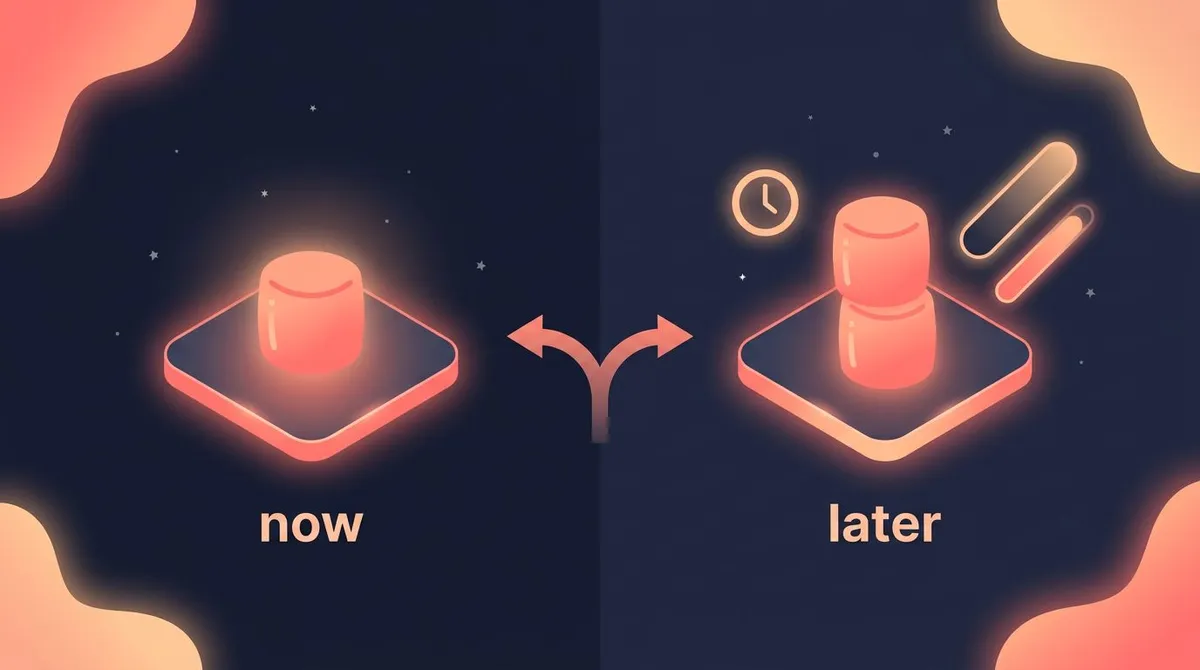
The first is present bias, also called hyperbolic discounting. We overvalue rewards we can get right now and heavily discount rewards that arrive later, which is why the couch beats the gym at 6 a.m. even when you truly want to be fit. It is the same force that makes staying disciplined so hard in the moment. A commitment device attaches a cost to the tempting choice in the present, so the math changes at the exact moment temptation strikes.
The second is loss aversion. Research by Daniel Kahneman and Amos Tversky found that losses feel roughly twice as painful as equivalent gains feel good, which is part of why a satisfying streak is one of the 4 laws of behavior change. Hard devices weaponize this directly by putting money at risk. Soft devices do it too, because breaking a public promise or a long streak registers as a real loss.
The evidence is strong. In their field experiment in the Philippines, "Tying Odysseus to the Mast," Nava Ashraf, Dean Karlan, and Wesley Yin offered clients a savings account that restricted withdrawals until a goal was met. You can read the study PDF here. Savings balances rose by roughly 80% relative to the comparison group after one year, driven entirely by the voluntary constraint. People saved more precisely because they took options away from themselves.
How to build a commitment device for any habit
You do not need an app or a contract to start. You need a stake, a rule, and a way to make the commitment visible. Here is a four-step build that works for a workout, a writing habit, or cutting screen time.
1. Pick your stake
Decide what you will put on the line. It can be hard (money to a stickK contract, or a locked transfer) or soft (a promise to a friend, a public post, or a streak you refuse to break). Choose a stake that would genuinely sting to lose. If losing it would not bother you, it will not bind you.
2. Make it automatic or public
A stake only works if you cannot quietly wriggle out of it. Automatic devices remove the decision entirely, like a transfer that fires on payday or a blocker on a timer. Public devices remove the exit by adding witnesses, like telling three people your goal or texting a partner every day. Pick whichever removal method fits the habit.
3. Set one clear, bright-line rule
Vague commitments fail because you can argue your way around them. "Exercise more" has no edge. "Twenty minutes of movement before 8 a.m. on weekdays, or I owe my partner $10" is a bright line you either cross or you do not. Clear rules also make it obvious whether you succeeded, which matters for the last step.
4. Add a tracker so the commitment is visible daily
A commitment you cannot see fades from mind by lunchtime. A daily tracker keeps the stake in front of you and turns your progress into a growing streak you will not want to break. If you are learning to be consistent, the visible chain is often the difference between week one and week ten.
This is where a habit tracker earns its place. A visible daily streak in an app like HabitBox is itself a soft commitment device. The chain is the stake. Each daily check-in adds to something you feel the loss of the moment you miss a day. Seeing the streak every time you open your phone keeps Sunday-night-you in the room when Wednesday-morning-you wants to quit.
Pro tips for making devices stick
A few adjustments separate devices that work from ones you abandon.
Start with a soft device before escalating to money. If a public promise and a streak are enough, you do not need to risk cash. Keep the stake proportional, because a punishment that feels cruel makes you avoid the whole system rather than the bad behavior. And build in a planned rest day so a single missed session does not blow up the entire arrangement, since motivation and discipline both run out and your system should survive an off day.
FAQ
What is a commitment device?
What are some commitment device examples?
Do commitment devices actually work?
How do I create a commitment device for a habit?
What is the difference between hard and soft commitment devices?

Mira Hartwell
Editor, HabitBoxEditor at HabitBox. Writes about habit science and productivity, grounding every post in named research (Lally, Wood, Walker, Huberman) instead of recycled advice. Read full bio →