The 4 Laws of Behavior Change: Atomic Habits Framework Explained (2026)
The 4 laws of behavior change are James Clear's playbook for building good habits: make it obvious, make it attractive, make it easy, and make it satisfying. Each law maps onto one stage of the habit loop, so you are not memorizing tips. You are tuning the four moving parts every habit runs on. To break a bad habit, you invert each law. Clear laid out this framework in Atomic Habits (2018), which has sold more than 30 million copies. This guide explains each law, sets the build version and the break version side by side, and runs one habit through all four.
Where the 4 laws come from
The 4 laws are a rebuild of an older idea, not a fresh invention.
Charles Duhigg popularized the habit loop in The Power of Habit (2012): cue, routine, reward. The cue triggers the behavior, the routine is the behavior itself, and the reward tells your brain the loop is worth repeating.
Clear took that loop and split it into four stages: cue, craving, response, and reward. The craving is the motivation behind the cue, and the response is the habit you actually perform.

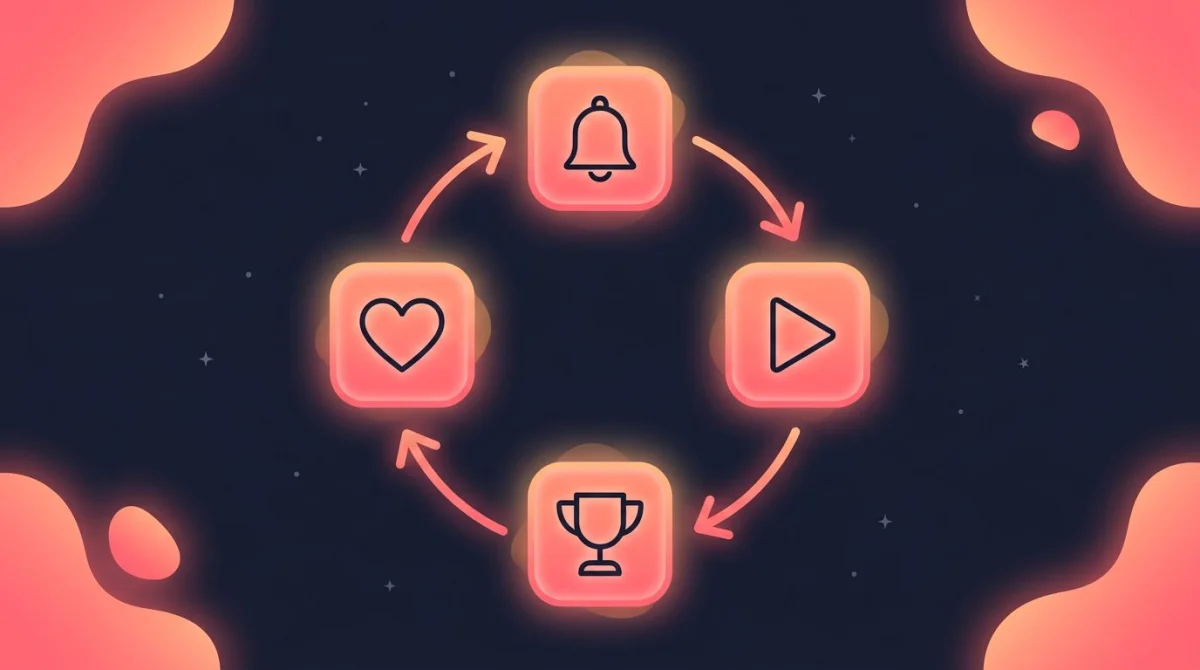
The 4 laws of behavior change: make it obvious, attractive, easy, and satisfying.
Here is the key move. Clear turned each stage into an instruction. The cue becomes "make it obvious." The craving becomes "make it attractive." The response becomes "make it easy." The reward becomes "make it satisfying." That shift from description to instruction is what makes the framework usable.
So the 4 laws are not loose advice. They are the habit loop translated into moves you can act on.
Law 1: Make it obvious (the cue)
A habit cannot start without a trigger. The first law works on the cue: you make the trigger for a good habit impossible to miss.
The most reliable way to do this is an implementation intention. Clear's formula is "I will behavior] at [time] in [location]." Vague goals like "I will meditate more" fail because nothing tells your brain when to act. Read more on writing these in our guide to [implementation intentions.
Three quick ways to make a good habit obvious:
- Lay out your gym clothes the night before, in plain sight.
- Put a water bottle on your desk so the cue is always visible.
- Use habit stacking: anchor the new habit to one you already do. "After I pour my morning coffee, I will write one sentence." Our habit stacking guide has more anchor examples.
The inverse of this law breaks bad habits: make it invisible. Remove the cue from your environment. If you scroll your phone in bed, charge it in the kitchen. If you snack on chips, do not keep them in the house. Out of sight works because most habits start with something you see.
Law 2: Make it attractive (the craving)
The second law works on the craving, the part of the loop that supplies motivation. The more attractive a behavior feels, the more likely you are to start it.
One practical tool is temptation bundling: pair something you want to do with something you should do. Only listen to your favorite podcast while you walk. Only watch your show while you fold laundry. The thing you crave pulls the habit you are building.
Three ways to make a good habit attractive:
- Bundle a treat you enjoy with the habit you want to install.
- Join a group where your desired behavior is the normal behavior. We copy the habits of the people around us.
- Reframe the language. Swap "I have to run" for "I get to run." Small wording shifts change how a habit feels.
The inverse for bad habits: make it unattractive. Name the real cost of the behavior. Instead of "smoking relaxes me," reframe it as "smoking steals my breath and my money." When the craving fades, the habit loses its fuel. For more on dismantling the loop, see how to break a habit.
Law 3: Make it easy (the response)
The third law works on the response, the habit itself. People often assume motivation is the bottleneck. More often, the bottleneck is friction. The easier a habit is to perform, the more likely you are to do it.
Clear's best-known tool here is the two-minute rule: scale any new habit down until it takes two minutes or less. "Read before bed" becomes "read one page." "Do yoga" becomes "put on my yoga clothes." You master the art of showing up before you scale the habit up.
Three ways to make a good habit easy:
- Reduce the steps. Prep the coffee maker at night so morning you just presses one button.
- Use the two-minute version on hard days so the streak never breaks.
- Design your environment so the right action is the path of least resistance.
The inverse for bad habits: make it hard. Add friction. Log out of social apps so you have to retype the password. Unplug the TV and store the remote in a drawer. Every extra step you add is one more chance to stop. This idea also underpins identity-based habits, where you ask what an easy default looks like for the person you want to become.
Law 4: Make it satisfying (the reward)
The fourth law works on the reward, the signal that closes the loop and tells your brain to repeat it. Here is the catch: we tend to value immediate rewards over delayed ones. Most good habits pay off later, while most bad habits pay off now.
So the fourth law is about adding an immediate, satisfying signal to behaviors that only pay off long-term.
Three ways to make a good habit satisfying:
- Track it. Marking a habit complete is a small, immediate hit of progress.
- Never miss twice. One slip is fine. Getting back on track the next day is what protects the habit.
- Add a small reward you actually enjoy after the behavior, not before.
The inverse for bad habits: make it unsatisfying. Add an immediate cost. Tell a friend you will pay them if you skip the gym, or use a habit contract. When the bad habit carries a quick sting, your brain stops chasing it.
This law is the bridge to consistency. The satisfaction of seeing progress carries a habit through the messy middle, which is also where most habit formation attempts quietly fall apart.
The 4 laws of behavior change at a glance
Every law has a build version for good habits and an inverse version for bad ones. Most summaries bury the inverse laws, so here they are with equal weight.
| Law | Build a good habit | Break a bad habit (inverse) | Example |
|---|---|---|---|
| 1. Cue | Make it obvious | Make it invisible | Lay out gym clothes vs. hide the phone charger |
| 2. Craving | Make it attractive | Make it unattractive | Bundle a podcast with a walk vs. name the real cost of smoking |
| 3. Response | Make it easy | Make it hard | Read one page vs. log out of social apps |
| 4. Reward | Make it satisfying | Make it unsatisfying | Mark the habit done vs. add a penalty for skipping |
Read the table left to right to build a habit. Read the inverse column to dismantle one. The four stages are the same either way.
How the 4 laws map to Fogg's B=MAP
The 4 laws are not the only behavior model worth knowing. BJ Fogg's behavior model, written as B=MAP, says a behavior happens when Motivation, Ability, and a Prompt converge at the same moment.
The two frameworks line up neatly. Clear's "make it attractive" maps to Fogg's Motivation. "Make it easy" maps to Ability. "Make it obvious" maps to the Prompt. Fogg's model has no separate reward term, and that is where Clear's fourth law adds something useful for long-term consistency.
The takeaway from both is the same: when a habit fails, you rarely need more willpower. You usually need a clearer prompt, lower difficulty, or a more immediate payoff.
A worked example: applying all 4 laws to one habit
Frameworks click once you run one real habit through them. Say you want to start a daily 10-minute walk.
To hear the thinking behind the framework, James Clear discusses atomic habits on TED's ReThinking with Adam Grant in the conversation below.
Make it obvious. Write the implementation intention: "After I finish lunch, I will walk for 10 minutes around the block." The cue is finishing lunch, which already happens every day.
Make it attractive. Use temptation bundling. Save your favorite podcast for walk time only. Now you look forward to the cue instead of dreading it.
Make it easy. Apply the two-minute rule on busy days. The minimum version is putting on your shoes and stepping outside. Some days that grows into 10 minutes. Some days it stays at two. The habit survives either way.
Make it satisfying. Mark the walk complete the moment you get home. That small check-in delivers an immediate sense of progress, even though the health payoff is months away.
One habit, four laws, four concrete moves. That is the whole system in miniature.
Where a habit tracker fits in
The fourth law is the hardest to engineer on your own, because most good habits do not pay off immediately. This is where a habit tracker earns its place: a tool like HabitBox sends a reminder that makes the cue obvious, then turns each completed day into a streak that makes finishing satisfying right now. Two of the four laws, handled in one tap.
4 Laws of Behavior Change FAQ
What are the 4 laws of behavior change?
The 4 laws of behavior change are James Clear's rules for building habits from Atomic Habits (2018): make it obvious, make it attractive, make it easy, and make it satisfying. Each law targets one stage of the habit loop, so the four together cover the cue, the craving, the response, and the reward.
How do you apply the 4 laws of behavior change?
Apply them in order. Set a clear cue with an implementation intention, make the habit appealing through temptation bundling, shrink the action using the two-minute rule, and add an immediate reward like marking it done. Running one habit through all four laws turns a vague goal into a concrete plan.
How are the 4 laws different from the habit loop?
The habit loop, described by Charles Duhigg, is the descriptive cycle of cue, routine, and reward. The 4 laws are Clear's prescriptive version. He renamed the stages cue, craving, response, and reward, then turned each into an instruction you can act on.
Do the 4 laws work for breaking bad habits?
Yes. To break a habit you invert each law: make it invisible, make it unattractive, make it hard, and make it unsatisfying. You remove the cue, drain the craving, add friction to the response, and attach a cost to the reward.
What app supports the 4 laws of behavior change?
A simple habit tracker like HabitBox supports two of the laws directly. Reminders make a habit obvious, and the streak you build each day makes finishing it satisfying. Tracking is also the clearest way to see whether your habit is actually sticking over time.

Mira Hartwell
Editor, HabitBoxEditor at HabitBox. Writes about habit science and productivity, grounding every post in named research (Lally, Wood, Walker, Huberman) instead of recycled advice. Read full bio →