How to Gamify Your Life: A Practical Guide (2026)
TL;DR: To gamify your life, borrow 5 game mechanics — points, streaks, levels, quests, and rewards — and apply them to 3 habits max. The core loop is simple: do the habit, mark it, watch the streak grow, cash in a small weekly reward. It works because your brain responds to visible progress and to not wanting to break a chain. The catch: pile on too many mechanics and you can smother the very motivation you were trying to spark.
Most guides on how to gamify your life are either pure hype or a thinly disguised ad for one app. This one is neither. You get a minimal system you can set up in ten minutes, the psychology behind why it works, and an honest warning about the trap that makes gamification backfire.
The good news is you do not need a complicated setup. Turning your habits into a game is mostly about making progress visible and giving your brain a small, satisfying signal every time you show up.
What gamifying your life really means
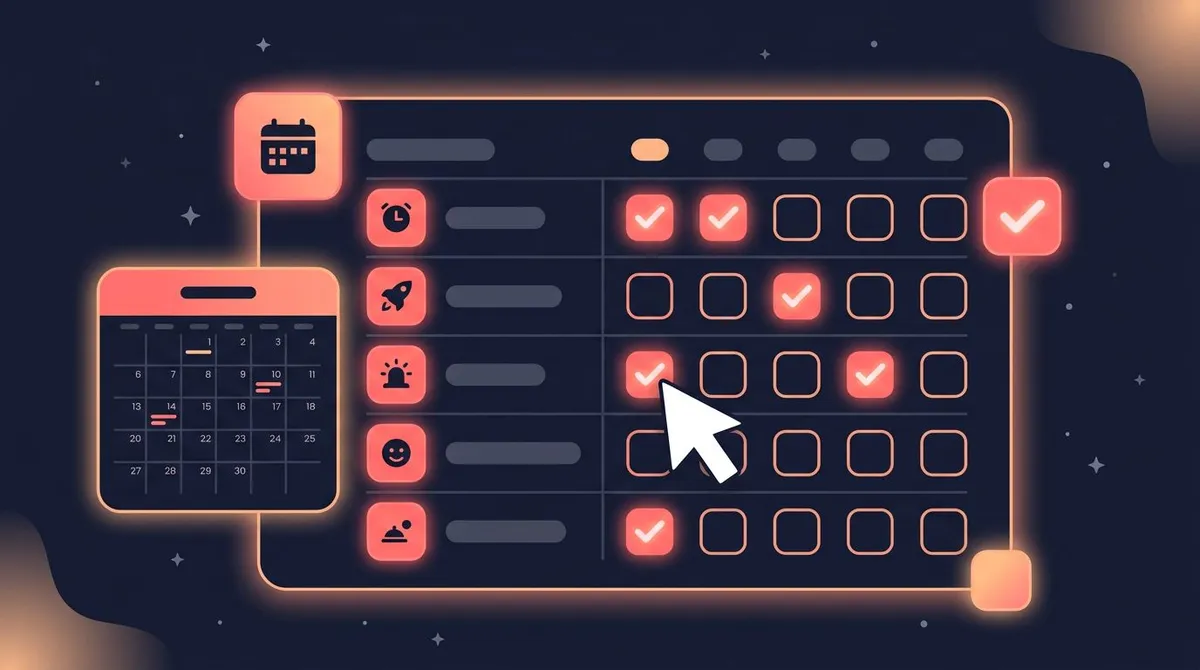
Gamifying your life means borrowing mechanics from games — points, progress bars, streaks, levels, and quests — and applying them to real habits so those habits feel more engaging. You are not playing a game. You are stealing the parts of games that make people want to keep going.
Game designer and researcher Jane McGonigal argued in Reality Is Broken that games are so absorbing because they give players clear goals, instant feedback, and a visible sense of progress. Most of daily life lacks all three. Gamification adds them back.
The point is not to make chores fun through sheer novelty. It is to build a feedback loop tight enough that your brain registers "I did the thing, and I can see it counted." That single signal is what keeps a habit alive on the days you do not feel like it.
It helps to know what you are actually solving for. Habits fail in two predictable places: starting (you never begin) and continuing (you begin, then quit around week three). Gamification is a starting-and-continuing tool, not a magic one. Streaks and points give you a reason to begin today and a reason not to abandon the run tomorrow. They will not fix a habit that is fundamentally wrong for your life — but they will carry a good habit through the flat, unmotivated stretch that ends most attempts.
The 5 core mechanics that actually work
You do not need all five at once. Each one solves a different motivation problem, so pick the ones that match where you tend to fall off.
1. Streaks
A streak counts consecutive days you complete a habit. It is the single most powerful mechanic because it stacks two effects. The goal-gradient effect — first documented by Clark Hull in 1932 and revived by Ran Kivetz's coffee-card study — means motivation rises as you get closer to a goal. A long streak makes the next check-in feel more valuable, not less.
The second effect is loss aversion. Once you have a 20-day streak, breaking it feels like losing something you own. That is why "don't break the chain" is stickier than any pep talk — and why our guide to tracking habits leans so hard on making your streak visible.
2. Points and XP
Points (or experience points) give every action a number. Assign more points to harder or rarer habits — a daily stretch might be 1 point, a weekly deep-clean 5. Points turn a fuzzy "I was productive" into a concrete score you can watch climb.
Keep the scoring simple. If you need a spreadsheet to calculate your points, you have already lost.
3. Levels and tiers
Levels group your accumulated points into milestones. Hit 100 points and you reach Level 2; hit 300 and you reach Level 3. Levels matter because they turn a long, shapeless journey into a series of near-term finish lines — which is the goal-gradient effect working at a larger scale.
The trick with levels is spacing. If Level 2 takes three months to reach, it stops motivating you and starts mocking you. Set the first few tiers close together so you feel early momentum, then widen the gaps as the habit gets stronger. Early wins are what convince your brain the game is worth playing.
4. Quests
Quests are bundled objectives with a time limit: a daily quest (do all 3 habits today) or a weekly quest (hit 15 check-ins this week). They add structure and a sense of a fresh start each morning, which helps on days when a long-term goal feels too distant to care about.
5. Rewards
Rewards are what you cash your points in for — a real treat you would not otherwise give yourself. A movie on Friday, a nice coffee, an hour of guilt-free gaming. The reward closes the loop and gives the points a purpose beyond the number itself.
Here is the trap to avoid, though: reward the habit, not the outcome, and keep rewards occasional. We will come back to why that matters.
The mechanics at a glance
Use this table to match each mechanic to a habit and see the specific thing to watch for.
| Game mechanic | Habit application | Watch-out |
|---|---|---|
| Streaks | Mark each day you meditate; protect the chain | One miss can feel like total failure — allow a "freeze" day |
| Points / XP | Score habits by effort: easy = 1, hard = 5 | Overcomplicated scoring becomes admin you skip |
| Levels / tiers | Unlock Level 2 at 100 points | Levels too far apart feel unreachable and demotivate |
| Quests | Daily quest = all 3 habits; weekly = 15 check-ins | Too many quests turn a game into a to-do list |
| Rewards | Cash points for a Friday treat | Rewarding every single rep can erode intrinsic motivation |
A simple starter system you can set up today
Do not build the whole arcade at once. Here is the minimum viable version — the whole thing takes about ten minutes to set up and 30 seconds a day to run.
- Pick 3 habits. No more. Three is enough to feel like a game and few enough to keep alive. Choose one health habit, one work habit, one fun-or-rest habit so your "game" covers your whole day. If you want help chaining them to existing routines, the habit-stacking builder maps them onto anchors you already have.
- Assign points. Give each habit a value from 1 to 5 based on effort. Write it down once and do not fiddle with it.
- Track one streak. Pick the single habit that matters most and count consecutive days. This is your headline number — the one you protect.
- Set one weekly reward. Decide the point total that unlocks it (say, 20 points) and what you get. One reward, not five. Cash it in on Sunday.
That is the entire system: points, one streak, one weekly reward. Run it for two weeks before adding levels or quests. Most people find that this alone changes how often they show up, because now there is a visible score where there used to be a vague intention.
If you already track habits in an app, most of this is automatic — you just decide the points and the reward. A dedicated tracker like HabitBox shows your streaks and completion rate as a calendar heatmap, so the "score" builds itself without any manual tallying.
The traps that make gamification backfire
This is the part the hype guides skip. Gamification has a failure mode, and it is not obvious until it hits you.
The overjustification effect
When you reward yourself for something you already found rewarding, the reward can replace the internal motivation instead of adding to it. Psychologists Edward Deci and Mark Lepper documented this as the overjustification effect: people paid to do a puzzle they used to enjoy for free became less interested in it once the payment stopped.
For habits, this means: if you gamify a habit you genuinely love, you risk teaching your brain to do it only for the points. Reserve heavy gamification for habits you struggle to start — not the ones you already enjoy. This is also why relying on it alone is fragile; our guide to motivation vs discipline covers what keeps you going once the reward loses its shine.
Novelty fades
Any new system feels exciting for the first two weeks. That excitement is not the mechanic working — it is just novelty, and it always fades. Judge your system by whether it still keeps you consistent in week six, not week one. Build for the boring middle.
Do not turn it into admin
The fastest way to kill a gamified habit is to make tracking it feel like a job. Elaborate dashboards, ten metrics, daily point audits — that is not a game, it is unpaid data entry. If maintaining the system takes longer than the habit itself, cut the system down. When in doubt, fewer mechanics win.
A useful test: if you skipped tracking for three days, would the system be a pain to catch up on? If yes, it is too heavy. The whole point of a game layer is that it should feel like a small reward for showing up, not a chore stacked on top of the chore. One-tap check-ins beat any spreadsheet, every time.
Allow a freeze day
Real life interrupts. A perfect-streak-or-nothing rule guarantees you will eventually miss, feel like you failed, and quit the whole system. Build in one "freeze" or grace day per week — a planned pause that does not reset your streak. This mirrors how BJ Fogg frames setbacks in Tiny Habits: a missed rep is data, not a verdict. Miss a day, note it, and pick the habit back up tomorrow. The streak survives, and so does your motivation.
Tools that gamify your habits
You can run the starter system on paper. But an app removes the friction, and two approaches dominate.
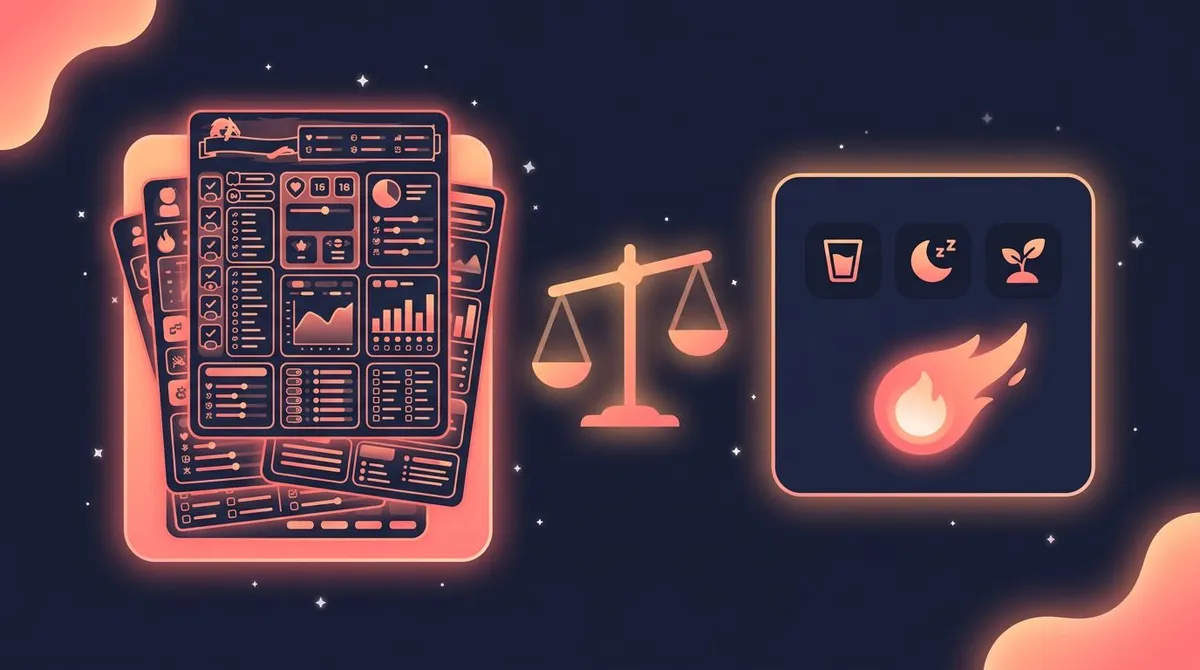
For full role-playing gamification, Habitica turns your habits into an RPG — you have a character, earn gold and gear, and can join party quests. It works brilliantly for people who love games and want the whole experience. The trade-off is overhead: managing a character is a habit in itself, and some people find the RPG layer becomes the very admin they were trying to avoid.
For the motivation without the game overhead, a lightweight streak tracker is the better fit. Apps like HabitBox give you the two mechanics that do most of the work — visible streaks and progress analytics — without a character sheet to maintain. You get the "don't break the chain" pull and a completion-rate score, and nothing else to manage.
Neither is objectively better; it depends on how much game you actually want. If you are weighing options, our roundups of Habitica alternatives and Streaks app alternatives compare the lighter trackers side by side, and the best habit tracker app guide ranks them by use case.
FAQ
What does it mean to gamify your life?
How do you gamify your habits?
What are the best gamification apps?
Does gamification actually work?
Can gamifying habits backfire?

Mira Hartwell
Editor, HabitBoxEditor at HabitBox. Writes about habit science and productivity, grounding every post in named research (Lally, Wood, Walker, Huberman) instead of recycled advice. Read full bio →