How to Stop Hitting Snooze: 7 Tricks That Work
TL;DR: Learning how to stop hitting snooze starts with understanding why it backfires. Those extra 9 minutes drop you back into the lightest, dream-rich stage of sleep, then yank you out of it again — which deepens grogginess instead of curing it. A 2025 study of more than 3 million sleep sessions found 55.6% of mornings ended with a snooze, averaging 2.4 presses and 10.8 minutes. The single most reliable fix: one consistent wake time plus moving your phone across the room so you have to stand up to turn it off.
If you snooze every morning, you're in the majority — and it's not a character flaw. It's a fixable habit loop. Below is what the sleep science actually says, plus seven tricks ranked roughly by how much leverage they give you.
Why hitting snooze makes you more tired
Here's the counterintuitive part: those nine extra minutes don't pay you back in rest. They cost you.
When your alarm first goes off, your body is often surfacing out of a sleep cycle — close to the lighter, dream-heavy stage. Snoozing sends you diving back down, and the next alarm interrupts that fresh descent partway through. Sleep expert Jenna Gress Smith, PhD, told BetterUp that snoozing hurts in two ways: "you're fragmenting what little extra sleep you're getting," and your body "will be jarred in and out of REM or maybe light non-REM sleep" — the mentally restorative stage.
The grogginess you feel on waking has a name: sleep inertia. It's a normal, temporary state where your brain hasn't fully switched on yet. Snoozing extends it. Dr. Fiona Barwick, a sleep medicine expert at Stanford Lifestyle Medicine, calls hitting snooze "one of the worst things you can do because it prolongs morning grogginess and associates the bed with being awake."
That second point matters more than it sounds. Every snooze cycle teaches your brain that the bed is a place for lying awake, fighting the alarm — which makes both waking and falling asleep harder over time.
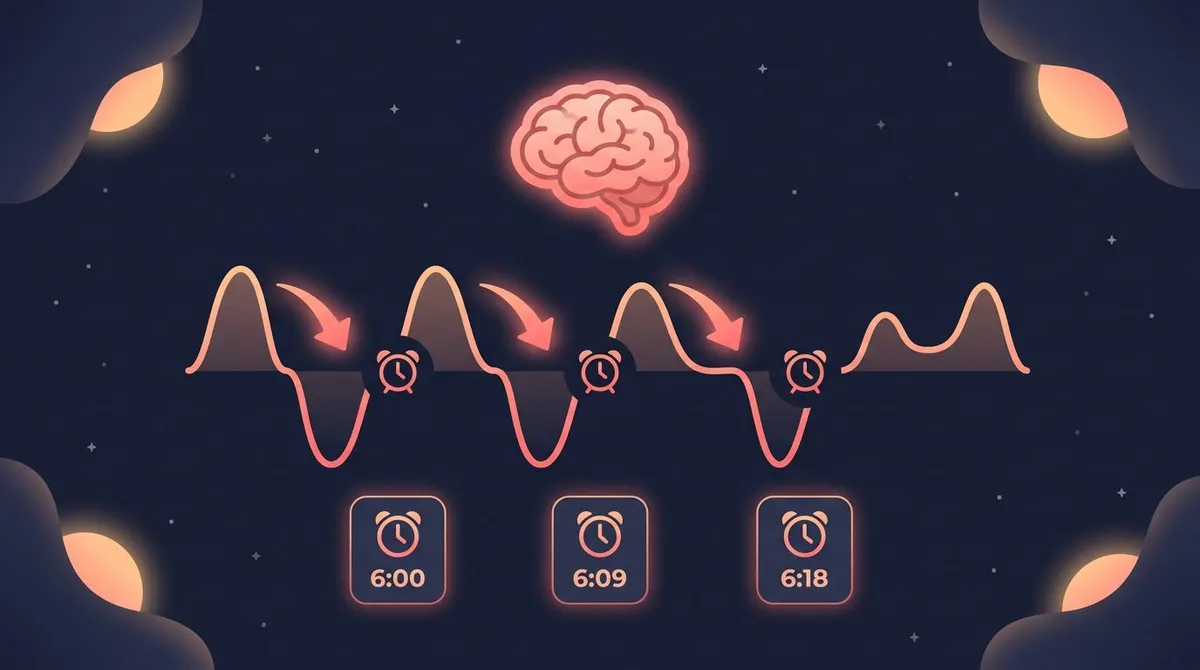
So the rested feeling you're chasing with that extra snooze? You're more likely to find it by getting up on the first alarm and letting daylight do its job.
The 7 tricks to stop hitting snooze
You don't need all seven. Start with the first two — they carry the most weight — and add the rest as needed.
1. Move your phone across the room
This is the highest-leverage change for most people. If your alarm is within arm's reach, snoozing is a half-asleep reflex you make before your brain is online. Move the phone (or clock) far enough that you have to stand up and walk to silence it.
Once you're upright and a few steps from the bed, the hardest part is over. Standing reduces the pull back to the pillow, and the brief walk nudges your body toward "awake."
2. Keep one consistent wake time — even on weekends
A single fixed wake time is the most powerful long-term fix, because it's what trains your circadian rhythm. When your body knows roughly when morning arrives, it starts surfacing toward that time on its own, so the alarm interrupts lighter sleep and waking feels less brutal.
Sleeping in on weekends undoes this. A two-hour weekend shift creates a mini jet-lag your body has to recover from every Monday. Pick a wake time you can hold seven days a week, even if it means a slightly later one than you'd like.
3. Let light in immediately
Light is your brain's strongest "it's morning" signal. Dr. Barwick's advice is to get out of bed within 15 minutes of the alarm and "get some natural light to stop melatonin production" — melatonin being the hormone that keeps you sleepy.
Open the curtains, step outside, or sit by a bright window. If you wake before sunrise, a bright lamp or a sunrise alarm that brightens gradually can stand in for daylight.
4. Use the 5-second rule
When the alarm goes off, count backward: 5–4–3–2–1, and move on "1." This is Mel Robbins' 5 Second Rule — the idea is that a short countdown interrupts the hesitation loop before your brain can talk you into "just five more minutes."
It won't make you a morning person overnight. But paired with a phone across the room, it gives you a concrete launch cue instead of a vague intention to get up.
5. Plan a real reason to get up
Willpower is thin at 6 a.m. A specific, appealing reason works better. That might be coffee you genuinely look forward to, a warm shower, a few quiet minutes before the house wakes, or a workout with a friend who's expecting you.
Make the reward immediate. "Being productive today" is too abstract to pull you out of a warm bed. "The first cup of coffee while it's still quiet" is something your half-asleep brain can actually move toward.
6. Fix the night before
Most snoozing is solved at bedtime, not in the morning. If you're chronically short on sleep, your body will fight every alarm — the 2025 study found long sleepers and the sleep-deprived both snoozed more. The fix is protecting a real sleep window, not muscling through the wake-up.
That means a consistent bedtime, cutting screens before bed, a dark cool room, and a caffeine cutoff in the early afternoon. We cover the full routine in our evening routine guide and a printable sleep hygiene checklist.
7. Habit-stack a reward onto waking
To make first-alarm waking stick, attach an enjoyable, tiny ritual to it. This is habit stacking: anchor the new behavior to a cue you can't miss. "After I turn off my alarm, I open the blinds and start the kettle."
The ritual gives your brain a positive association with getting up — the opposite of the bed-equals-fighting-the-alarm loop. To go deeper on linking cues to actions, see implementation intentions.
The night-before checklist
Because snoozing is mostly a bedtime problem, here's what to set up the evening before so the first alarm has a fighting chance.
| Evening step | Why it helps you wake on the first alarm |
|---|---|
| Set a consistent bedtime 7–9 hours before wake | Removes the sleep debt that fuels snoozing |
| Put the phone/alarm across the room | Forces you to stand up to silence it |
| Lay out clothes, prep coffee, set your "reason to get up" | Lowers morning friction and gives you a pull |
| Dim lights and stop screens ~1 hour before bed | Lets melatonin rise so you fall asleep faster |
| Make the room dark and cool | Improves deep sleep so the alarm meets lighter sleep |
| Cut caffeine by early afternoon | Prevents fragmented sleep that deepens grogginess |
| Set a sunrise alarm or open-curtain plan | Pre-loads the light signal that ends melatonin |
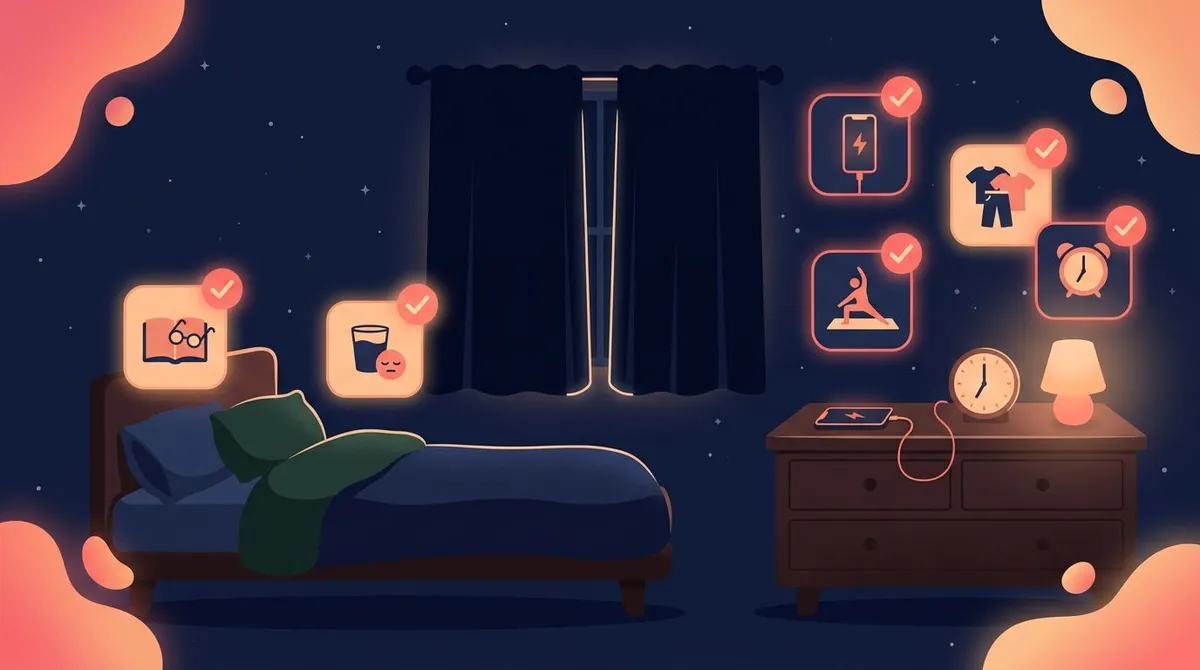
Run through it for a week and you'll likely notice the morning fight getting quieter — not because you're more disciplined, but because you're better rested.
When snoozing signals a real sleep problem
Sometimes the snooze button is a symptom, not the issue. If you're sleeping a full 7–9 hours and still can't surface for your first alarm — or you wake unrefreshed no matter what — that's worth paying attention to. A sleep tracker can help you check whether you're really getting those hours, though no app can diagnose a sleep disorder.
Persistent daytime exhaustion, loud snoring, gasping awake, or feeling broken in the morning despite enough hours can point to conditions like sleep apnea, an out-of-sync chronotype, or another sleep disorder. None of those get fixed by willpower or a louder alarm.
The honest answer here: if better habits don't move the needle after a few weeks, talk to a doctor or sleep specialist. There's no shame in needing more than a phone-across-the-room trick — some people genuinely do.
Track your first-alarm streak
What makes this stick isn't intensity — it's consistency, and consistency is easier to keep when you can see it. Marking each morning you got up on the first alarm turns an abstract goal into a streak you don't want to break.
That's the loss-aversion effect: once you've got a chain of "up on time" days going, skipping feels like a loss. A simple tracker like HabitBox lets you log a "first-alarm wake" habit each morning and watch the streak grow, which keeps the behavior visible long enough to become automatic. If you want help making any new routine durable, our guide on how to be consistent digs into the mechanics.
And if your real goal is an earlier start, not just skipping snooze, pair these tactics with our how to wake up at 5am guide — it covers the bedtime math that makes early waking sustainable.
FAQ
Why is hitting snooze bad?
Does snoozing make you more tired?
How do I stop hitting the snooze button?
Should I put my alarm across the room?
Why can't I wake up to my first alarm?

Mira Hartwell
Editor, HabitBoxEditor at HabitBox. Writes about habit science and productivity, grounding every post in named research (Lally, Wood, Walker, Huberman) instead of recycled advice. Read full bio →