Chore App: 8 Best Picks for Families & Roommates (2026)
TL;DR: There is no single best chore app, because a family with kids, three roommates, and one adult in a studio need three different tools. Families do best with Chorsee, Cozi, Homey, or Chores & Allowance Bot. Roommates should look at Flatastic or Sweepy. Solo adults want Tody or Spotless.
Ratings and prices were checked against the US App Store, Google Play, and each vendor's own pricing page on 10 September 2026.
Most chore app roundups list ten apps and let you sort it out. That fails, because the apps are built for different households. An allowance tracker for a nine-year-old is useless to three roommates arguing about the bathroom. A shared cleaning rota is overkill for one person in a studio.
So this guide splits the picks by who you live with. Find your household below, then read only that section. If you would rather not install anything at all, our free chore chart maker prints a weekly grid for the fridge instead.
Start here: which kind of chore app do you need?
Three household types buy chore apps, and they want three different things.
Families with kids need assignment and motivation. A parent hands out tasks, a child completes them, and something happens afterwards — points, stars, screen time, or actual money. The app has to work on a kid's device and a parent's device at once.
Roommates and shared houses need fairness and evidence. Nobody is the boss, so the app's job is to show who did what, rotate the unpleasant tasks, and settle the "I always take the bins out" argument with a record instead of a mood.
Solo adults need memory. There is no one to assign anything. The problem is that you forget the bathroom is due, or you clean the same visible surfaces every week while the oven quietly goes six months. The app is a reminder system, not a management system.
Pick the wrong category and the app dies in a week. A solo adult who installs a family allowance tracker gets a screen full of features for people who do not exist.
Comparison table: 8 chore apps at a glance
| App | Best for | Platforms | App Store rating | Paid tier (US) |
|---|---|---|---|---|
| Chorsee | Families who want chores plus allowance | iOS, Android | 4.6 (11,686) | Free; $8.99/mo, $39.99/yr, $119.99 lifetime |
| Cozi | Whole-family logistics, not just chores | iOS, Android, web | 4.8 (398,097) | Free with ads; Gold $39/yr |
| Homey | Paying kids real money for chores | iOS, Android | 4.1 (2,779) | Free; $6.99/mo, $59.99/yr |
| Chores & Allowance Bot | A simple points-and-payout chart | iOS, Android | 4.5 (10,903) | Free; $9.99/mo, $39.99/yr |
| Flatastic | Roommates splitting chores and costs | iOS, Android | 4.7 (282) | Free; $18.49/yr solo, $34.99/yr household |
| Sweepy | Splitting cleaning by effort | iOS, Android | 4.7 (10,494) | Free; $3.99/mo, $19.99/yr |
| Tody | Solo cleaning by what's actually due | iOS, Android | 4.8 (10,673) | Free; $9.99/yr, household tiers $25–$80/yr |
| Spotless | A minimal solo cleaning routine | iOS only | 4.5 (1,282) | Free; $1.99/mo, $9.99/yr, $49.99 lifetime |
Ratings are US App Store figures. Prices change often, so confirm on the store listing before you subscribe.
Best chore apps for families with kids
Four apps handle the parent-assigns, child-completes pattern well. They differ mostly in what the child gets at the end.
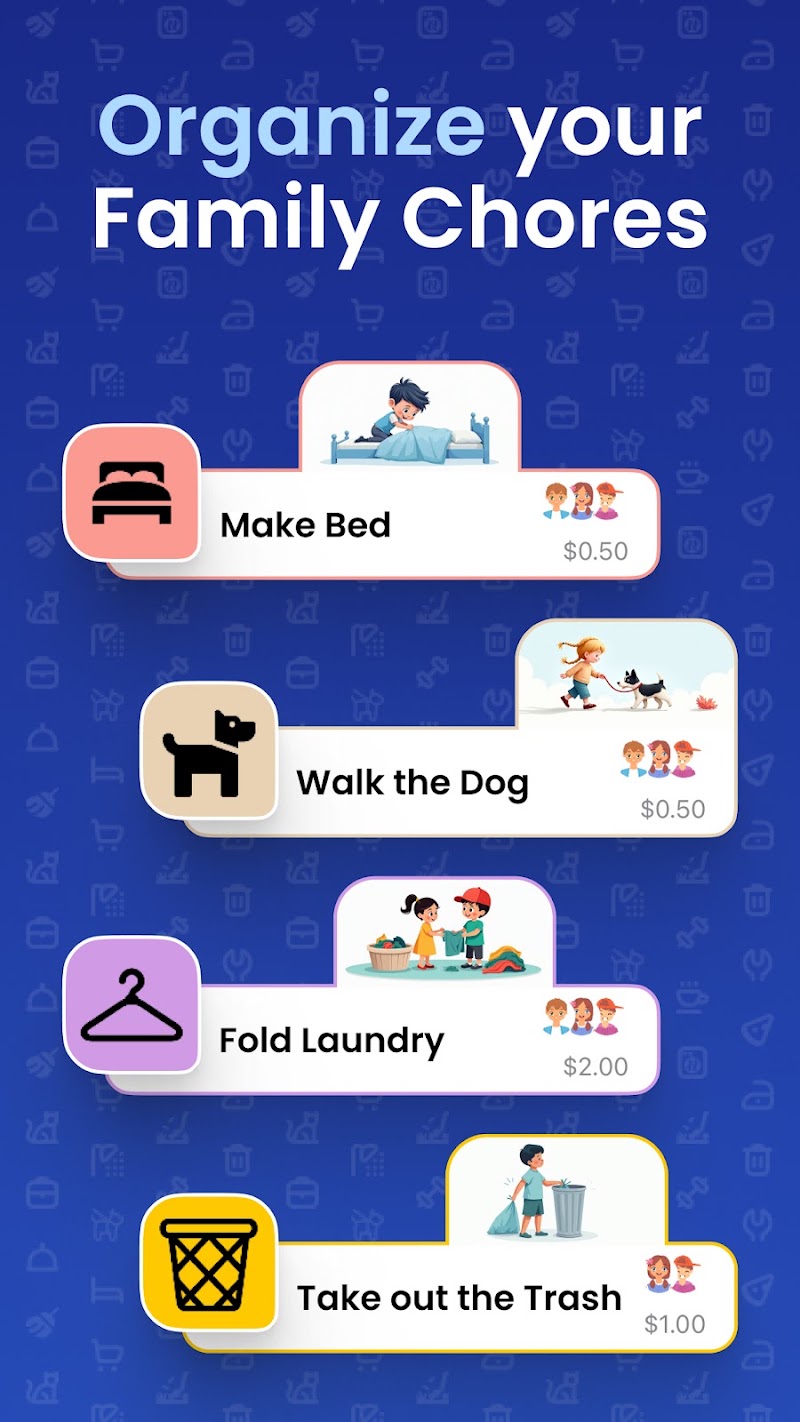
Chorsee — best all-round family chore tracker
Rating: (4.6/5) (11,686 App Store ratings) · 4.4 on Google Play
Chorsee deliberately skips gamification. The developer's pitch is a clean app that assigns chores and tracks allowance without turning the house into a game. You can assign a chore daily or weekly, to everyone, to one child, or first-come-first-served.
That last option is quietly excellent for siblings. Unclaimed chores sit in a pool, and whoever gets there first earns them. Money is tracked per child, so you can credit and debit accounts as you go.
One honest caveat: Chorsee's own website only advertises iPhone and iPad. The Android app exists, but with 147 Play reviews against nearly 12,000 on iOS, it is clearly the smaller build. Check it before you commit an Android household.
Cozi Family Organizer — best when chores are the small problem
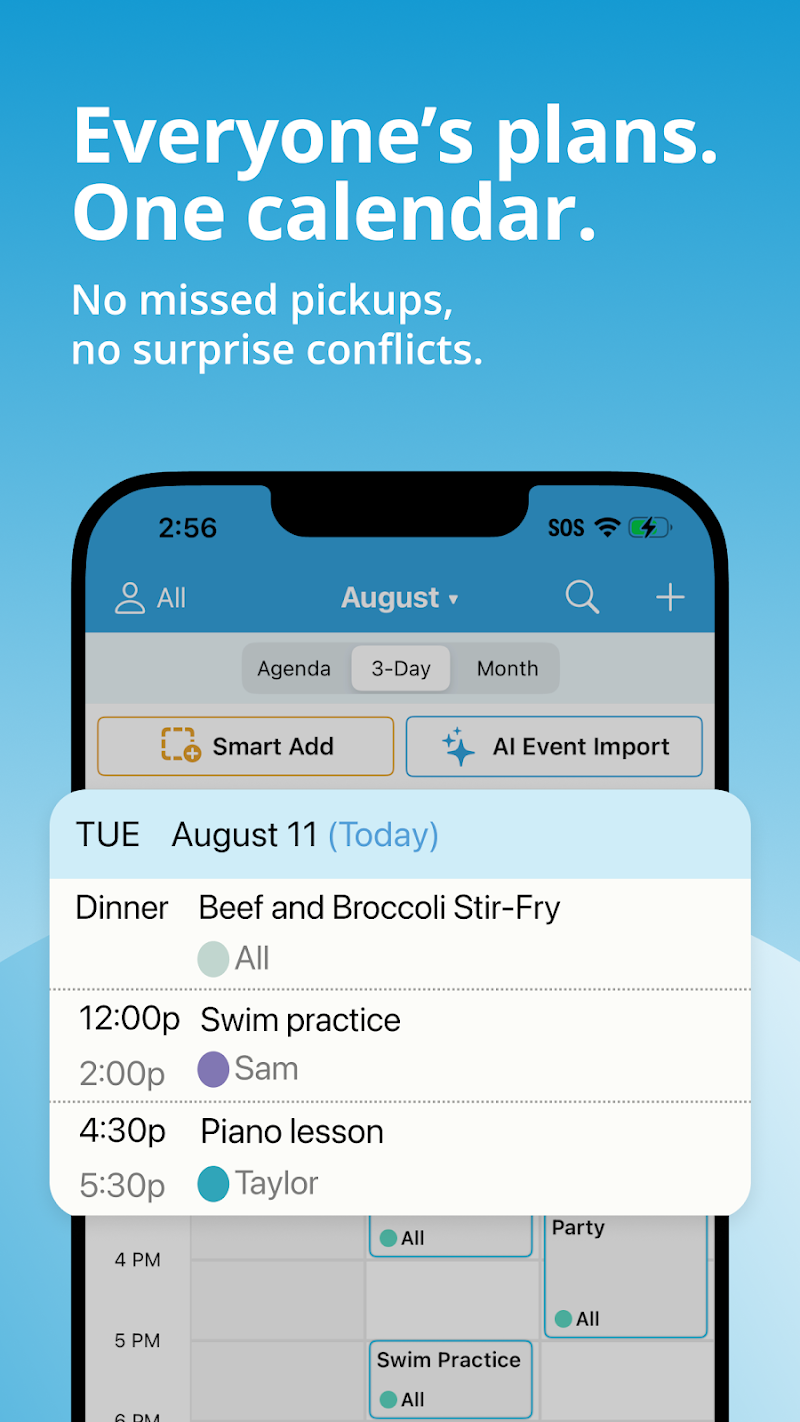
Rating: (4.8/5) (398,097 App Store ratings) · 4.7 on Google Play
Cozi is not really a chore app. It is a shared family calendar with to-do lists, shopping lists, and a meal planner attached, and chores live inside those lists. With nearly 400,000 App Store ratings, it is far and away the most established app here.
Choose Cozi when chores are one item on a much longer list of family coordination problems. If your actual pain is a calendar nobody reads, a dedicated chore tracker will not fix it.
The free version is ad-supported. Cozi Gold costs $39 a year on Cozi's own pricing page, removes ads, and adds month view on mobile plus a birthday tracker. The App Store also lists a pricier Cozi Max tier.
This walkthrough compares several kid-focused chore apps side by side, which is useful if you want to see the assignment flow before installing anything:
Homey — best for paying kids actual money
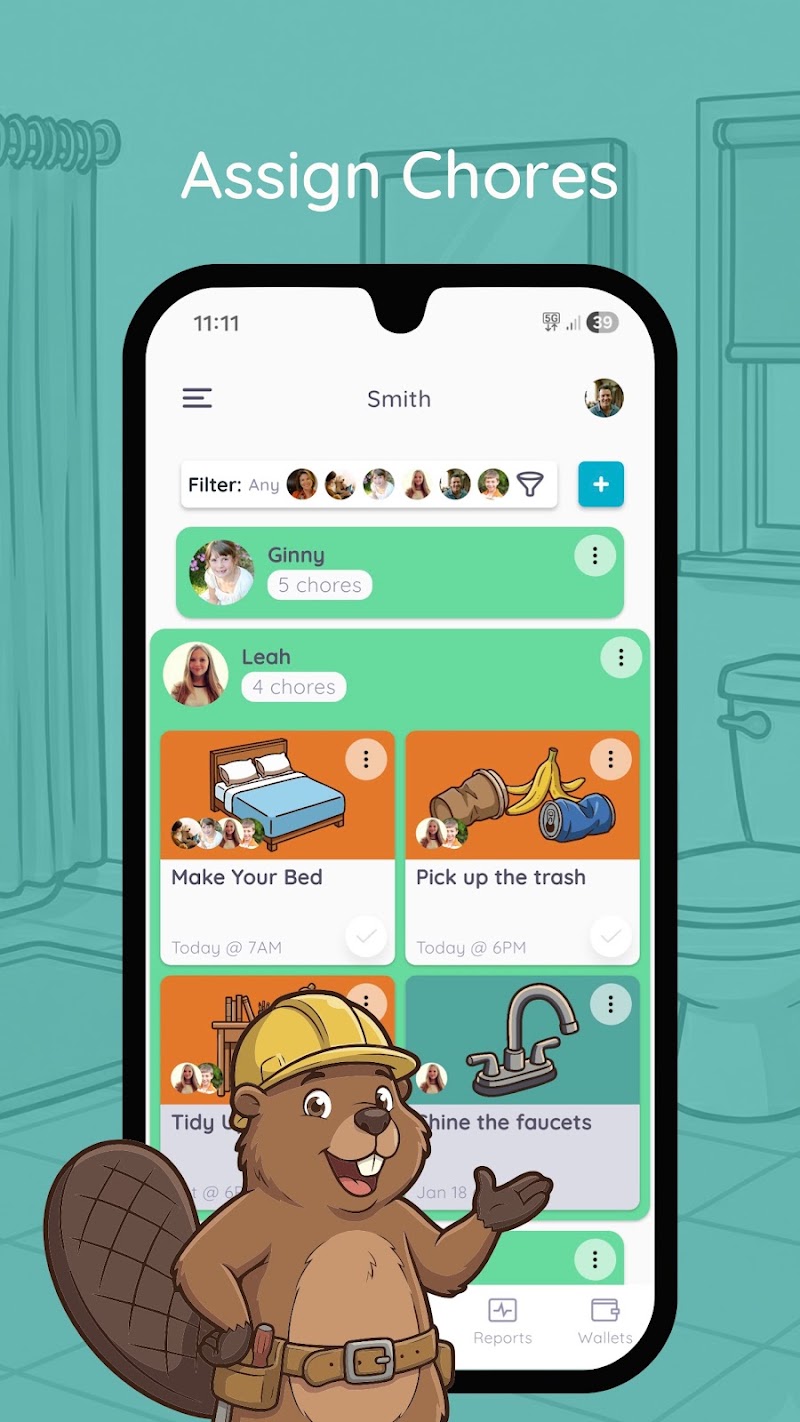
Rating: (4.1/5) (2,779 App Store ratings) · 2.7 on Google Play
Homey ties chores to real allowance. Parents set recurring chores, confirm completion, and issue payouts, with the money going into an account rather than a pocket. Its official listing describes the bank-transfer features for US users, so check what your country's version supports before relying on it for payments. The company's angle is financial literacy: kids learn that money is earned.
The concept works, and the app has been around since 2015. But you should know the numbers before you download. The iOS rating sits at 4.1, while the Android version scrapes 2.7 across 682 reviews, and the last iOS update was January 2026.
That gap matters. If your family runs on Android, treat Homey as a maybe, not a default.
Chores & Allowance Bot — best plain points-and-payout chart
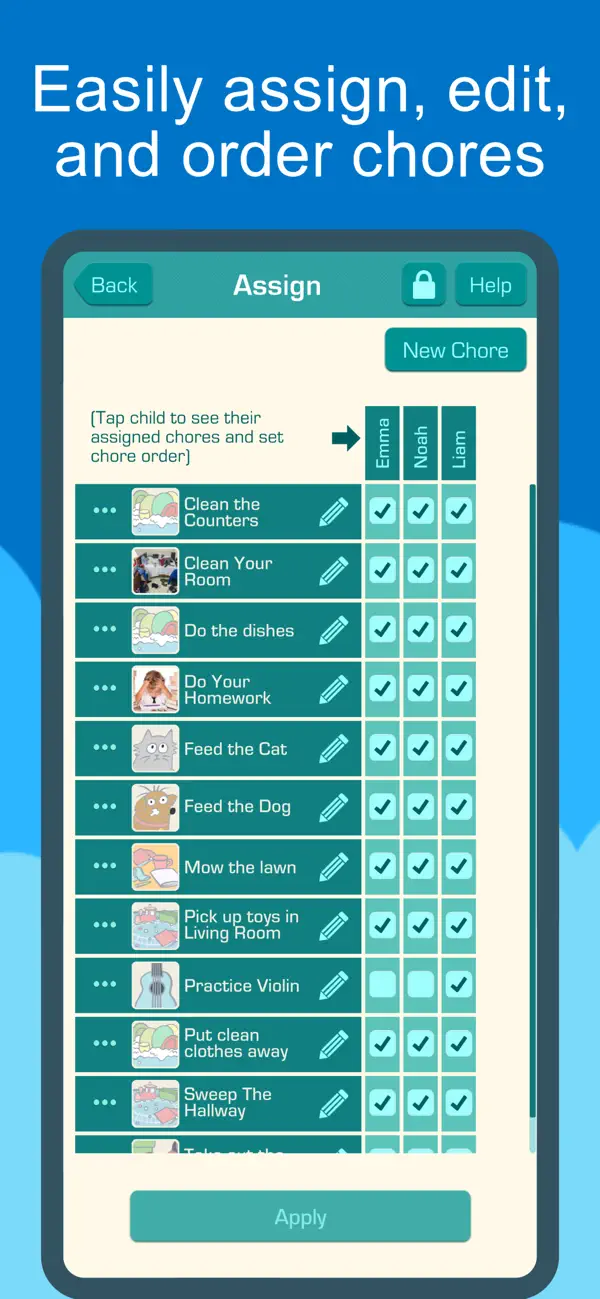
Rating: (4.5/5) (10,903 App Store ratings) · 4.5 on Google Play
Chores & Allowance Bot, from Wingboat, does one thing: children's chores, allowances, and savings goals. It has been in the store for years and holds 4.5 stars on both platforms, which is rare consistency.
Pick it when you want the digital version of a fridge chart. There is no calendar, no meal planner, and no financial institution to connect. Premium runs $9.99 monthly or $39.99 a year.
Best chore apps for roommates and shared houses
Shared houses have a different problem. No one has authority, so the app has to make contribution visible without anyone playing manager.
Flatastic — best for roommates who also split money
Rating: (4.7/5) (282 App Store ratings) · 4.4 on Google Play
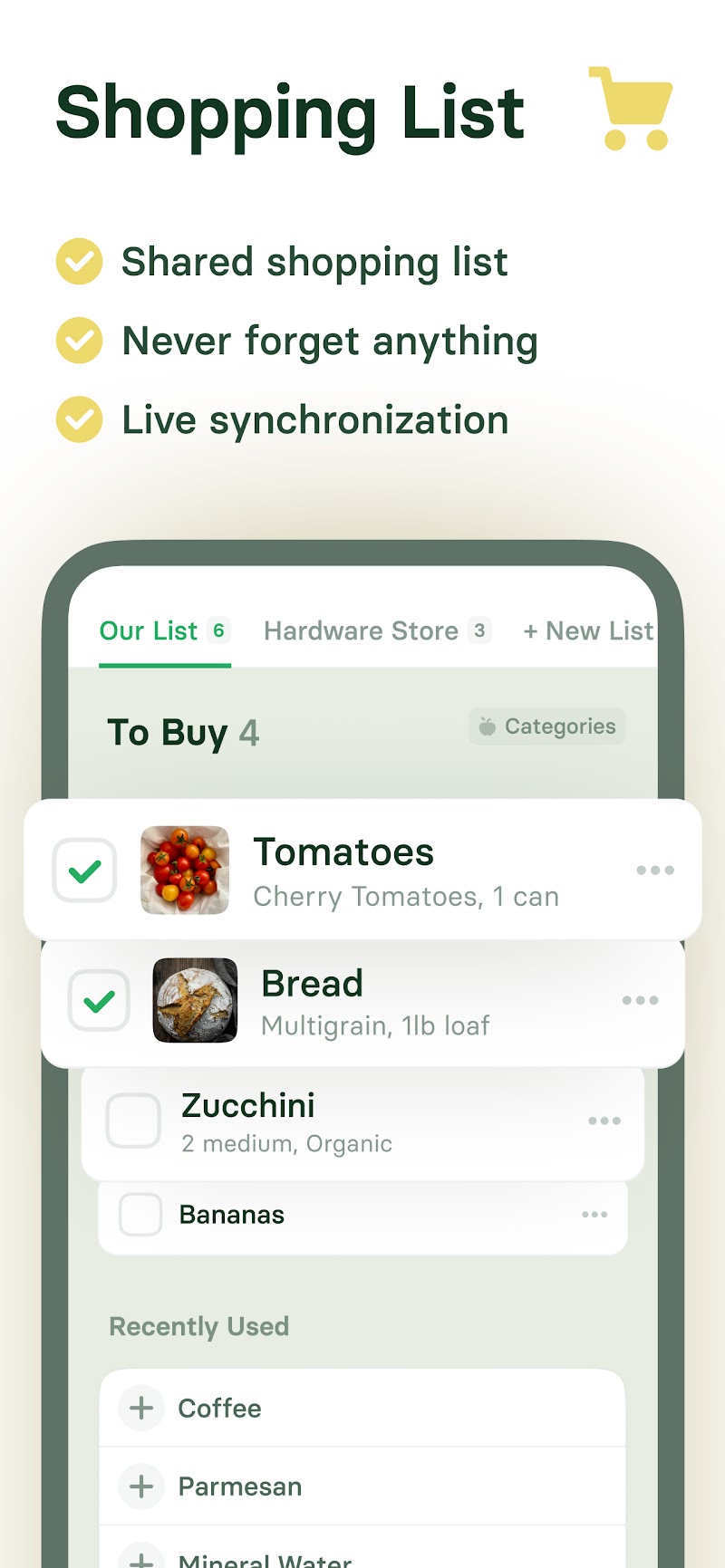
Flatastic is built for flatshares, and it covers both things roommates fight about: the cleaning rota and the money. You get a rotating chore plan, shared expenses with budget breakdowns, and a shopping list everyone can edit.
The chore history is the useful part. Premium keeps a record of what was done and when, which turns a disagreement into a lookup. Finance entries export to CSV, so settling up at the end of a month is not a group chat archaeology project.
Pricing is unusual and worth noting. "Premium for one" costs $18.49 a year, while "Premium for everybody" is $34.99 a year and covers the whole flat — so one person can upgrade the entire household for less than two individual plans.
Sweepy — best for splitting cleaning by effort
Rating: (4.7/5) (10,494 App Store ratings) · 4.5 on Google Play
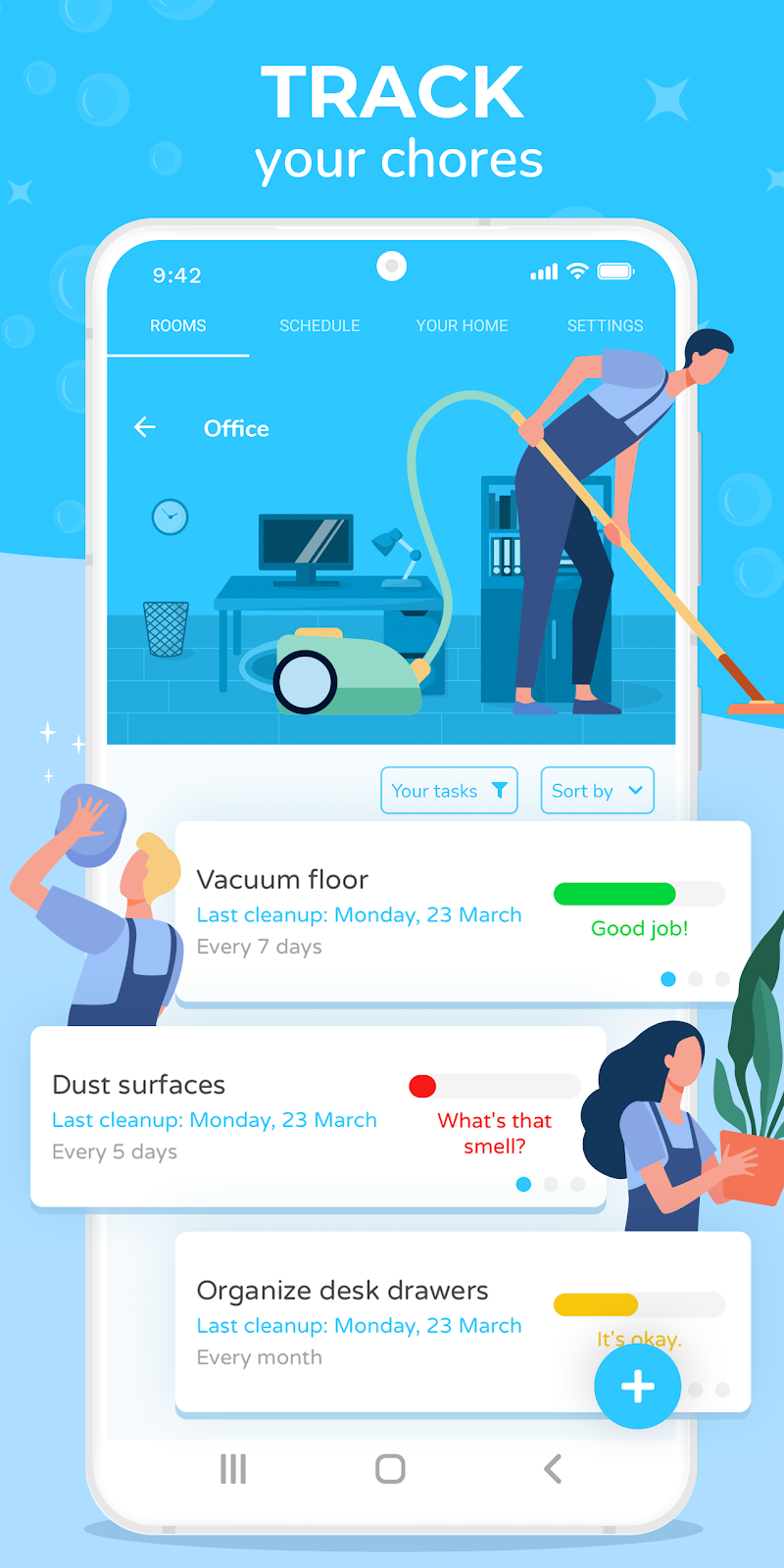
Sweepy scores every task from one to three points based on how tedious it is. Dusting a surface might be one point. Sweeping and mopping the floor is three.
That small design choice solves a real dispute. Counting tasks makes whoever wipes the counter look as productive as whoever cleans the bathroom, and points fix the arithmetic. Add your housemates, and a leaderboard shows contribution over time.
Sweepy also has a Smart Schedule that builds today's list to match how much time you actually have. Parents can approve a child's completed task before points land, so it works for families too. It runs $3.99 a month or $19.99 a year.
Best chore apps for solo adults
Living alone changes the problem completely. Assignment, fairness, and rewards all disappear. What remains is remembering that the sheets are overdue.
Tody — best for cleaning what's actually due
Rating: (4.8/5) (10,673 App Store ratings) · 4.7 on Google Play
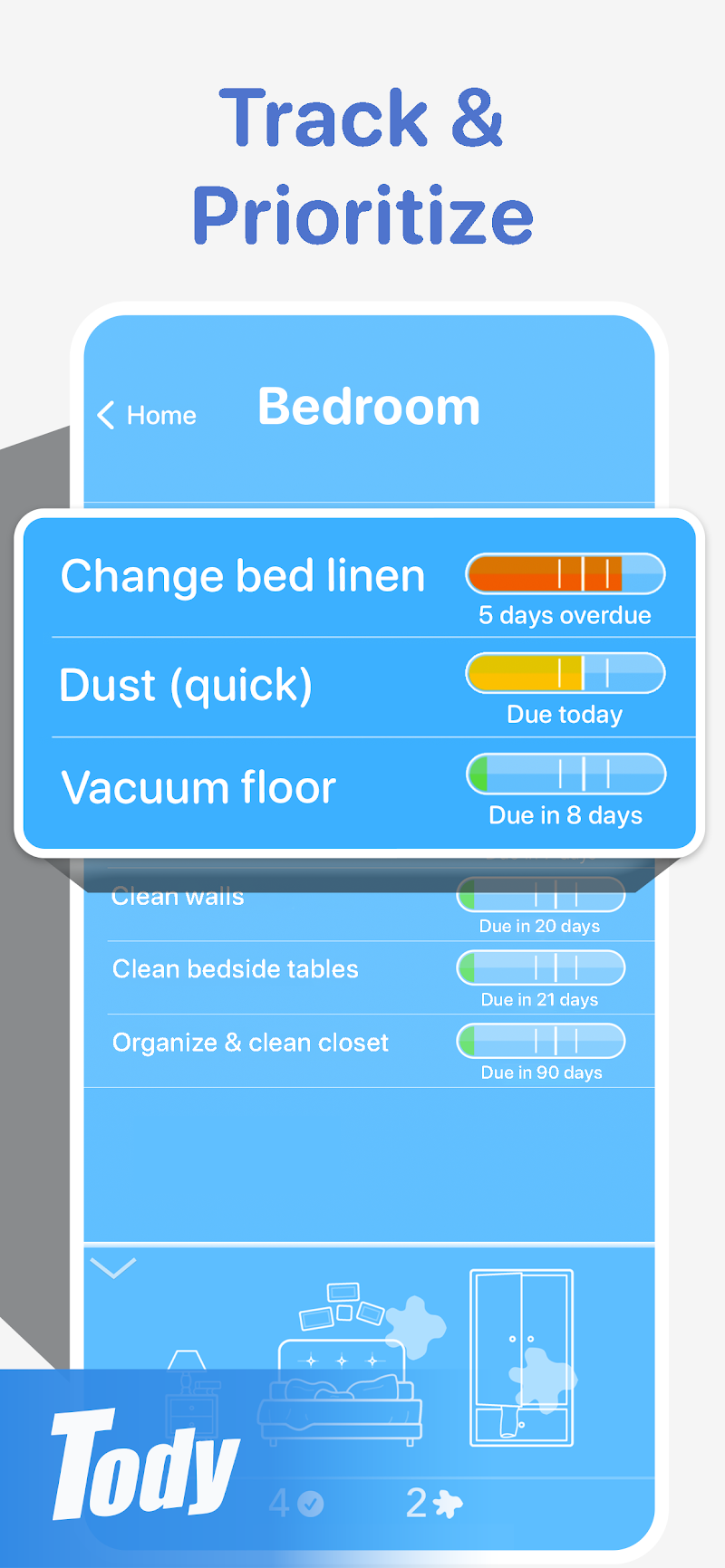
Tody is the strongest app here for one person, and carries the highest App Store rating in this roundup — 4.83, narrowly ahead of Cozi. Instead of a rigid weekly checklist, it tracks how long it has been since each task was done and shows how overdue it is.
That inverts the usual failure mode. A calendar-based list guilt-trips you about Tuesday's vacuuming on Friday. Tody just tells you the floor is now four days past due and the oven has three months left.
The free plan is genuinely usable: an automatic cleaning plan, dueness tracking, chore assignment and rotation, and no ads. Premium at $9.99 a year adds multiple homes and a focus timer. Household sync, per-person contribution targets, and monthly reports sit in Premium+, priced by household size from $25 to $80 a year.
Spotless — best minimal routine, if you're on iPhone
Rating: (4.5/5) (1,282 App Store ratings) · iOS only
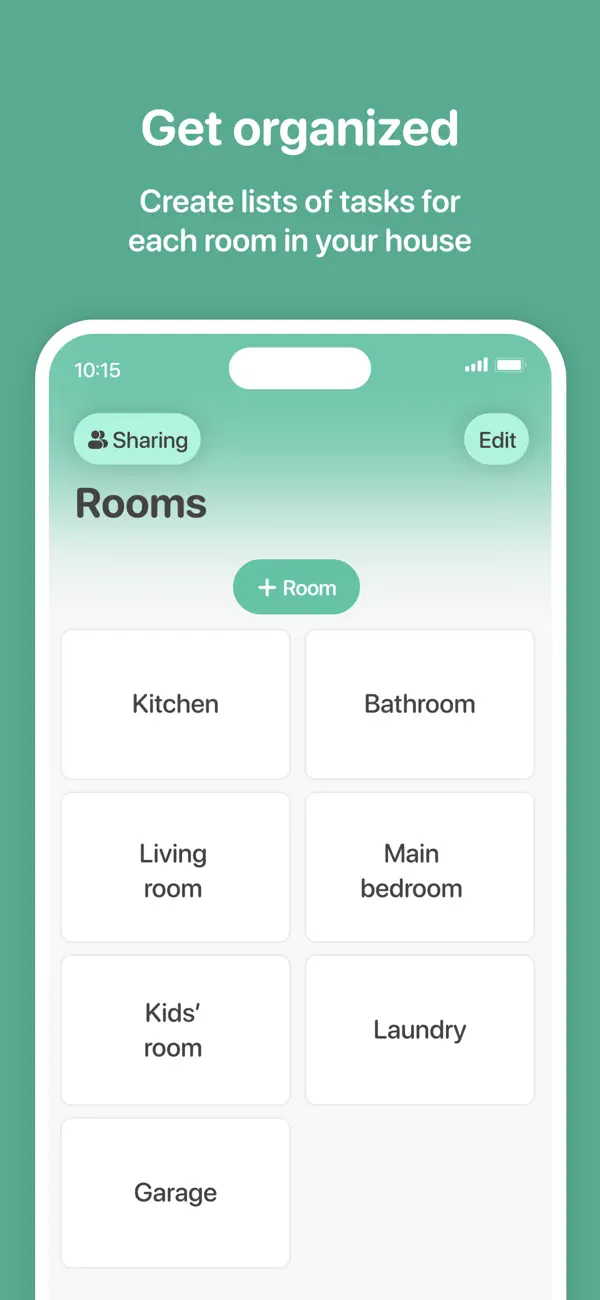
Spotless works on the same idea as Tody but with fewer moving parts. Set up rooms, add tasks with sensible frequencies, and glance at which ones need attention most.
It is the right pick if Tody feels like too much app. Reminders arrive at times you choose, and you can share rooms with household members at no extra cost to them. There is no Android version at all, so this is an iPhone-only recommendation.
Paid options are flexible: $1.99 a month, $9.99 a year, or $49.99 once for lifetime access.
What the research says about who does what
Chore apps exist because household labour is unevenly split and badly tracked. The data on this is clear and recent.
In a Pew Research Center survey of US working parents conducted in March 2026, among different-sex couples where both parents work full time, 43% said the mother does more of the household chores. Only 17% said the father does more, and 40% called it about equal.
The perception gap is bigger than the split itself. Most mothers (63%) said they personally handle more of the chores, while fathers were far more likely to describe the division as even.
Satisfaction follows the same line. Among those two-full-time-income families, 49% of fathers said they were extremely or very satisfied with how chores are divided, against 26% of mothers.
That gap is what a shared chore app is actually for. It replaces an argument about impressions with a log of completed tasks. Apps like Flatastic and Sweepy that keep a visible history are doing more work than their feature lists suggest.
Points, allowance, or nothing? Choosing a motivation model
The four family apps above use different rewards, and the choice matters more than the interface.
Real money (Homey, Chorsee) connects effort to earnings, which is why parents who care about financial literacy like it. The risk is that unpaid chores start to feel optional.
Points and leaderboards (Sweepy) create competition without cash. This works well with siblings close in age and badly when one child always wins — our guide to gamifying your life covers when points help and when they backfire.
Nothing at all (Tody, Spotless, and Chorsee if you skip the money) treats chores as a fact of living somewhere. For adults, this is usually the right answer. You do not need to gamify wiping a counter.
Start with the lightest model that works. You can always add rewards later, but removing them is much harder.
How to make a chore app stick
Most chore apps get abandoned in week two. The fix is not a better app — it is attaching the app to something you already do.
Psychologist Peter Gollwitzer called this an implementation intention: a plan in the form "when X happens, I will do Y." His 1999 paper in American Psychologist, Implementation intentions: Strong effects of simple plans, showed that these if-then plans reliably outperform vague goals.
Applied here, that means picking a cue rather than a time. "When I put the kettle on Sunday morning, I open the app and clear what's due" beats "check the app more often." Our guide to implementation intentions covers the formula in more depth, and habit stacking shows how to bolt a new action onto an existing one.
For solo adults there is a second layer worth separating out. Some of what you call chores are not house maintenance at all — they are personal routines that repeat daily. Making the bed, doing the dishes after dinner, a ten-minute evening tidy.
Those belong in a habit tracker rather than a cleaning app. A cleaning app answers "is the bathroom due?" A habit tracker answers "did I do my evening tidy today, and how many days in a row?" HabitBox, our own app, covers that second question with one-tap check-ins, streaks, a calendar heatmap, and reminders — on iOS and Android, with no account and your data on the device. It is free to start, with an optional Plus upgrade.
To be clear about what it is not: HabitBox is a solo habit tracker with no shared lists, no household members, and no social features. It cannot run a family chore rota, and it is not trying to. Pair it with Tody or Spotless if you want both layers, or see the daily habit tracker app guide for how the daily check-in works.
Couples sit between the solo and roommate cases, and the tooling question is different again — our guide to a habit tracker for couples covers why shared trackers often backfire.
How to pick in 60 seconds
Answer three questions and you are done.
- Who lives with you? Kids means a family app. Peers means a roommate app. Nobody means a solo app.
- Does money change hands? If yes, Homey or Chorsee. If no, skip the allowance apps entirely — they add friction you will not use.
- What phones are in the house? Spotless is iOS only. Chorsee's Android build is thin. Everything else covers both.
Then set the cue on day one, before the novelty fades. Decide the exact moment you will open the app, and put a repeating reminder there. If you want a broader system for the rest of the household admin, how to be more organized and how to create a routine both go further than chores alone.
Chore app FAQ
What is the best chore app?
It depends on your household. For families with kids, Chorsee handles chores and allowance in one clean app. For roommates, Flatastic covers both the rota and shared costs. For one adult living alone, Tody is the strongest pick, with the highest App Store rating of any app here (4.83). There is no app that wins all three cases.
Is there a good free chore app?
Yes. Tody's free plan includes an automatic cleaning plan, dueness tracking, chore assignment and rotation, with no ads. Sweepy, Spotless, Flatastic, and Chorsee all have free tiers too, though they gate history, extra homes, or household sync behind a subscription. Try the free version for two weeks before paying.
What is the best chore app for roommates?
Flatastic is built specifically for flatshares and adds shared expenses alongside the cleaning rota, which covers both common sources of friction. Sweepy is the better choice if your only issue is that cleaning feels unevenly split, because its one-to-three point system weights hard tasks properly.
Do chore apps with rewards actually work for kids?
They work while the reward feels worth it, which is why the model matters. Real allowance apps like Homey link effort to earnings and tend to last longer with older children. Points and leaderboards suit siblings of similar age but demotivate a child who always loses. Start light — many families find plain assignment is enough.
Can I use a habit tracker instead of a chore app?
If you live alone, often yes. Recurring personal routines like an evening tidy or making the bed fit a habit tracker better than a cleaning app, because you want a streak rather than a due date. For anything shared with other people, or for deep-clean tasks that recur every few months, use a real chore app — habit trackers have no concept of rooms, assignment, or overdue tasks.
The short version
Match the app to the household, not to the review score. Families should look at Chorsee first, then Cozi if the calendar is the deeper problem. Roommates should start with Flatastic, or Sweepy if fairness is the sticking point. Solo adults are best served by Tody.
Then do the part that decides everything: pick the exact moment you will open it, and attach the app to that. The tool is not what keeps a house running. The routine is.

Mira Hartwell
Editor, HabitBoxEditor at HabitBox. Writes about habit science and productivity, grounding every post in named research (Lally, Wood, Walker, Huberman) instead of recycled advice. Read full bio →