Habit Stacking Examples: 30 Stacks to Steal (2026)
Habit stacking is the simplest behavior-change tool that survives a busy week. You take a habit you already do without thinking — pouring coffee, brushing teeth, locking the front door — and you bolt a new behavior onto the back of it. The old habit becomes the cue. The new habit gets a free ride. Below are 30 working habit stacking examples organized by time of day and use case, plus the formula, the mistakes that kill stacks, and a 5-step worksheet to build your own.
TL;DR
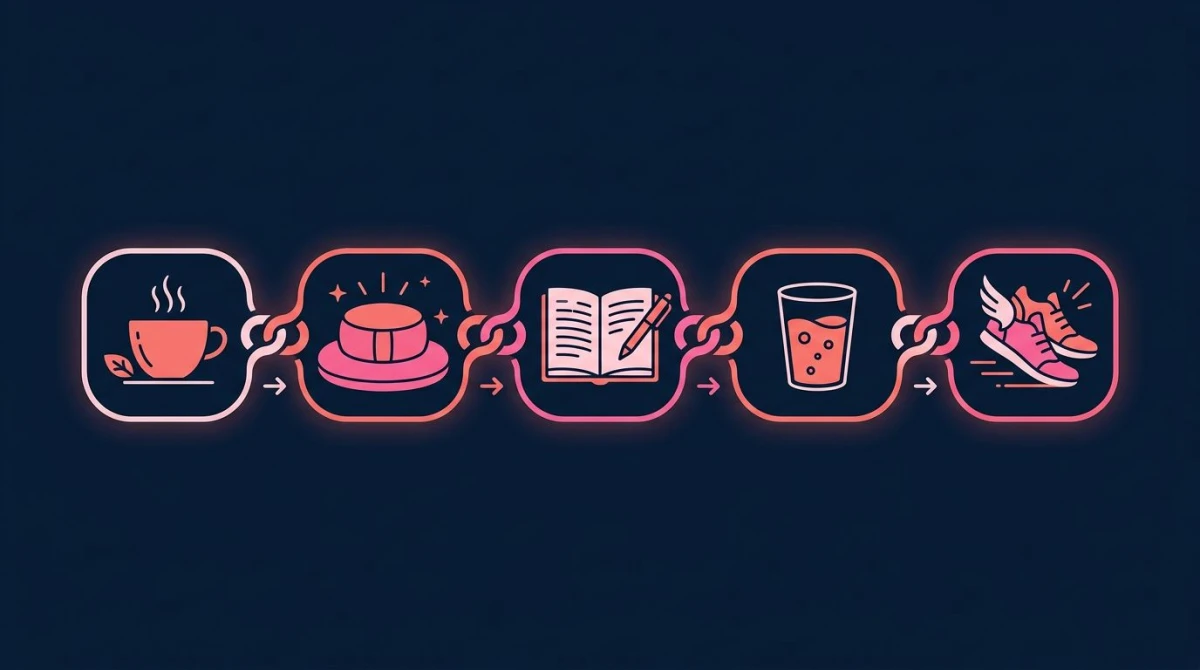
Habit stacking uses the formula "After [CURRENT HABIT], I will [NEW HABIT]" — popularized by James Clear in Atomic Habits (2018) and rooted in BJ Fogg's earlier "anchor moment" idea from Tiny Habits (2019). The trick is to attach a small new behavior to a rock-solid existing one so the existing habit becomes the cue. 30 examples follow, grouped by morning, evening, fitness, mindfulness, learning, and parenting. Pick one. Stick it on tomorrow's existing routine. Track it.
The formula in one line
After [CURRENT HABIT], I will [NEW HABIT].
That is it. Clear's clean phrasing reduces decision-making to almost zero. You are not deciding "when should I meditate?" You decided that the moment you stacked it: right after you pour your morning coffee. Cleveland Clinic psychologist Dr. Lauren Alexander frames it the same way: "the already-existing habit will cue you to do your new one."
For deeper science on why this works (cue-routine-reward, automaticity, the Lally et al. 2009 UCL finding that habits take a median 66 days to automate), the longer write-up lives in our habit stacking pillar. The page you are reading now is the practical examples library.
How to read these examples
Every stack below uses the same shape:
- Cue: the existing habit you already do.
- New behavior: the small action you are bolting on.
- Why it works: the specific behavioral fit.
- Track it: how to mark it so the stack survives week three.
Keep the new behavior tiny at first. Fogg's rule: if it takes more than 30 seconds to start, it is too big. You can always grow the behavior later; you cannot shrink a habit you never installed.
Morning stacks (5)
1. After the coffee machine starts, I will drink one glass of water.
Cue: the espresso machine or kettle running. New behavior: sip a full glass of water while it brews. Why it works: the wait is dead time you cannot fill with anything else, so adherence is high. Track it: mark "morning water" on your habit tracker before the coffee is poured, or use one of the best water reminder apps if you want to log cups all day.
2. After I sit down with my coffee, I will write three lines in a journal.
Cue: sitting in your usual morning chair, hands warm on the cup. New behavior: open a small notebook and write three lines — gratitude, intention for the day, or what is on your mind. Why it works: sitting + warm cup is a calm anchor; writing is short enough to survive bad mornings. Track it: if you write at least three lines, that day counts.
3. After I brush my teeth, I will do 10 squats.
Cue: finishing teeth-brushing. New behavior: 10 bodyweight squats next to the sink. Why it works: you cannot leave the bathroom without finishing teeth, so the cue is unbreakable. Track it: any morning where 10 squats happen is a green check, even if the rest of the day collapses.
4. After I put on my shoes, I will read one paragraph from a book by the door.
Cue: tying or slipping on the shoes you wear out. New behavior: open the book you keep on the entry table and read one paragraph. Why it works: the book is physically at the cue, so friction is near zero. Track it: weekly tally rather than daily — some days you will read three paragraphs, some zero.
5. After I lock the front door, I will name one thing I am looking forward to.
Cue: the click of the deadbolt. New behavior: say one specific thing you are looking forward to today, out loud. Why it works: the deadbolt is a transition moment you never skip, and a tiny positive priming exercise has measurable effects on mood across the morning. Track it: it counts when you say it out loud (silent thinking does not).
Evening stacks (5)
6. After I close my laptop for the day, I will write tomorrow's top 3 tasks.
Cue: the lid closing on your work laptop. New behavior: open a small notebook and write three tasks for tomorrow. Why it works: Cal Newport-style shutdown rituals lower work anxiety because the day has a clear ending. Track it: any list of three written tasks counts, even if you change them in the morning.
7. After I start the dishwasher, I will stretch for 2 minutes.
Cue: the dishwasher button press. New behavior: two minutes of hamstring and back stretches in the kitchen. Why it works: the dishwasher cycle gives you a forced wait you can use. Track it: set a 2-minute timer; if it goes off, you are done.
8. After I plug in my phone for the night, I will read 5 pages.
Cue: placing the phone on its charger across the room. New behavior: pick up the book on your nightstand and read 5 pages. Why it works: the phone has just left your hand and the book replaces the doomscroll. Track it: 5 pages, every night, marked on the streak. See tracking habits for why streaks beat hour-counts here.
9. After I get into bed, I will do a 60-second body scan.
Cue: head touches the pillow. New behavior: breathe slowly and scan from feet to head, noticing tension. Why it works: the cue is unmistakable; the duration is short enough to not become a project. Track it: if you make it past your calves before falling asleep, it counts.
10. After I set my alarm, I will write tomorrow's one priority.
Cue: setting the morning alarm on your phone. New behavior: write one sentence: tomorrow's single most important task. Why it works: it pre-decides the morning, so you wake up without negotiation. Track it: the sentence must be written, not thought.
Fitness stacks (5)
11. After my morning alarm rings, I will put on workout clothes.
Cue: alarm off. New behavior: the clothes laid out the night before go on before anything else. Why it works: wearing the gear makes a workout 3x more likely. Track it: clothes on = stack done. The workout itself is a separate habit you can track or not.
12. After I park at the office, I will take the stairs to my floor.
Cue: turning off the engine. New behavior: stairs instead of elevator. Why it works: the elevator is a default; stairs need a cue strong enough to override it. Track it: count stair days per week. Five out of five is the goal.
13. After I finish lunch, I will walk for 10 minutes.
Cue: putting down the fork. New behavior: 10 minutes outside or around the building. Why it works: the walk also helps post-meal glucose control, which is a useful side-benefit. Track it: mark a walk green-check after the 10 minutes hit. See how to make exercise a habit for why short anchors beat ambitious routines.
14. After I brush my teeth at night, I will do a 1-minute plank.
Cue: teeth done. New behavior: one-minute plank on the bathroom floor. Why it works: the bathroom floor is private, the cue is daily, and the duration is short enough to never skip. Track it: 60 seconds = checkmark. Want progression instead of a flat minute? Turn this stack into a daily plank challenge with a day-by-day schedule.
15. After I pour my second coffee, I will do 10 pushups.
Cue: the second cup being poured. New behavior: 10 pushups next to the kitchen counter. Why it works: caffeine is starting to land; the cue is unmistakable; 10 reps is tiny. Track it: any day with at least 10 pushups counts. Two sets of 10 still counts as one stack done.
Mindfulness & mental health stacks (5)
16. After I sit down at my desk, I will take three deep breaths.
Cue: chair contact. New behavior: three slow breaths, exhale longer than inhale. Why it works: activates the parasympathetic nervous system before the first email lands. Track it: any morning where you do this before opening Slack counts.
17. After I close my email tab, I will name one thing I am grateful for.
Cue: the tab closing. New behavior: one specific gratitude, said in your head or out loud. Why it works: gratitude practice has well-documented effects on mood and stress when done daily over several weeks. Track it: specific gratitudes only ("the coffee my partner made") not generic ones ("my health").
18. After I shower, I will write down one thing on my mind.
Cue: stepping out of the shower. New behavior: towel off, grab the notebook on the sink, write one sentence. Why it works: the shower has loosened the brain; writing immediately captures what surfaced. Track it: one sentence = done.
19. After I close the door behind me coming home, I will pause for 30 seconds.
Cue: the front door clicking shut. New behavior: 30 seconds standing still, breathing. Why it works: marks a transition between work and home, which reduces spillover stress. Track it: if you check your phone before the 30 seconds, restart.
20. After I put dinner plates in the sink, I will text one friend.
Cue: plates hitting the sink. New behavior: send one short text to a friend you have not spoken to in a while. Why it works: social maintenance is a habit, not an event. Track it: one text per day, even a one-liner. See the mental health checklist for why low-friction social check-ins compound.
Reading & learning stacks (5)
21. After I sit down with morning coffee, I will read 1 article.
Cue: seated, first sip. New behavior: one substantive article (not social feed scroll). Why it works: the morning brain is fresh; an article is a finite unit. Track it: finishing one article = green check.
22. After my commute starts, I will start an audiobook.
Cue: car in drive or train in motion. New behavior: play audiobook instead of music or podcasts. Why it works: time you would have spent on autopilot becomes learning time. Track it: one chapter per commute day.
23. After I finish lunch, I will do 5 minutes of language learning.
Cue: plate empty. New behavior: five minutes of Duolingo, Anki, or a flashcard app. Why it works: lunch is a daily anchor and 5 minutes survives every schedule. Track it: a streak counter is your friend here.
24. After I open a new browser tab, I will read one piece of saved content.
Cue: Cmd-T or Ctrl-T. New behavior: click into your read-later list (Pocket, Instapaper, Reader) before going elsewhere. Why it works: intercepts the doom-scroll reflex and converts it into intentional reading. Track it: weekly count of saved-content reads.
25. After I get into bed, I will read one chapter or 10 pages.
Cue: head on pillow with the lamp still on. New behavior: read until you hit either marker. Why it works: reading in bed slows the brain better than screens. Track it: chapters or page count per week — see how readers using simple trackers add up significant volume across a year.
Parenting stacks (5)
26. After I make my kids breakfast, I will pour myself a glass of water.
Cue: plates on the table. New behavior: one full glass of water for you. Why it works: parents notoriously forget their own basic care; pairing it with the kids' meal makes it automatic. Track it: if the water is gone before the kids leave the table, done.
27. After I drop the kids off, I will set one personal intention.
Cue: car door closing after drop-off. New behavior: state one specific intention for the day before driving away. Why it works: marks the transition from caregiver to your own day. Track it: intention must be specific and said out loud.
28. After the kids' bath, I will brush my own teeth.
Cue: their bath done. New behavior: brush yours before continuing the bedtime routine. Why it works: your own evening hygiene tends to slip when bedtime gets chaotic. Track it: brushed before story time = green check.
29. After I read the bedtime story, I will say one specific thing I appreciated about them.
Cue: closing the book. New behavior: one specific observation ("the way you helped your brother today"). Why it works: specific praise lands harder than generic, and the cue makes it daily. Track it: one specific observation per night.
30. After the kids are asleep, I will spend 5 minutes alone before doing anything else.
Cue: door clicks shut after lights out. New behavior: five minutes of silence — no chores, no phone, no Netflix. Why it works: prevents the immediate task-switch into evening chores and protects a tiny window of recovery. Track it: five quiet minutes = stack done. The rest of the evening is yours.
Build your own habit stack (5-step worksheet)
The 30 examples above are starter scripts. The stack that works best for you is the one anchored to your existing routine. Use these five steps.
- Pick a rock-solid anchor. List 5–10 things you already do every day without thinking — pouring coffee, locking the door, putting your phone on the charger. The anchor must be daily and automatic.
- Pick one tiny new behavior. Under 30 seconds to start. If you cannot do it on your worst day, it is too big.
- Write the sentence. "After [ANCHOR], I will [NEW BEHAVIOR]." Read it out loud. If it sounds vague, sharpen the anchor and the behavior.
- Place a physical cue. Put the book on the entry table, the water glass next to the coffee machine, the journal on the chair. Friction kills more habits than motivation does.
- Track for 30 days. A habit tracker app like HabitBox keeps a daily streak and a calendar heatmap on iOS and Android, which makes the chain visible. Long streaks become loss-averse; you do not want to break them.
The identity-based habits framing adds an extra layer: each completed stack is one vote for the person you want to become, which sustains the behavior past the initial novelty.
4 mistakes that kill habit stacks
1. The new behavior is too big
"After my morning coffee, I will work out for 45 minutes" is not a stack; it is a wish. The new behavior must be smaller than the anchor. Start with two minutes, grow later.
2. The cue is ambiguous
"After I get ready for bed" covers fifteen actions and triggers none of them. Pick the specific moment — "after I plug in my phone," "after I set my alarm," "after I turn off the bathroom light." Specificity is what makes a cue work.
3. No tracking
Stacks that are not tracked melt by week three. The brain genuinely cannot tell whether you have done the new behavior 4 days or 14 days in a row without a record. A streak — even a paper one — supplies the memory.
4. No weekly review
A stack that no longer fits your routine quietly dies. Once a week, look at last seven days. If a stack hit fewer than five of seven days, redesign it (smaller behavior, different cue) rather than guilt-trip yourself into the same broken setup.
FAQ
What is habit stacking?
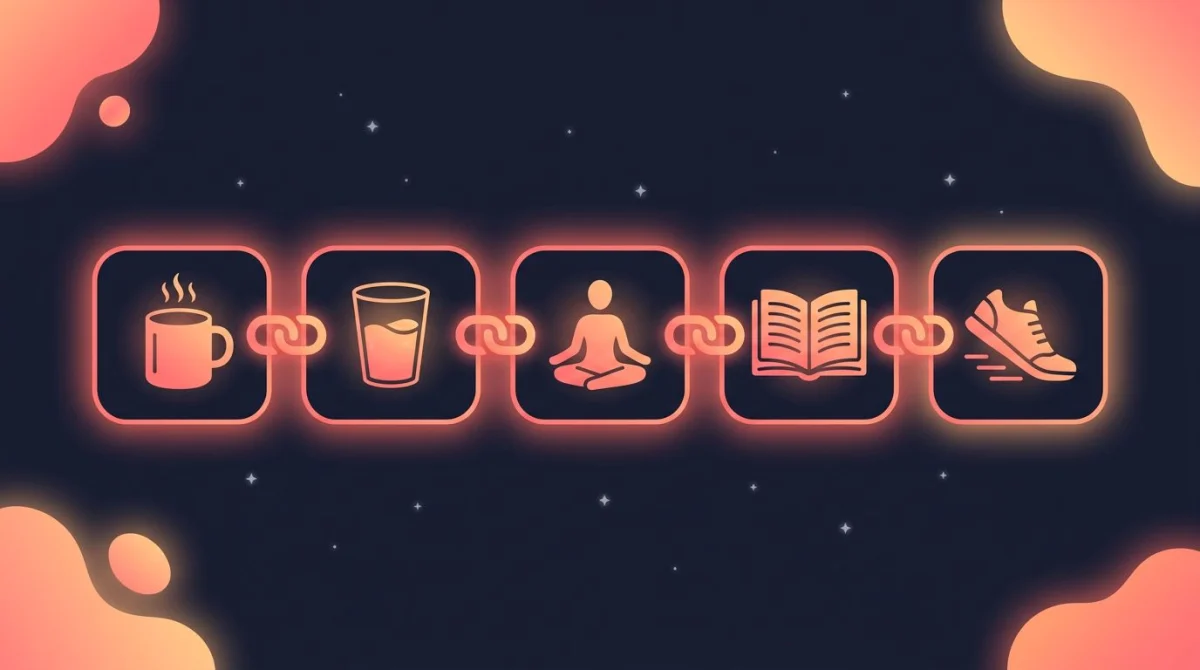
Habit stacking vs. habit chaining: what is the difference?
How many habits can you put in one stack?
What is the best app for habit stacking?
What are some quick examples of habit stacking?
The takeaway
Habit stacking works because it replaces the question "when will I do this?" with the answer "right after the thing I already do." Pick one anchor, one tiny behavior, and a single 30-day run before you stack anything else. The examples above are blueprints — but the only stack that matters is the one you actually run tomorrow morning.

Mira Hartwell
Editor, HabitBoxEditor at HabitBox. Writes about habit science and productivity, grounding every post in named research (Lally, Wood, Walker, Huberman) instead of recycled advice. Read full bio →