Apps Like Finch: 8 Alternatives by Exit Reason (2026)
TL;DR. There are eight credible apps like Finch, and which one fits depends less on app quality than on why you are leaving. The four most common reasons split cleanly into four groups: you still want a pet but a less childish one, you want the pet plus real consequences, you want the mood data without the pet, or you are done with pets and want streak data. The table below names all eight and shows which group each one belongs to.
Nobody searches for a replacement while a tool is working. If you are here, something specific broke — the bird started feeling like homework, or the app felt like it was written for someone half your age, or you wanted a number and got a hug.
That specific broken thing is the only useful sorting rule. A list ranked "best to worst" cannot help you, because the app at the top might fix a problem you do not have.
So this guide is organised by exit reason instead. Find the sentence that sounds like you, and read that section.
At a glance: how the eight alternatives compare
| App | Virtual pet? | Real streak stats? | Free tier limit | iOS + Android | Account required? |
|---|---|---|---|---|---|
| Finch | Yes, a bird | Basic | Free, with Finch Plus | Both | Yes |
| Amaru | Yes, a companion creature | Not the focus | Free, optional paid unlock | Both | Not stated |
| Voidpet Garden | Yes, collectible voidpets | Not the focus | Free, with Voidpet Giga | Both | Yes |
| Catzy | Yes, a cat | Not the focus | Free trial, then subscription | Both | Not stated |
| Habitica | Pets plus an RPG avatar | Basic | Free, optional subscription | Both | Yes |
| Daylio | No | Basic | Free, with Daylio Premium | Both | No |
| stoic | No | Basic | Free, with a subscription | Both | Not stated |
| HabitBox | No | Full | Free to start (Plus for more) | Both | No |
| Loop Habit Tracker | No | Full | Free, open source, no in-app purchases | Android only | No |
Two columns need a word of explanation. "Real streak stats" rates the depth of the reporting, not whether a streak counter exists anywhere in the app: "Basic" means the app counts days, "Full" means it also keeps a history you can look back through, and "Not the focus" means caring for the pet is the loop and the numbers are incidental.
"Account required" was checked against each app's own privacy policy and its Google Play Data safety declaration in September 2026. Where those documents do not settle the question, the cell reads "Not stated" rather than a guess. Loop is the strictest of the nine on this point — its Play listing declares no data collected at all.
Every figure here was checked against the live App Store and Play Store listings, not copied from other roundups. Store facts move, so treat the table as a September 2026 snapshot.
Why people leave Finch, in four sentences
Leaving is normal, and it is worth saying plainly that it is not a failure of yours. Long-term users describe a predictable arc: the pet that once made check-ins feel warm eventually becomes one more thing to maintain, and the subscription renewal is the moment people finally ask whether it still earns its place.
Reason one: the app feels childish. You are an adult with a mortgage and the interface is handing you a tiny hat.
Reason two: nothing happens when you skip. Finch never punishes you, which is a deliberate design choice, and for some people it is the exact reason the habit never took hold.
Reason three: you were never tracking habits at all. You were using the daily check-in as a feelings journal, and you want that data in a tool built for it.
Reason four: you outgrew the check-ins. You want a scoreboard — current streak, longest streak, a year of history on one screen.
If you want the full breakdown of what Finch does well and where it falls short before you go anywhere, our Finch app review covers the app itself in detail. This guide picks up where that one ends, and answers the other question: what instead.
One reassurance before the lanes. Phillippa Lally and colleagues at University College London found a median of 66 days for a new behaviour to become automatic. Their study first appeared in the European Journal of Social Psychology in 2009. That automaticity lives in you, not in the app you logged it with, so switching trackers does not reset your progress.
Lane A: you still want a pet, but a less childish one
This is the biggest group, and the one nobody writes for. The complaint is not that the pet is bad. The complaint is that the art, the copy and the reward loop are pitched at a much younger audience, and it makes a grown adult feel faintly silly at 10pm.
The three apps below keep the companion and change the register. None of them is a habit tracker in the strict sense, so read them as self-care apps with better taste rather than as scoreboards.
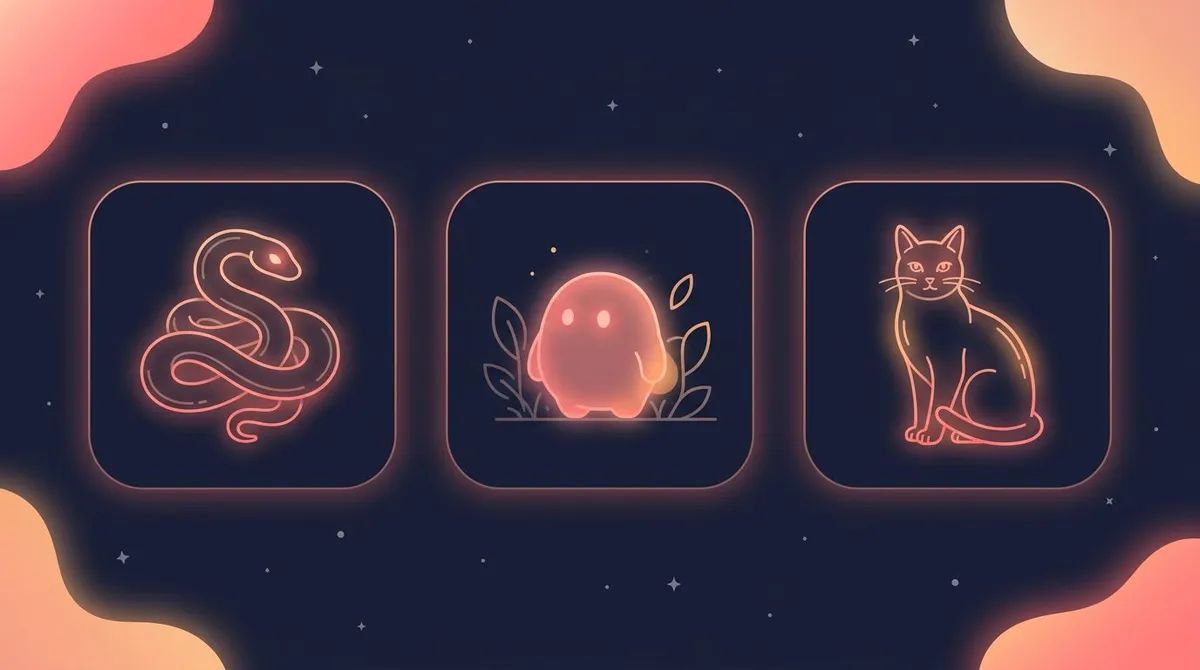
Is there a Finch app for adults?
Yes, and it is a real search — enough people type it that it has become its own query. The honest answer is that no app markets itself as "Finch for adults", so you are choosing by art direction and tone rather than by a label.
Amaru is the closest fit if you want the same care loop with a quieter visual style. Voidpet Garden works if you like the collecting but want something stranger and more designed. Catzy suits you if cats are the thing and you want a calmer daily rhythm.
The other route, which the next three lanes cover, is to admit that the pet was never the point and move to a tool that does not have one.
Amaru
Amaru is a self-care virtual pet built around a companion creature you look after by looking after yourself. It sits in the Games category on the App Store as well as Health & Fitness, which tells you where its heart is — this is a small game with self-care as its engine, and the art is drawn with a lighter, more restrained hand than Finch's.
Its most unusual feature is the pricing philosophy. The developers keep the self-care content out from behind the paywall, and they run a system where players can donate full copies of the game to people who cannot afford one. That is rare, and it is worth knowing about.
Amaru is on both iOS and Android, and it is free with an optional paid unlock rather than a subscription.
Keep Finch if: you want the guided exercises, breathing and reflection prompts that Finch has built up over years — Amaru's library is much smaller.
Switch if: the childish framing is your whole problem and you want a companion with a calmer, more grown-up visual style.
Voidpet Garden
Voidpet Garden is the most distinctive of the three. You grow and collect voidpets — small creatures with a genuinely odd, well-drawn aesthetic — in a garden that fills up as you use the app.
The mental health content is more substantial than the cute exterior suggests. Its journal prompts draw on cognitive behavioural therapy and dialectical behaviour therapy, developed with input from practising therapists, and those prompts are free.
Voidpet Garden has accounts, and the pets are tied to them. That is the trade for having a collection that follows you between devices.
Keep Finch if: you want one steady companion you bond with, rather than a collection to grow and manage.
Switch if: you want the collecting layer and a visual style with more personality, and you like a journal prompt that has some structure behind it.
Catzy
Catzy is the simplest pitch of the three: a cat, and a self-care journey built around caring for it. It is newer than the others and has a smaller following on the App Store than on Google Play, where it has gathered a much larger review count.
Be clear-eyed about the model. Catzy runs an auto-renewing subscription with a free trial, and the trial converts automatically unless you cancel it in your Apple ID settings first. Set a reminder on the day you install it.
Keep Finch if: you want a deep bench of self-care exercises and a mature, well-tested app.
Switch if: you want a cat rather than a bird, and a lighter daily loop.
If the pet mechanic itself is what hooks you, it is worth understanding why it works before you pick a replacement. Our guide to gamifying your life covers the reward loops these apps are built on.
Lane B: you want a pet and real stakes
Finch never makes you feel bad for missing a day. That is a therapeutic choice, not an oversight. But if you have been checking in for months without much changing, the absence of consequence may be the missing ingredient.
Habitica is the app that supplies it. It turns your habits into a retro role-playing game where your character takes damage when you skip your dailies, and where a party of other players is counting on you. It has pets and mounts too, so you are not giving up companions.
Two honest caveats. Habitica needs an account, because the whole system is synced and social. And on Android its listing declares that it contains ads alongside the optional subscription.
We have written up Habitica in full elsewhere rather than repeating it here — see its entry in our best habit tracker app roundup for the detail, and the Finch app review if you want the direct head-to-head with Finch specifically. If you like the idea but suspect the RPG layer will become its own chore, our Habitica alternatives guide is the better next stop.
Keep Finch if: you are anxiety-prone, or you know that losing health points for a missed day will make you avoid the app entirely.
Switch if: you respond to consequences and accountability, and a system with no downside has never moved you.
Lane C: you want the mood data without the pet
Some people never used Finch as a habit tracker at all. The daily check-in was the point — a small, low-effort place to say how the day went. If that is you, a dedicated mood tracker will do the same job with far better reporting and no creature to feed.
Daylio
Daylio is the fastest structured mood log there is. You pick a mood face and tap the activities that filled your day, and it builds correlations from there — which days with exercise felt better, which weeks went sideways.
For an ex-Finch journaler the draw is the correlation view specifically. Finch tells you how you felt. Daylio starts telling you what appears to move it.
Its privacy story is reassuring for a mood app. The Play listing declares no data shared with third parties, and backups go to your own cloud storage or to a file you keep. It does declare collecting app activity and device identifiers, though, so it is not as strict as Loop.
Keep Finch if: you want warmth and encouragement wrapped around the check-in, because Daylio is a neutral instrument and will not cheer for you.
Switch if: you want your check-ins to turn into patterns you can read.
stoic
stoic is the pick if what you valued was the evening reflection rather than the mood score. It is a journalling app with mood tracking attached, and it leans on prompts to get you writing when you have nothing to say.
It has moved firmly toward AI-assisted journalling, which is either the appeal or the dealbreaker depending on your taste. Worth knowing before you install it. It is on both platforms, free to start, with a subscription for the rest.
Keep Finch if: you want the reflection kept short and gentle, because stoic will happily ask you to write more than Finch ever did.
Switch if: the evening reflection was the part you looked forward to, and you want more room and better prompts for it.
Both apps sit in our wider best mood tracker app comparison if you want to see them against the rest of the category.
Lane D: you are done with pets and want streak data
This is the "I outgrew the check-ins, give me a scoreboard" reader. You do not want a companion, an avatar or a mood face. You want to know that today is day 41, that your record is 63, and to see the whole year on one screen.
James Clear makes the case for this in Atomic Habits (2018): make progress visible, because a visible record of what you have done is its own motivation. A contribution grid is the same principle as Finch's growing bird, rendered as data instead of a character.

Both apps below have full write-ups in our best habit tracker app guide, so here we cover only how they land for someone arriving from Finch.
HabitBox
HabitBox is the closest thing in this lane to a direct swap for the daily check-in. Habits are one tap, and the payoff is a contribution-grid heatmap plus current and longest streaks, with charts and statistics available to everyone rather than locked behind the upgrade.
Three things matter for someone coming from Finch. There is no account and no sign-up, so your habits live on your device. On iPhone there is a home-screen widget, which puts the grid where you already look — our habit tracker widget guide covers why that placement matters so much for consistency. And it runs on both iOS and Android.
Two platform-specific notes, because the details differ. iPhone users get optional iCloud sync through their own iCloud account, and the widget. On Android your habits stay on the device, and you move them between phones with the export and import backup file, which is part of Plus.
HabitBox is free to start, with an optional Plus upgrade for more.
Keep Finch if: the bird is what gets you to open the app. HabitBox has no character to care for, and if the companion is your motivation, removing it removes the reason you check in.
Switch if: you want the streak history and the grid, and the pet had become one more thing to maintain.
Ready to trade the pet for a scoreboard? Get HabitBox on iOS and Android — one-tap check-ins, a contribution grid that fills in as you go, and no account to create.
Loop Habit Tracker
Loop Habit Tracker is the purist option, and the one with the shortest list of caveats. It is free and open source under the GPL, with no in-app purchases and no ads, and its Play listing declares that it collects no data whatsoever.
State the limit up front: Loop is Android only. There are apps on the App Store using the Loop name, and they are not this app. If you are on an iPhone, this lane has one option, not two.
What you get is daily reminders, a clear streak view and genuinely good charts, from a project that has been maintained for years without trying to sell you anything.
Keep Finch if: you are on iOS, or you want any encouragement at all — Loop is an instrument, and it is silent.
Switch if: you are on Android and you want maximum privacy and zero cost, with the numbers front and centre.
If cost is the deciding factor across the whole category, our free habit tracker roundup compares what each app's free tier covers.
What happens to your Finch history when you leave
Nobody else writing about this topic tells you, so here is the honest answer: plan on starting fresh.
Finch's public store listing and marketing materials do not advertise a data export, and we could not confirm one from its published documentation. If your history matters to you, contact Finch support and ask before you cancel anything — do not assume it will be waiting for you later.
Of the alternatives here, Daylio is explicit about backups: its store listing describes scheduled backups to your own cloud storage, or a backup file you can take with you. HabitBox includes export and import as part of Plus, so your data can move to a new phone.
The practical reality is that habit history rarely transfers between apps in any case. The formats do not match, and no app imports a competitor's journal.
That sounds worse than it is. Wendy Wood, in Good Habits, Bad Habits (2019), estimates that roughly 43% of daily behaviour runs on habit, cued by context rather than by decisions. Your streak number lived in an app. The behaviour lives in your kitchen, your running shoes and your bedtime — and none of those are being deleted.
One practical tip: screenshot your Finch stats before you go. It takes a minute, and it is the only archive you are guaranteed to keep.
Reasons to stay on Finch
This section is here because the honest answer for a lot of readers is "do not switch".
Finch is one of the most highly rated self-care apps on either store, with hundreds of thousands of ratings behind it and a support-first design that a lot of people credit with getting them through hard periods. Nothing in this guide is more established or more trusted than that.
It is the better app if you are anxiety-prone. The no-punishment design is a genuine therapeutic decision, and swapping to a system that penalises a missed day can turn a gentle habit into a source of dread.
It is the better app if you are new to habit-building. The scaffolding — the prompts, the exercises, the encouragement — is doing real work that a bare streak counter will not do for you.
And it is the better app if you need a tool that never makes you feel bad. That is harder to build than it looks, and Finch does it well.
BJ Fogg explains why in Tiny Habits (2019): the positive emotion you feel at the moment of completion is what wires a behaviour in, not repetition alone. Finch's bird is a celebration mechanic, and celebration is the active ingredient. If that is working for you, leaving costs you something real.
If your goal is a gentler self-care rhythm rather than a different tracker, our guide to self-care habits may be more useful than any app switch.
How to choose between apps like Finch, in three questions
Answer these in order and you will land in one lane.
1. Do you want a companion at all? If yes, go to question two. If no, go straight to Lane C for mood data or Lane D for streak data, and skip the rest.
2. Do you want consequences when you skip? If yes, Habitica is the only app here that supplies them. If no, Lane A is your shelf: Amaru for a calmer style, Voidpet Garden for collecting, Catzy for cats.
3. What were you recording? If it was feelings, you want a mood tracker — Daylio for patterns, stoic for writing. If it was completions, you want a streak tracker — HabitBox on either platform, Loop if you are on Android and want it free and open source.
One more piece of advice worth more than the app choice. Wood's work on context cues suggests changing the app is a real intervention, because you are changing the cue that triggers the behaviour. Do it deliberately: install the new app, put it where the old one sat on your home screen, and set the reminder for the same time. Do not leave the switch half-finished.
FAQ
Is there a Finch app for adults?
What apps are most similar to Finch?
Is there a free app like Finch?
Does Habitica have a pet like Finch?
Can I export my Finch data before I switch?
Should I leave Finch at all?

Mira Hartwell
Editor, HabitBoxEditor at HabitBox. Writes about habit science and productivity, grounding every post in named research (Lally, Wood, Walker, Huberman) instead of recycled advice. Read full bio →