12 min
The Planning Fallacy: Why You Run Out of Time
The planning fallacy makes us underestimate task time even when we know better. The Kahneman & Tversky research, examples, and 5 fixes that actually work.
Read the storyTHE HABITBOX JOURNAL
Science-backed advice on habit tracking, goal setting, focus, and productivity — for a little more intention in your everyday.

The planning fallacy makes us underestimate task time even when we know better. The Kahneman & Tversky research, examples, and 5 fixes that actually work.
Read the story
Broke your streak or fell off your habits? Here's a 7-step plan to get back on track fast — without the guilt spiral that makes it worse.
Read the story
Loss aversion means losses hurt about twice as much as equal gains feel good. 8 real examples, the Kahneman & Tversky research, and how streaks harness it.
Read the story
Intrinsic motivation means doing something for its own reward. 12 examples, the self-determination theory behind it, and how to build it into habits.
Read the story
Gamify your life with points, streaks, and levels - without burning out on the novelty. A simple game-mechanics system for habits, plus what to avoid.
Read the story
Hyperbolic discounting explains why $50 today beats $100 next month - and why habits fail. The research, real examples, and how to beat your present bias.
Read the story
The best time to drink coffee isn't first thing in the morning. Here's what cortisol and caffeine's half-life say about timing — plus a free calculator.
Read the story
The goal gradient effect: motivation rises as you near a goal. The coffee-card study, why streaks and progress bars work, and how to use it for habits.
Read the story
The average adult reads 200-300 words per minute. See average reading speeds by age and level, what counts as fast, and test your own WPM free.
Read the story
Extrinsic motivation means acting for an external reward. 10 examples, the overjustification effect that undermines habits, and how to use rewards wisely.
Read the story
75 Hard too strict? Compare 6 alternatives - 75 Soft, 75 Medium, Operation 66, Winter Arc and more - by rules, duration and difficulty.
Read the story
A commitment device binds your future self to a good decision. How they work, real examples from behavioral economics, and how to build one for any habit.
Read the story
75 Soft rules: a 45-minute workout with a weekly rest day, eat well, about 3 liters of water and 10 pages a day. Vs 75 Hard, plus a free printable tracker.
Read the story
Journaling can lower stress, improve mood, and boost memory. Here are the research-backed benefits of journaling and how to build a daily habit.
Read the story
The 75 Hard diet has no set menu: pick any structured diet, follow it with zero cheat meals and no alcohol for 75 days. Rules, food list and a sample day.
Read the story
All-or-nothing thinking makes one missed day feel like total failure. Learn what causes it, the research behind it, and 6 ways to break the cycle.
Read the story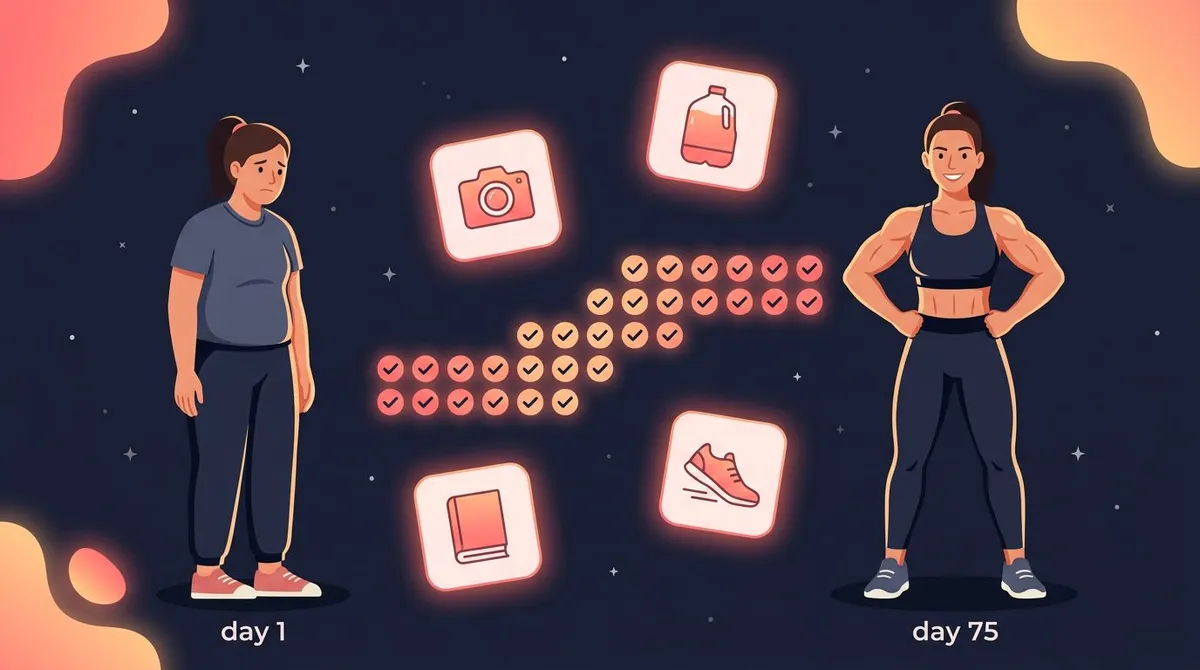
Most 75 Hard before-and-afters show mental changes before physical ones. See a realistic week-by-week timeline and how to track your own progress.
Read the story
The Compound Effect summary: Darren Hardy's formula for small daily choices, the half-life of habits, Big Mo, and why tracking speeds up change.
Read the story
Mindset by Carol Dweck summary: fixed vs growth mindset, the praise research, the power of yet, and everyday habits that build a growth mindset.
Read the story
The ONE Thing summary: Gary Keller's Focusing Question, the domino effect, the six lies, and how to time-block and track your one thing.
Read the story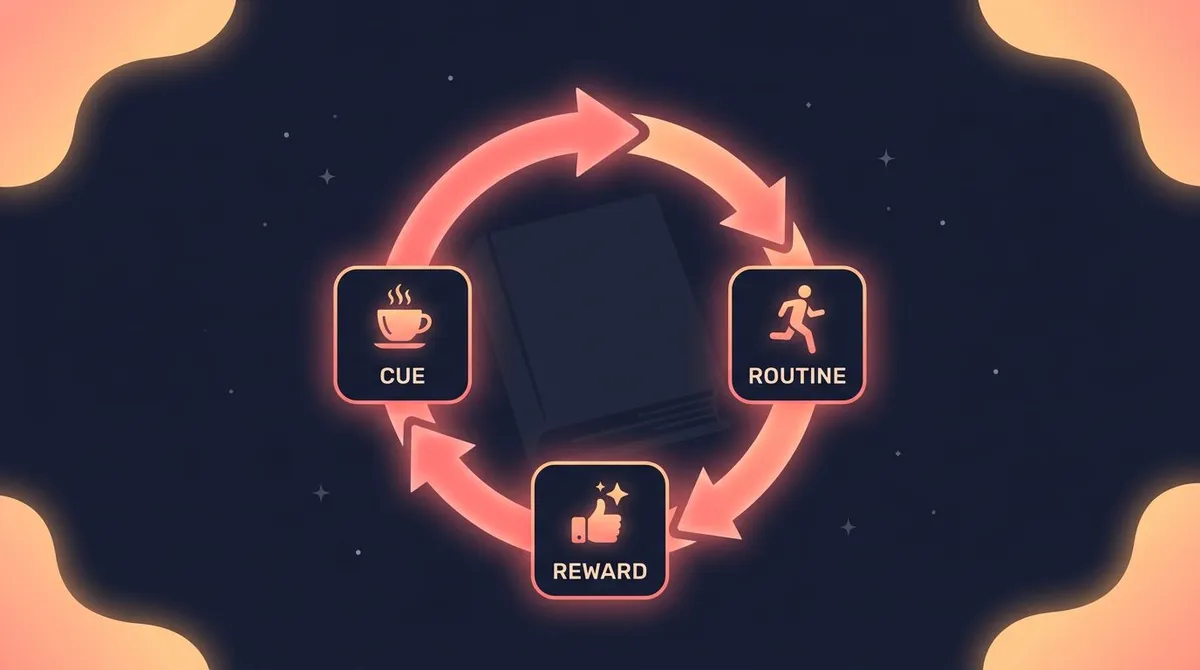
An original summary of Charles Duhigg's The Power of Habit: the cue-routine-reward loop, keystone habits, and how to apply each to a tracked habit.
Read the story